
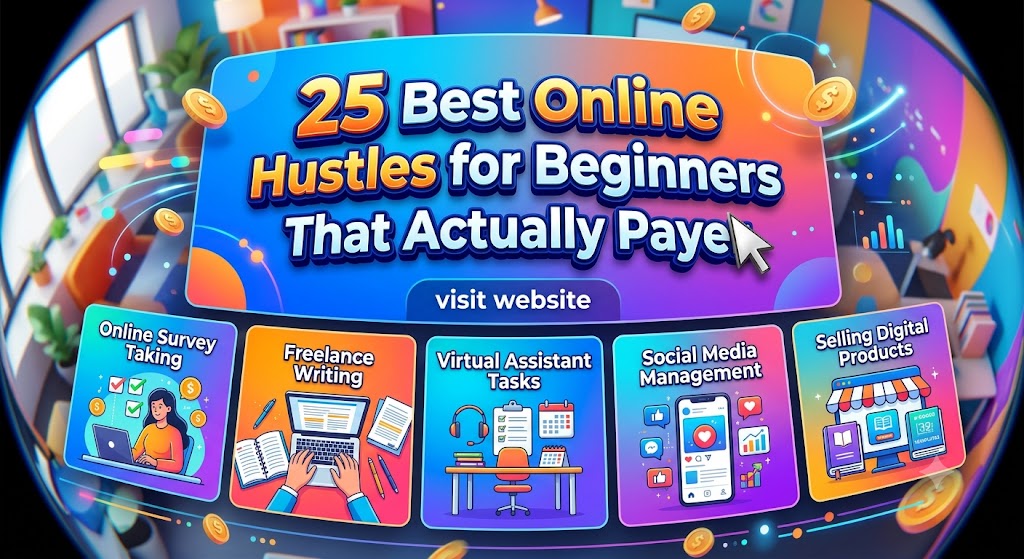
Best Online Side Hustles for Beginners
Best Online Side Hustles for Beginners: From Zero to Digital Income
The traditional 9-to-5 landscape is undergoing a seismic shift. In an era defined by inflation, economic volatility, and the rapid advancement of digital technology, the “single source of income” is no longer a safety net; it is a risk. Today, the internet has democratized the ability to generate wealth, allowing anyone with a laptop and a stable connection to build a secondary income stream from the comfort of their home.
Whether you are looking to pay off debt, save for a dream vacation, or eventually transition into full-time entrepreneurship, the world of online side hustles offers unparalleled flexibility. However, for a beginner, the sheer volume of options can be paralyzing. Where do you start? What actually pays? And how do you avoid the “get rich quick” scams that plague the digital space?
This comprehensive guide breaks down the most effective, beginner-friendly online side hustles, providing a roadmap for those ready to exchange their time and talent for financial freedom.
1. The Power of Freelance Writing: Turning Words into Currency
Why It’s Great for Beginners
You don’t need a degree in journalism to succeed. If you can write clearly, research effectively, and follow a brief, you can get paid. The barrier to entry is low, and the overhead costs are virtually zero.
Popular Sub-Niches
- Blog Post Writing: Creating informative and engaging articles for company blogs.
- Copywriting: Writing persuasive text for advertisements, landing pages, and email campaigns.
- Technical Writing: Simplifying complex information into manuals or guides.
- Ghostwriting: Writing books or articles on behalf of a client who takes the credit.
How to Get Started
- Identify Your Niche: Don’t be a generalist. Specialize in topics like personal finance, health, SaaS, or travel.
- Build a Portfolio: Create 3–5 high-quality samples. You can host these on a free site like Medium or a personal WordPress blog.
- Use Freelance Marketplaces: Start on platforms like Upwork, Fiverr, or ProBlogger’s job board.
- Pitch Directly: Find companies in your niche and send a personalized cold email offering your services.
2. Virtual Assistance: The Backbone of Digital Businesses
As more entrepreneurs move their businesses online, the demand for Virtual Assistants (VAs) has skyrocketed. A VA is essentially a remote personal assistant who handles administrative, creative, or technical tasks.
Core Responsibilities
- Email Management: Sorting through inboxes and responding to routine inquiries.
- Scheduling: Managing calendars and setting up appointments.
- Data Entry: Organizing spreadsheets and updating databases.
- Social Media Moderation: Managing comments and basic posting schedules.
Why It’s Great for Beginners
If you are organized, communicative, and proficient with tools like Google Workspace, Zoom, and Slack, you already have the foundational skills. VA work provides a steady, hourly income and often leads to long-term relationships with clients.
1. Freelance Writing
Learn how to earn money by writing blog posts, website content, emails, and articles for businesses worldwide.
2. Virtual Assistant
Help business owners with email management, scheduling, customer support, and administrative tasks from home.
3. Online Tutoring
Teach students online in subjects you know or help them improve their English language skills.
4. Graphic Design
Create logos, social media posts, and marketing materials using tools like Canva or Adobe Express.
5. Social Media Management
Manage Instagram, Facebook, TikTok, or LinkedIn accounts for small businesses and content creators.
6. Affiliate Marketing
Promote products through your blog, website, YouTube channel, or social media and earn commissions on sales.
7. Print-on-Demand Business
Sell custom-designed T-shirts, mugs, hoodies, and accessories without holding any inventory.
8. Blogging
Start a niche blog and monetize it with ads, affiliate marketing, and sponsored content.
9. YouTube Content Creation
Create helpful or entertaining videos and earn through ads, sponsorships, and affiliate links.
10. Selling Digital Products
Design and sell templates, planners, eBooks, checklists, or printable products on online marketplaces.
11. Online Surveys
Complete legitimate surveys and market research studies to earn extra cash during your spare time.
12. Website Testing
Get paid to test websites and apps by providing feedback on usability and user experience.
13. Data Entry Jobs
Perform basic typing and data organization tasks for businesses with minimal experience required.
14. Transcription Services
Convert audio and video recordings into written text for clients in various industries.
15. AI Prompt Writing
Create effective prompts for AI tools that businesses, marketers, and creators can use for productivity.
16. Selling Stock Photos
Upload high-quality photos to stock photography websites and earn passive income from downloads.
17. Online Customer Support
Work remotely by answering customer questions through chat, email, or phone support.
18. Dropshipping
Launch an online store where suppliers handle inventory and shipping while you focus on marketing.
19. Remote Microtasks
Complete small online tasks like data labeling, categorization, and AI training for quick earnings.
20. Online Bookkeeping
Help small businesses manage financial records if you have basic accounting knowledge.
21. Voice-Over Work
Record voiceovers for commercials, YouTube videos, audiobooks, and e-learning courses.
22. Selling Handmade Products
Turn your creative skills into income by selling handmade crafts, jewelry, or artwork online.
23. Resume Writing
Help job seekers create professional resumes and cover letters that improve their chances of getting hired.
24. Online Coaching
Share your expertise in fitness, business, language learning, or personal development through virtual coaching.
25. Mobile App Testing
Test new mobile applications before launch and provide feedback to developers for payment.
3. The Creator Economy: Content Creation on YouTube and TikTok
We are living in the age of the creator. Platforms like YouTube, TikTok, and Instagram have turned ordinary people into media moguls. While this takes longer to monetize than freelancing, the potential for passive income and “viral” growth is unmatched.
YouTube: The Long-Term Play
YouTube is the second largest search engine in the world. By creating helpful tutorials, entertaining vlogs, or “faceless” cash-cow channels (where you use stock footage and voiceovers), you can earn through the YouTube Partner Program (ads), sponsorships, and affiliate links.
TikTok: The Fast-Growth Play
TikTok’s algorithm is incredibly beginner-friendly. A single well-timed video can reach millions of people overnight. Beginners can monetize through the TikTok Creator Rewards Program, TikTok Shop (affiliate marketing), or by driving traffic to their own digital products.
Strategies for Success
- Consistency over Quality (Initially): Don’t wait for the perfect camera. Start with your phone. Consistency helps you learn the algorithm.
- Focus on Value: Every video should either entertain, educate, or inspire.
- SEO is King: On YouTube, use tools like TubeBuddy or VidIQ to find keywords that people are actually searching for.
4. Digital Products: Create Once, Sell Forever
Selling digital products is the holy grail of side hustles because it offers true passive income. Unlike physical goods, there is no inventory, no shipping, and no overhead costs per sale.
Examples of Digital Products
- E-books: PDF guides on a specific topic (e.g., “A Beginner’s Guide to Keto”).
- Canva Templates: Social media posts, resume templates, or wedding invitations.
- Printables: Budget trackers, planners, or coloring pages.
- Online Courses: Video lessons teaching a specific skill (coding, cooking, photography).
How to Start
- Solve a Problem: What do people ask you for help with?
- Choose a Platform: Use Etsy for printables, Gumroad for e-books, or Teachable/Udemy for courses.
- Market via Social Media: Use Pinterest or TikTok to show your product in action.
5. Affiliate Marketing: Earning Commissions on Recommendations
Affiliate marketing involves promoting someone else’s product and earning a commission for every sale made through your unique link. It is one of the most popular side hustles because you don’t have to create a product or handle customer service.
The Three Pillars of Affiliate Marketing
- The Niche: Choose an area you are passionate about (e.g., tech, fitness, parenting).
- The Traffic: Where will your audience come from? (Blog, YouTube, Email list, or Pinterest).
- The Offer: Find reputable affiliate programs like Amazon Associates, ShareASale, or ClickBank.
How to Scale
Avoid being “spammy.” Instead of just posting links, create deep-dive reviews, comparison articles (“Product A vs. Product B”), or “Best Of” lists. Trust is the currency of affiliate marketing; if your audience trusts your recommendations, the income will follow.
6. Social Media Management: Helping Brands Navigate the Digital Noise
Many small business owners know they need to be on Instagram, TikTok, and Facebook, but they have no idea how to create content or engage with followers. This is where a Social Media Manager (SMM) comes in.
What an SMM Does
- Creating a content calendar.
- Designing graphics (using Canva).
- Writing captions and researching hashtags.
- Engaging with the community (responding to DMs and comments).
- Analyzing performance metrics.
Success Tip for Beginners
Offer to manage the social media of a local business or a non-profit for free for one month in exchange for a testimonial and a case study. Use those results to land your first high-paying monthly retainer client.
7. Print on Demand (POD): E-commerce Without the Inventory Risk
Dropshipping has its challenges, but Print on Demand is a much friendlier entry point for beginners. With POD, you create designs for products like T-shirts, mugs, or phone cases. When a customer buys one, a third-party supplier (like Printful or Printify) prints and ships the item for you.
Why It Works
- Zero Upfront Cost: You only pay for the product after the customer pays you.
- Creative Outlet: You can use AI tools like Midjourney or simple design software like Canva to create designs even if you aren’t an artist.
- Global Reach: You can sell to customers worldwide.
Where to Sell
- Redbubble/Teepublic: They provide the traffic; you just provide the art.
- Etsy + Printify: You set up an Etsy shop and link it to your POD provider for a more professional brand feel.
8. Transcription and Translation: Monetizing Your Language Skills
If you are a fast typist or bilingual, transcription and translation are straightforward ways to earn money.
Transcription
This involves listening to audio or video files and typing out what is said.
- General Transcription: Interviews, lectures, or podcasts.
- Medical/Legal Transcription: Requires specialized knowledge but pays significantly more.
- Platforms: Rev, TranscribeMe, and Scribie.
Translation
If you are fluent in more than one language, you can translate documents, website copy, or subtitles.
- Platforms: Gengo, ProZ, and Stepes.
9. Remote Tutoring and Teaching: Sharing Your Expertise
The global e-learning market is booming. You don’t need to be a certified teacher to tutor online; you just need to be proficient in a subject that others want to learn.
Ways to Teach
- English as a Second Language (ESL): Platforms like Preply and Cambly allow you to chat with students from around the world to help them improve their English.
- Academic Tutoring: Help students with Math, Science, or SAT prep via platforms like Chegg or Tutor.com.
- Niche Skills: Teach anything from guitar to Excel through private Zoom sessions.
10. User Testing and Micro-tasks: The “Pocket Money” Hustles
While they won’t make you a millionaire, user testing and micro-tasks are perfect for earning a few extra hundred dollars a month with zero commitment.
User Testing
Companies like UserTesting and TryMyUI pay you to visit a website or use an app while recording your screen and speaking your thoughts aloud. They want to see how intuitive their interface is.
- Pay: Usually $10 for a 20-minute test.
Micro-tasks
Platforms like Amazon Mechanical Turk (MTurk) or Clickworker offer small tasks like data labeling, image categorization, or short surveys. It’s repetitive work, but it can be done while watching TV.
11. Search Engine Evaluation: Helping AI Get Smarter
Companies like Google and Bing use human “Search Evaluators” to ensure their search results are relevant, accurate, and helpful. You are given a set of queries and must rate the results based on specific guidelines.
How to Apply
The main players in this space are Appen and Telus International (formerly Lionbridge). The work is flexible, usually pays an hourly wage, and requires no prior experience—just a keen eye for detail and strong research skills.
How to Choose the Right Side Hustle for You
With so many options, how do you pick the one that won’t lead to burnout? Use the S.P.A. Framework:
- Skills: What are you already good at? If you enjoy writing, go for freelancing. If you are a “people person,” try tutoring or VA work.
- Passion: You don’t have to love the work, but you shouldn’t hate it. If the thought of spreadsheets makes you cringe, avoid VA or data entry work.
- Availability: How much time do you have? If you only have 30 minutes a day, micro-tasks or user testing might fit. If you have 10 hours a week, you can build a freelance business or a YouTube channel.
Common Pitfalls to Avoid as a Beginner
Starting an online side hustle is exciting, but it’s easy to get derailed. Watch out for these common traps:
- The “Shiny Object” Syndrome: Don’t jump from one hustle to another every week. Pick one and stick with it for at least 90 days before deciding if it works.
- Ignoring Taxes: Online income is taxable. Set aside 20–30% of your earnings in a separate savings account so you aren’t blindsided during tax season.
- Falling for Scams: If a “job” asks you to pay for training, equipment, or “software fees” upfront via wire transfer or crypto, it is likely a scam. Legitimate platforms take a cut of your earnings after you get paid.
- Undervalueing Your Time: While you might start with lower rates to build a portfolio, don’t stay there. Regularly increase your prices as your expertise grows.
The Path to Scaling: From Side Hustle to Business
A side hustle becomes a business when you stop trading your time for money and start building systems.
- Outsource: If you are a freelance writer, eventually you might hire other writers and become a content agency.
- Automate: Use tools like Zapier or Buffer to automate repetitive tasks.
- Productize: Turn your service into a product. Instead of “custom graphic design,” sell a “Brand Identity Package” for a flat fee.
Final Thoughts: The First Step is the Hardest
The best online side hustle is the one you actually start. The digital economy rewards those who take action and remain consistent. You don’t need to have everything figured out on day one. You don’t need a fancy website or a business degree.
Start small. Earn your first $10. Then your first $100. Then your first $1,000. Each milestone will build the confidence and the capital you need to expand your digital footprint. The internet is a vast landscape of opportunity; find your corner of it today.