Online Business Ideas That Actually Work in 2026
100 Online Business Ideas
The digital economy has matured. The days of throwing up a generic Shopify store and waiting for sales are over. In 2026, the online business landscape is defined by specificity, recurring revenue, and strategic use of technology. This guide explores proven business models that are generating real income, why they work, and how to choose the right one for your skills and goals.
The Evolution of Online Business: What Actually Works Now
Before diving into specific ideas, it is crucial to understand the current environment. The “solopreneur” boom, fueled by remote work and accessible technology, has created immense opportunity but also significant competition . The businesses that thrive are those that carve out a distinct niche, leverage recurring revenue models, or solve very specific problems for a dedicated audience.
Key trends shaping success in 2026 include:
- The Power of the Niche: Generalist stores are struggling. Consumers are looking for specialized solutions and are willing to pay a premium for them . If you try to sell to everyone, you’ll likely sell to no one.
- Recurring Revenue: Business models with predictable cash flow—like software-as-a-service (SaaS), subscription boxes, and membership sites—are more resilient and valuable .
- AI as an Enabler: Artificial intelligence is not a business model in itself, but a powerful tool for automating tasks, generating content, and analyzing data, allowing small teams to operate like much larger enterprises .
- The Rise of Social Commerce: Platforms like TikTok Shop are blurring the lines between content and commerce, allowing businesses to sell directly through engaging video content and livestreams .
With these trends in mind, let’s explore the most viable online business models.
Category 1: E-commerce and Physical Products
E-commerce remains a cornerstone of online income, but success depends on a smart approach to product selection and fulfillment.
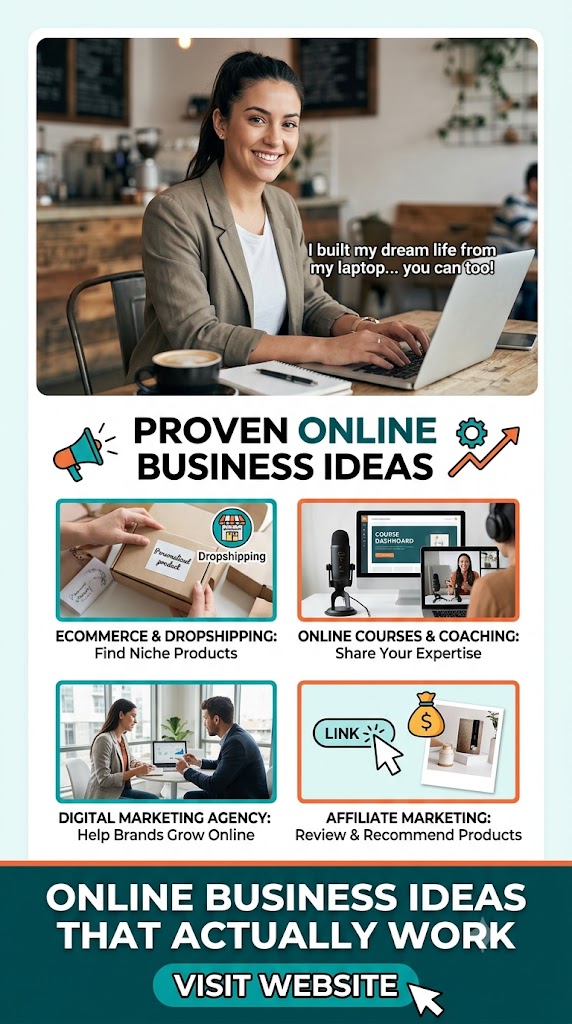
1. Print-on-Demand (POD)
What It Is: Print-on-Demand allows you to sell custom-designed products like t-shirts, mugs, and phone cases without holding any inventory. A third-party supplier prints and ships the item only after a customer places an order .
Why It Works:
- Zero Upfront Inventory: You don’t have to buy stock you might not sell, making it a low-risk entry point for beginners.
- Creative Control: You focus on the design and branding, letting the supplier handle logistics .
- Scalability: The model scales easily as the supplier handles production and shipping, regardless of order volume.
How to Make It Work: Success in POD is rarely about the product itself (which is often a commodity) and entirely about the brand and design. You must find a specific audience and create designs that resonate deeply with them. For instance, a store focused on “funny gifts for cat-loving engineers” will outperform a generic “funny t-shirts” store.
2. Dropshipping
What It Is: Similar to POD, dropshipping lets you sell products without managing inventory. However, rather than custom-designed items, you sell generic products from a supplier who ships them directly to your customer .
Why It Works:
- Wide Product Selection: You can sell almost anything without the overhead of a warehouse.
- Low Financial Risk: Similar to POD, you only buy the product after you’ve made the sale .
How to Make It Work: Dropshipping’s accessibility is both its strength and its weakness. It’s incredibly easy to start, which means high competition. To succeed, you must move beyond selling “best-sellers” from AliExpress. The key is to find and dominate a low-competition niche . For example, selling a curated collection of specialty car accessories for a specific brand like Tesla or Jeep, or portable health devices for a particular condition like a smart posture corrector, can help you stand out . Reliable suppliers and excellent customer service are non-negotiable for building a sustainable dropshipping business .
3. Niche E-commerce Store (Handmade & Unique Products)
What It Is: Forgoing the “generic product” model to sell unique, often handmade or highly curated items. This could be handcrafted jewelry on Etsy, eco-friendly home goods, or specialized kitchen tools .
Why It Works:
- Higher Margins: Unique products command higher prices because customers aren’t comparing them to identical items on a dozen other sites.
- Brand Loyalty: A unique brand with a story and a specific mission builds a loyal customer base that will return for more.
How to Make It Work: Focus on a product category where you can add value. This could be through exceptional craftsmanship, a strong brand story focused on sustainability, or creating a product that solves a very specific problem. For instance, DIY craft kits for adults (e.g., resin art, candle-making, embroidery) are a booming market because they offer an experience, not just supplies. Similarly, eco-friendly pet products like bamboo bowls or hemp toys target a growing audience of conscious consumers in a massive market .
4. Subscription Boxes
What It Is: A recurring delivery of curated products to a customer’s doorstep. This model has grown significantly, with the market reaching $41.47 billion in 2025 .
Why It Works:
- Recurring Revenue: Once you acquire a subscriber, you have a predictable income stream.
- Higher Customer Lifetime Value: Subscribers who love your curation will stay for months or years.
- Discovery and Convenience: You are providing a service by finding the best products for your niche and saving your customers time .
How to Make It Work: The market is saturated with generic beauty and snack boxes. Success lies in high-end, niche subscriptions. Think “rare single-origin tea and coffee,” “organic supplements for specific dog breeds,” or “luxury chess pieces.” Curation is everything; the box must deliver more value than the sum of its parts .
Category 2: Digital Products and Content Creation
This category is all about scaling your knowledge and creativity. Once created, digital products can be sold an infinite number of times with virtually no cost per sale .
1. Online Courses and Coaching
What It Is: Packaging your expertise into structured educational content, or offering personalized guidance via video calls. This market is worth over $203 billion in 2025, and demand is only growing .
Why It Works:
- Scalability: A well-made course can be sold to thousands of students without your direct involvement.
- Authority Building: Teaching on a topic establishes you as an expert in your field .
- High Profit Margins: No cost of goods sold, just the initial investment of your time to create the content.
How to Make It Work: Don’t create a generic course on “how to start a business.” Find a hyper-specific problem you can solve. For example, a course on “How to use AI to automate your e-commerce customer service” is more compelling than “AI for Business” . Pairing the course with group coaching adds value and allows you to command a higher price . Platforms like Teachable and Thinkific make the technical side easy .
2. Affiliate Marketing
What It Is: Earning a commission by promoting other people’s products. You don’t create or sell the product; you simply drive traffic to the seller’s site .
Why It Works:
- Zero Product Creation: You don’t need to design a product, handle customer service, or manage inventory.
- Passive Income Potential: Once you’ve created a blog post or video that ranks on Google, it can generate commissions for months or years .
How to Make It Work: Affiliate marketing fails when you build a generic “review blog.” Success demands that you build an audience in a specific niche. Whether it’s a YouTube channel dedicated to video editing software, a newsletter about sustainable investing, or a blog for remote workers, your authority in the niche makes your recommendations valuable. Trust is your currency .
3. Selling Digital Products (E-books, Templates, Stock Assets)
What It Is: Creating downloadable assets like e-books, digital planners, business templates, stock photos, or audio clips .
Why It Works:
- Pure Passive Income: You create it once and sell it indefinitely without any ongoing effort.
- No Inventory or Shipping: Perfect for a location-independent business model .
How to Make It Work: This is a crowded space. To stand out, your product must be high-quality and solve a specific pain point. A bundle of social media templates for real estate agents is more valuable than generic Instagram templates . Similarly, stock photos of a very specific and underserved niche (e.g., “overhead shots of people working in cafes”) can be more profitable than generic landscape photography.
4. Paid Newsletters and Membership Sites
What It Is: Placing exclusive content behind a paywall. This can be on platforms like Substack or Patreon, or through a custom-built membership site .
Why It Works:
- Recurring Revenue: A core pillar of a stable online business.
- Direct Connection: You have a direct relationship with your most loyal and engaged fans, independent of algorithms.
- Strong Community: Members feel a sense of belonging to an exclusive group.
How to Make It Work: The barrier to entry is low, so the content must be exceptional and unique. It should offer insights, data, or perspectives that your audience simply cannot get anywhere else. A niche-focused newsletter, like daily crypto analysis or deep-dive reports on global supply chains, is much more likely to succeed than a generic “business tips” newsletter .
5. Podcasting & Video Content (YouTube/TikTok)
What It Is: Building an audience through long-form audio (podcasts) or short-form video (YouTube Shorts, TikTok, Instagram Reels) and monetizing through ads, sponsorships, or selling your own products .
Why It Works:
- Massive Reach: These platforms have billions of users, offering huge potential for audience growth.
- Personal Connection: Audio and video allow you to build a strong personal connection with your audience, building trust and authority.
How to Make It Work: Competition for attention is fierce. Success requires consistency, high production value, and a clear content strategy. Repurposing a podcast episode into a blog post, several social media clips, and a newsletter maximizes your return on time investment . The most successful creators are now seamlessly integrating commerce into their content, a strategy demonstrated by many Malaysian MSMEs using TikTok Shop to drive significant sales and brand awareness .
Category 3: Service-Based Businesses
If you have a marketable skill, you can build a profitable online business with almost zero startup capital. Your time and expertise are your inventory.
1. Freelancing (Writing, Design, Code)
What It Is: Offering your services on a project-by-project basis. This can range from freelance writing and copywriting to graphic design, web development, video editing, and more .
Why It Works:
- Lowest Barrier to Entry: All you need is a computer and an internet connection.
- Immediate Cash Flow: You can start earning money almost immediately by finding clients on platforms like Upwork or Fiverr .
How to Make It Work: The difference between a struggling freelancer and a thriving one is often soft skills: communication, reliability, and professionalism. While platforms are a good starting point, the goal should be to build a client base that comes to you directly through your network and portfolio. Creating a professional website to showcase your work is an essential step .
2. Virtual Assistant (VA) Services
What It Is: A specialized form of freelancing where you provide administrative, technical, or creative support to businesses remotely. Tasks can include email management, scheduling, social media, and customer service .
Why It Works:
- High Demand: Busy entrepreneurs and small businesses are increasingly seeking flexible, remote support .
- Recurring Business: VAs often work with clients on a retainer, providing steady monthly income.
How to Make It Work: General VA work is becoming commoditized. The most successful VAs specialize in a specific industry or service. A “VA for Real Estate Agents” who can manage CRM software and create property listings is far more valuable and in-demand than a generalist VA. This allows you to charge a premium .
3. Social Media Manager & Marketing Consultant
What It Is: Helping businesses build their brand, engage their audience, and drive sales through social media platforms .
Why It Works:
- Businesses See the Need: Companies understand that they need a social media presence, but many lack the time or expertise to manage it effectively.
How to Make It Work: Stay ahead of the curve. Platform algorithms and trends are constantly changing. As a consultant, your knowledge of the latest features (like TikTok Shop or Instagram AI tools) is your primary asset. You can also scale this by creating a “done-for-you” social media management service . Like many aspects of online business, niching down—for example, into managing social for vegan restaurants or for cybersecurity firms—will help you stand out .
4. Consulting & Coaching
What It Is: Similar to coaching, but typically more focused on providing specific expertise and strategic advice to businesses or individuals in areas like marketing, finance, operations, or career development .
Why It Works:
- High Perceived Value: Clients are willing to pay a premium for expert advice that can save or make them significant money.
- Low Overhead: This is a purely skill-based business.
How to Make It Work: Success hinges on your credibility and network. You must have a proven track record and be able to clearly articulate the return on investment you can provide for a client. Consultants with certifications (e.g., a CPA for tax consulting) have a built-in advantage. Word-of-mouth and a strong professional presence on LinkedIn are key to growth .
Category 4: Emerging and Platform-Based Models
1. The Marketplace Model
What It Is: Building a platform that connects two sides, like buyers and sellers (e.g., Etsy, Airbnb, Upwork). You don’t own the inventory or provide the service; you just facilitate the transaction and take a cut, such as a commission on each sale .
Why It Works:
- Network Effects: The more buyers join your platform, the more attractive it is for sellers, and vice-versa. This creates a powerful “flywheel” that makes the business stronger and harder to compete with as it grows .
- No Inventory Risk: You are not responsible for products or services your users provide.
- Multiple Monetization Avenues: You can earn money through commissions, subscriptions, listing fees, or advertising .
How to Make It Work: This is one of the most challenging business models to start. It requires solving the “chicken-and-egg” problem: attracting enough sellers to attract buyers, and enough buyers to attract sellers . The key is to start in a niche and provide exceptional value to one side to get the flywheel spinning. While high-risk, it’s also high-reward, as successful marketplaces can become incredibly valuable.
2. AI-Powered Services
What It Is: Using AI tools to offer enhanced or automated services. This can range from an AI-assisted content creation agency (using AI to generate copy and images, which is then refined by humans) to a consultancy that helps other businesses integrate AI into their operations .
Why It Works:
- Efficiency: AI tools dramatically speed up workflows, allowing you to offer services faster and cheaper than competitors, or to take on more clients.
- Competitive Edge: Being an early adopter of AI technologies in a specific industry can provide a significant advantage.
How to Make It Work: The focus should be on solving a real business problem, not just using a cool tool. For example, a “data analysis and AI predictions” service that helps small e-commerce companies forecast demand and optimize pricing would be highly valuable . Combining AI with another business model, like consulting or content creation, is a powerful way to create a unique and efficient offering .
Conclusion: Your Path to a Profitable Online Business
The “best” online business idea is the one that fits your unique skills, passions, and resources. There is no magic bullet. The most common thread among the successful business models outlined here is execution.
Start by evaluating your strengths. Are you a creative person? POD, digital products, or a content-based business might be for you. Are you organized and detail-oriented? Dropshipping or becoming a VA could be a great fit. Do you have deep expertise in a specific field? Coaching, consulting, or creating an online course are powerful ways to monetize that knowledge .
Here are the key takeaways to guide you:
- Start Small, Think Big: Begin by testing your idea on a small scale. Use platforms to validate demand before building a custom website .
- Dominate a Niche: Avoid the temptation to be a generalist. The riches are in the niches. Find a specific problem or audience you can serve better than anyone else .
- Focus on Recurring Revenue: Whenever possible, build a model that generates recurring income—be it a subscription box, a membership site, or a retainer-based consulting service .
- Set Up Proper Finances: Open a separate business bank account and track your finances from day one. This is crucial for long-term success and managing your tax obligations .
- Leverage Technology: Use AI tools to automate repetitive tasks, conduct market research, or generate content, allowing you to focus on high-level strategy and growth .
The digital economy is more open than ever. With a clear strategy, a focus on value, and consistent effort, anyone can build a successful online business. The key is not just to have an idea, but to execute it relentlessly.