Online Entrepreneurship for Beginners
Your Complete Guide to Starting a Digital Business in 2026
The dream of working for yourself, setting your own schedule, and building a business from anywhere in the world has never been more achievable. Advances in technology have made entrepreneurship accessible to almost anyone with a computer and an internet connection . Whether you’re looking to generate a side income or replace your full-time job, this comprehensive guide will walk you through everything you need to know about starting your online business journey.
What is Online Entrepreneurship?
An online entrepreneur is a business owner who operates on the Internet, utilizing various business models to provide products or services . Unlike traditional brick-and-mortar businesses, online entrepreneurs can reach a global audience with lower startup costs and greater flexibility . Examples include bloggers, content creators, e-commerce site owners, online consultants, and service providers .
Online businesses typically fall into four main categories :
- Retail: Selling physical or digital products through an online shop or marketplace
- Services: Providing remote services such as training, teaching, consulting, or creating
- Apps and SaaS: Building and selling software applications or subscription-based tools
- Content and Media: Creating podcasts, videos, blogs, or books that generate income through sales, subscriptions, or advertising
Why Start an Online Business?
Flexibility and Freedom
One of the greatest benefits of online entrepreneurship is the freedom to work from anywhere at any time. Whether at home, in a coffee shop, or while traveling, you can operate your business without locational constraints . This flexibility allows you to balance work and personal life more effectively.
Low Startup Costs
Starting an online business costs significantly less than opening a physical store. You save on rent, utilities, and expensive inventory. With just a computer and internet connection, many online businesses can be launched with minimal investment . According to startup statistics, only 0.05% of startups raise venture capital—most successful businesses launch with minimal investment, relying on skills and time rather than money .
Global Reach
An online store isn’t confined by geographical boundaries. Customers from around the world can find you through the internet, providing access to a far broader market than any local business could achieve .
Scalability
Online businesses are inherently scalable. As your customer base grows, you can expand operations without the limitations faced by physical businesses. Adding new products, entering new markets, or increasing marketing efforts can be done efficiently with online platforms .
Choosing the Right Business Idea
Low-Investment Digital Business Ideas
Starting a digital business no longer requires huge financial resources. Thanks to online platforms, AI tools, and social media, many entrepreneurs can launch profitable activities with little upfront investment . Here are some accessible ideas:
Print-on-Demand: Sell customized products like T-shirts, mugs, or phone cases without managing inventory. Products are only printed when customers place orders, significantly reducing financial risk .
Freelance Content Creation: Businesses constantly need digital content for their websites, blogs, newsletters, and social media. If you have skills in writing, graphic design, or video editing, this can become a profitable online business with minimal investment beyond a computer .
Affiliate Marketing: Promote products or services online in exchange for commissions on sales generated through your links. Build blogs, YouTube channels, or social media accounts to attract audiences and recommend relevant products. This model can generate passive income over time with relatively low startup costs .
Online Coaching or Consulting: Professionals with expertise in business, fitness, marketing, or other fields can monetize their knowledge through online coaching sessions using video conferencing platforms .
Dropshipping: Sell products without holding inventory. When a customer orders from your store, you pass the order to a supplier who ships directly to them. This model suits people with strong marketing skills and requires no inventory costs or warehouse space .
Skill-Based Online Business Opportunities
Many successful digital businesses are built around specific professional skills :
Web Development and Site Building: Every company needs a professional online presence. Entrepreneurs with coding, UX design, or no-code skills can create websites for startups and small businesses .
SEO and Digital Marketing Consulting: Companies rely on search engines and social media to attract customers. Entrepreneurs with expertise in SEO, paid advertising, or content marketing can offer consulting services to help brands improve their digital visibility .
Social Media Management: Help businesses grow their online presence by managing their social accounts and engaging with followers .
Virtual Assistant Services: Provide administrative, scheduling, or customer service support to businesses remotely. This requires limited investment and can quickly evolve into a specialized business offering premium support services .
Online Tutoring and Teaching: Digital learning platforms continue to grow worldwide. Entrepreneurs with expertise in languages, business, or academic subjects can create online tutoring businesses through video courses or coaching sessions .
Digital Product Businesses
Selling digital products has become one of the most scalable online business models. Unlike physical products, digital content can be created once and sold repeatedly without inventory or shipping costs :
Online Courses: Create courses on topics like marketing, design, coding, or personal development and sell them through platforms like Udemy, Teachable, or Skillshare .
E-books and Digital Guides: Monetize your expertise by creating practical guides, industry reports, or business templates for niche audiences .
Downloadable Templates and Toolkits: Sell social media templates, business dashboards, financial spreadsheets, or productivity planners online .
Paid Newsletters: Share exclusive insights or specialized advice through premium newsletters using platforms like Substack and Beehiiv .
How to Start Your Online Business: A Step-by-Step Guide
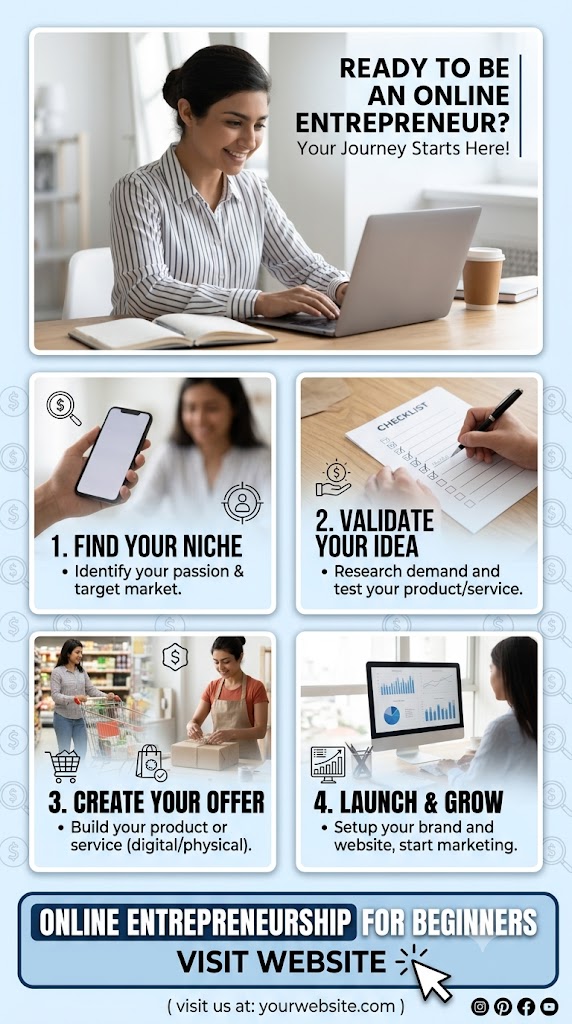
Step 1: Identify Your Niche and Validate Your Idea
Every business starts with an idea. The best ideas solve problems, meet genuine needs, or allow entrepreneurs to turn their passion into a successful venture . When choosing a niche, consider what areas align with your knowledge base, skills, and interests .
To validate your business idea, ensure there’s actual demand for your products or services :
- Conduct market research: Dive deep into online market research to gain insights into potential customers, competitors, industry trends, and marketing strategies .
- Analyze competitors: Explore your competitors’ strengths, weaknesses, and strategies to identify gaps in the market .
- Use keyword research: Find out if people are actively searching for the product or service you intend to sell .
- Create a Unique Value Proposition: Define what makes your brand stand out from competitors .
Essential Question: Will your business answer a genuine customer need? Do you have a point of difference that sets you apart?
Step 2: Choose Your Business Model
Your business model is your company’s blueprint for generating revenue. It defines your target audience, nature of your business, and revenue goals . Common business models include:
Business to Consumer (B2C): Selling products and services directly to end users. This is the most common model for e-commerce businesses .
Business to Business (B2B): Selling products or services to other businesses .
Consumer to Consumer (C2C): Facilitating peer-to-peer transactions between consumers through online marketplaces like Etsy or eBay .
Other models to consider:
- Subscription: Customers pay a recurring fee for curated boxes, software, or ongoing access. This provides predictable revenue once a customer base is built .
- Freemium: Offer free content or services with the option to upgrade to paid premium services .
- Advertising: Other businesses pay you to advertise on your website, app, or social media channels .
Step 3: Create a Business Plan
A business plan documents your goals, strategies, and financial projections . It serves as a roadmap for getting your business off the ground and on the right path. Key components include :
- Executive Summary: Your company’s mission, vision, core values, and strategic goals
- Company Description: Business history, location, and legal structure
- Products and Services: Features, benefits, and unique selling points
- Market Analysis: Industry overview, target market, and competitive analysis
- Marketing Plan: Strategies to attract and retain customers
- Financial Plan: Revenue projections, funding requirements, and break-even analysis
- Operations: Guidelines and processes for running your business smoothly
Pro Tip: A business plan is a living document that should be updated as your business evolves .
Step 4: Choose Your Business Name and Legal Structure
Selecting the right business name is a strategic decision that impacts brand recognition and marketing efforts. Your name should be :
- Easy to spell, pronounce, and remember
- Reflect your brand personality, values, and offerings
- Available as a domain name and on social media platforms
- Not already trademarked or in use
Register Your Domain Name: A memorable domain name is one of the most essential parts of your brand. Keep it simple, brief (aim for 5-14 characters), and typable. Avoid repeated letters, numbers, and deliberate misspellings .
Legal Structure: Choose a legal structure for your business—sole proprietorship, LLC, partnership, or corporation. This choice affects your management setup, legal responsibilities, and financial obligations .
Step 5: Build Your Website or E-commerce Store
Choosing the right web hosting and platform is essential as your website or online store needs to work seamlessly for customers .
E-commerce Platforms:
Shopify: Super-popular for user-friendliness, massive selection of tools, and ability to customize every aspect of your online store. Lets you sell products through multiple channels and works with over 100 different payment gateways worldwide. If you want to build and scale your store over time, Shopify is a specialized, all-in-one e-commerce platform .
WooCommerce: A plugin for WordPress that’s open-source, free-to-use, and deeply customizable. Has a steeper learning curve than Shopify but offers a robust platform with a huge library of themes, apps, and plugins .
Website Builders: Platforms like Wix and Squarespace provide tools to build your own website affordably and easily .
Key Website Features You’ll Need :
- Product/Service Catalog: Detailed product names, descriptions, pricing, and photos
- Payment Gateway: Process customer payments through services like Stripe, Square, or PayPal
- Shipping and Fulfillment: For physical products, integrate shipping carriers and consider offering free shipping to entice customers
- Mobile-Friendly Design: Ensure your site works seamlessly on smartphones and tablets
Step 6: Build Your Online Brand
Your brand goes beyond what your business does—it communicates “who” your business is and what you stand for .
Brand Identity Elements:
- Mission and USP: Clear statement of your purpose and what makes you unique
- Visual Identity: Logo, brand colors, and fonts that represent your business
- Tone of Voice: How you sound online, both in written and spoken content
Develop Your Offerings: Create products or services your target audience can’t refuse. For physical products, decide whether to source from manufacturers or wholesalers. For digital products, figure out how to create them effectively .
Step 7: Create a Marketing Plan
A marketing plan is crucial to eCommerce success. Approximately 80% of successful content marketers document their marketing plans .
Essential Marketing Components :
- Market Research and Target Market Analysis
- Competitor Analysis
- Unique Selling Proposition
- Marketing Strategies and Tactics
- Budget Allocation
- Key Performance Indicators (KPIs)
Effective Marketing Channels:
Social Media is Essential: Connect with customers on social platforms. Social commerce is on the rise, with consumers buying directly from social platforms. Customers often buy based on reviews and feedback, so asking for reviews is one of the most important and affordable things you can do .
Content Marketing: Up-to-date content optimized for SEO helps customers find you through search engines. Content includes blogs, product pages, videos, and audio .
Paid Advertising: Use pay-per-click services like Google Ads to appear higher in search results .
Email Marketing: Send regular emails with relevant news and offers .
Search Engine Optimization (SEO): SEO strategies help your content appear higher in search engines, increasing website visitors, brand awareness, and sales. Components include using popular keywords, updating content regularly, and creating optimized metadata .
Step 8: Test, Launch, and Promote
Before launching, thoroughly test your site :
- Check every link, button, and fillable form
- Read and re-read all content and product descriptions
- Ensure everything is clean and free of errors
- Nothing turns customers off faster than a frustrating shopping experience
Once you’ve launched:
- Engage with your social media followers consistently
- Post frequently and interact with other brands
- Use a mix of content types: blogs, videos, and emails
- Monitor analytics to understand what works and adjust accordingly
Essential Skills for Online Entrepreneurs
Digital Marketing
Online entrepreneurship depends on a solid personal brand, which you can promote through digital marketing. Identify what differentiates your business from competitors and focus on those elements in your marketing efforts .
Search Engine Optimization (SEO)
SEO increases the number of visitors to your website, leading to more brand awareness and sales .
Copywriting and Content Creation
Because you may perform many business functions with few team members, being skilled in copywriting and content creation helps save money and enhance efficiency. Regular updates improve search rankings and increase customer engagement .
Time Management
Working on a tight budget and with limited staff means online entrepreneurs must manage their time well. This involves organization, prioritization, and delegation of tasks .
Technical Skills
Basic knowledge of website development, social media management, and e-commerce platforms is valuable for most online businesses .
Learning Resources for Beginners
Several free online courses can help you build the entrepreneurial mindset and practical skills needed to succeed :
Entrepreneurship Essentials – A Beginner’s Road to Success (Udemy): Provides a practical overview of entrepreneurship fundamentals .
Entrepreneurship in Emerging Economies (edX/Harvard University): Explores how entrepreneurship can address social challenges in emerging markets .
Discovering Entrepreneurship: A free, self-paced beginner course covering entrepreneurship fundamentals, opportunity identification, and entrepreneurial storytelling .
Many universities also offer in-person and online courses for entrepreneurs, and online certifications can add validity to your proposal for potential investors .
Managing Business Finances
Set up proper business finances from day one by opening a business bank account and using accounting software to track cash flow. Many small businesses fail due to poor cash flow management .
Important Financial Steps:
- Register with tax authorities and determine your tax obligations
- Understand your business structure’s legal responsibilities
- Track income and expenses diligently
- Consider getting professional accounting advice
Common Pitfalls to Avoid
Starting Without Research: Don’t launch without validating your idea. Ensure there’s actual demand for what you’re selling .
Ignoring Legal Requirements: Even online businesses must comply with state and local laws. Choose a legal structure, get necessary licenses, and understand tax obligations .
Quitting Your Job Too Soon: Start your online business as a side project to test your idea and build revenue. Most businesses take 3-6 months to generate consistent income and 12+ months to replace full-time earnings .
Neglecting Marketing: A great product isn’t enough—you need a solid marketing plan to reach customers.
Poor Time Management: Without proper organization and prioritization, you’ll struggle to balance all aspects of running a business.
The Realities of Online Entrepreneurship
Entrepreneurship can be deeply rewarding, but not at the cost of your own self-care and well-being. Sam Vander Wielen, author of When I Start My Business I’ll Be Happy, teaches that even when life doesn’t go perfectly smoothly as a business owner, you can still build and grow your business. The most important lesson is that your business won’t fix your life—but you can still find fulfillment in the journey .
The average entrepreneur salary in the U.S. is approximately $46,453 per year, with an additional $6,500 in profit sharing on average . However, income potential varies widely based on business model, niche, and execution.
Conclusion
Online entrepreneurship offers unprecedented opportunities for beginners to start businesses with minimal investment and global reach. By following the steps outlined in this guide—identifying your niche, choosing the right business model, creating a solid plan, building your online presence, and implementing effective marketing—you can turn your entrepreneurial dreams into reality.
Remember that successful online entrepreneurs possess key skills including digital marketing, SEO, copywriting, and time management . These skills can be developed through available resources, courses, and hands-on experience .
The best time to start your online business was yesterday. The second-best time is today . Start small, test your ideas, learn from your experiences, and gradually build your business. With persistence, the right strategy, and a willingness to learn, you can create a profitable and fulfilling online business.