Comprehensive Programs, Strategies, and Earning Guides for the Modern Era
The landscape of work and wealth creation has undergone a seismic shift. We are no longer tethered to the traditional 9-to-5 desk job as the sole means of financial survival. In the modern era, the “Digital Gold Rush” is in full swing, offering unprecedented opportunities for those who know where to look, which skills to cultivate, and which strategies to deploy.
This guide is a masterclass in modern earning. Whether you are looking to build a passive income stream, launch a high-growth startup, or master high-ticket freelancing, this 3000-word comprehensive guide provides the roadmap you need to navigate the complex world of online and offline earning.
Part 1: High-Income Skills – The Foundation of Modern Wealth
Before looking for “programs,” you must look at your “portfolio” of skills. High-income skills are those that the market values at $100 per hour or more. These are not typically taught in traditional schools; they are learned through specialized training and obsessive practice.
1. Copywriting: The Art of Selling with Words
Copywriting is perhaps the most undervalued yet most powerful skill in the digital economy. Every website, email, advertisement, and product description requires a copywriter.
- The Strategy: Focus on “Direct Response” copywriting. This isn’t just writing; it’s psychology. You learn to trigger emotions that lead to a sale.
- Top Programs: AWAI (American Writers & Artists Institute), Copybloggers’s Academy, and Dan Lok’s High-Ticket Copywriter.
- Earning Potential: Beginners can earn $2,000/month, while elite copywriters charge $10,000+ per project or take a percentage of the sales they generate.
2. Software Development and AI Integration
Coding remains a titan in the earning world, but the game has changed. It’s no longer just about HTML/CSS.
- The Strategy: Focus on Python for AI and Machine Learning, or Solidity for Blockchain development. Learning to integrate AI APIs (like OpenAI) into existing business workflows is currently a goldmine.
- Top Programs: FreeCodeCamp (Best for basics), Coursera’s “AI for Everyone,” and Lambda School (now BloomTech).
- Earning Potential: Remote developers often start at $70,000/year, with senior roles exceeding $200,000.
3. Digital Marketing and Media Buying
Businesses are desperate for customers. If you can prove that for every $1 they give you, you can return $3 in sales through Facebook or Google Ads, you will never be broke.
- The Strategy: Master “Performance Marketing.” Learn how to analyze data, run A/B tests, and optimize conversion funnels.
- Top Programs: Google Ads Certification, Facebook Blueprint, and CXL Institute.
- Earning Potential: Freelance media buyers often charge a base fee plus 10-20% of the total ad spend.
Part 2: Passive Income Programs and Digital Assets
The goal of true wealth is to decouple your time from your money. Passive income isn’t “free money”; it’s front-loaded work that pays dividends for years.
1. Content Ecosystems (YouTube and Podcasting)
YouTube is the second largest search engine in the world. A successful channel is a 24/7 digital salesperson.
- The Strategy: Niche down. Don’t start a “vlog”; start a channel about “Solar Panel Installation for RVs” or “AI Tools for Accountants.” Specificity attracts high-paying advertisers.
- Monetization: AdSense is just the tip. The real money is in sponsorships, affiliate links, and selling your own digital products.
- The “Faceless” Strategy: You don’t even need to be on camera. Use stock footage, AI voiceovers (like ElevenLabs), and tight editing to build “Cash Cow” channels.
2. Affiliate Marketing: The “Middleman” Model
Affiliate marketing involves promoting other people’s products and earning a commission on every sale.
- High-Ticket vs. Low-Ticket: Selling a $20 book on Amazon earns you pennies. Promoting a $2,000 software subscription (SaaS) can earn you $600 per referral.
- The Strategy: Build a “Bridge Page.” Don’t send traffic directly to the offer. Send them to an educational page where you explain the benefits, capture their email, and then redirect them to the product.
- Top Programs: Authority Hacker (Best for SEO-based affiliate marketing) and Legendary Marketer.
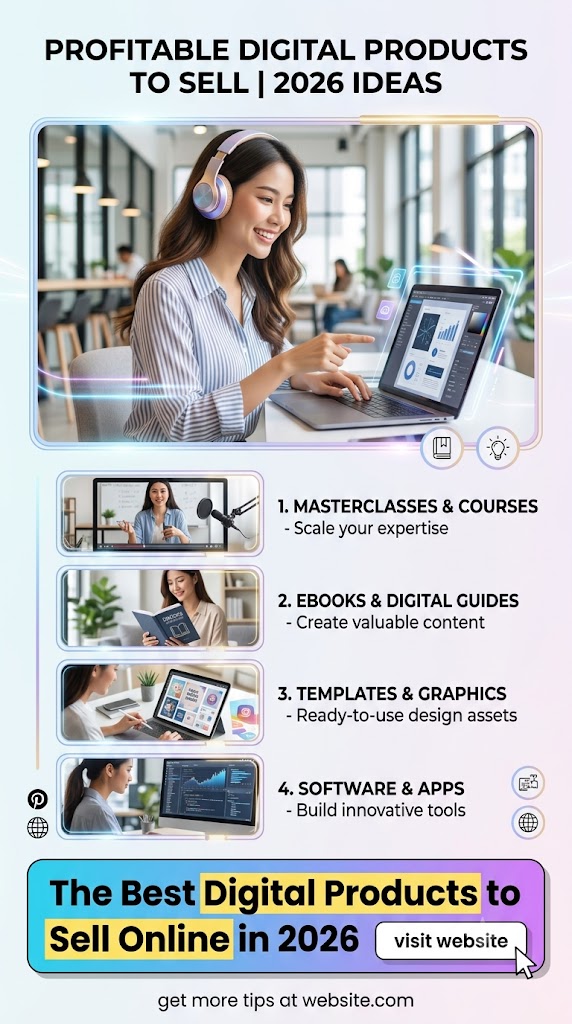
3. Digital Products and Online Courses
If you have a skill, you can package it. The cost of reproducing a digital file is zero.
- The Strategy: Use the “Beta Launch” method. Sell the idea of the course before you build it. If people buy, build it live with them. This ensures market-message fit.
- Platforms: Teachable, Kajabi, and Gumroad for simple digital downloads.
Part 3: E-commerce and Logistics-Based Earning
Selling physical goods has been revolutionized by the internet. You no longer need a warehouse or a storefront.
1. Amazon FBA (Fulfilled by Amazon)
You find a product, brand it (Private Label), and ship it to Amazon’s warehouses. They handle the shipping, returns, and customer service.
- The Strategy: Look for “High Demand, Low Competition” niches using tools like Jungle Scout or Helium 10. Focus on improving an existing product rather than inventing something brand new.
- The Risk: It requires capital (at least $3,000–$5,000) for initial inventory.
2. Dropshipping 2.0
Traditional dropshipping from China to the US is dying due to slow shipping times. The new strategy is “High-Ticket Local Dropshipping.”
- The Strategy: Partner with domestic suppliers (e.g., a luxury bathtub manufacturer in the US) and sell their $3,000 products. You handle the website and marketing; they handle the shipping.
- Tools: Shopify is the gold standard for your storefront.
3. Print on Demand (POD)
POD allows you to sell custom designs on t-shirts, mugs, and posters without holding inventory.
- The Strategy: Design for “Passionate Micro-Niches.” Think “Left-handed underwater welders who love Labradors.” The more specific, the higher the conversion.
- Platforms: Printful, Printify, and Redbubble.
Part 4: The Gig Economy and Freelance Arbitrage
If you need money now, the gig economy is the fastest route. However, to make it a “high earning” path, you must apply specific strategies.
1. Upwork and Fiverr Optimization
These platforms are crowded, but 90% of the competition is low quality.
- The Strategy: The “Specialize to Generalize” approach. Start by being the “Best Shopify Landing Page Expert for Skincare Brands.” Once you have 20 five-star reviews, you can expand to broader web design.
- Earning Guide: Never compete on price. Compete on “Value and Speed.” Offer a 24-hour turnaround for a premium price.
2. Service Arbitrage (Drop Servicing)
This is the business of selling a service and then hiring someone else to do the work.
- The Strategy: You build a high-end agency website offering “Premium Video Editing for YouTubers.” You sell a package for $2,000/month. You then hire a skilled editor on a platform like OnlineJobs.ph for $800/month. You manage the client and the quality control, pocketing the $1,200 difference.
Part 5: Investment Strategies for Long-Term Wealth
Earning money is only half the battle; keeping and multiplying it is the second half.
1. The Dividend Growth Strategy
Instead of gambling on the next “meme stock,” focus on companies that pay you to own them.
- The Strategy: Reinvest your dividends. Through the power of compounding, a modest portfolio can grow into a massive income generator over 10-15 years.
- Tools: Vanguard, Fidelity, or Robinhood (for beginners).
2. Real Estate: The “House Hacking” Method
Real estate remains the most consistent wealth builder in history.
- The Strategy: If you are young, buy a multi-unit property (like a duplex). Live in one unit and rent out the others. The rent from the other units should cover your mortgage, allowing you to live for free while building equity.
3. Index Fund Investing (The Boglehead Way)
For those who don’t want to spend hours analyzing charts.
- The Strategy: Put a set percentage of your income every month into an S&P 500 index fund (like VOO or SPY). Historically, the market returns about 7-10% annually. It’s boring, but it’s statistically the most successful way to build wealth for 99% of people.
Part 6: Step-by-Step Earning Guides
To make this actionable, here are three “Quick-Start” guides for the most accessible high-earning paths today.
Guide 1: How to Start a $5,000/Month Freelance Agency
- Select a Service: Choose something businesses need (Ghostwriting for CEOs on LinkedIn, Short-form video editing for TikTok/Reels).
- Build a Portfolio: Do 3 projects for free or at a deep discount in exchange for a video testimonial.
- Outreach: Use LinkedIn to find your ideal clients. Send “Loom” videos—record your screen showing them exactly how you can improve their current presence.
- Pricing: Start at $500 per client. As you get results, raise your price to $1,500. You only need 4 clients to hit your goal.
Guide 2: Building a Niche Authority Site (Passive Income)
- Niche Selection: Use a tool like Ahrefs to find a topic with “High Volume” and “Low Keyword Difficulty.” (e.g., “Best camping gear for cold weather”).
- Content Creation: Write 50 high-quality articles answering specific questions people ask on Google.
- Monetization: Once you hit 10,000 visitors a month, apply for an ad network like Mediavine or Raptive. Add affiliate links to the products you review.
- Flip It: Websites usually sell for 35x to 45x their monthly profit. A site making $1,000/month can be sold for $40,000.
Guide 3: Mastering High-Ticket Affiliate Marketing
- Find a Problematic Software: Look for software that is essential but hard to use (like Salesforce or complex CRM systems).
- Create Tutorials: Make YouTube videos or blog posts titled “How to set up [Software] for [Specific Industry].”
- The Link: Include your affiliate link in the description. Because these are subscription-based, you will earn a commission every single month the user stays subscribed.
Part 7: The “Force Multipliers” – Strategies for Exponential Growth
If you want to move from “earning a living” to “building a fortune,” you must apply these three psychological and strategic frameworks.
1. The 80/20 Rule (Pareto Principle)
In every earning endeavor, 80% of your results will come from 20% of your activities.
- The Strategy: Audit your time weekly. Identify the tasks that actually move the needle (e.g., sales calls, creating content) versus the “busy work” (e.g., checking email, tweaking your logo). Delegate or delete the 80%.
2. The Concept of “Leverage”
Naval Ravikant, a famous entrepreneur and investor, speaks about four types of leverage:
- Labor: Hiring people (The hardest form of leverage to manage).
- Capital: Investing money (Scales very well).
- Code: Writing software that works while you sleep.
- Media: Creating content (Books, videos, podcasts) that works while you sleep.
- Modern Wealth Secret: Code and Media are the most accessible forms of leverage for the average person today.
3. Building a Personal Brand
In an age of AI-generated content, “Human Connection” is a premium.
- The Strategy: Don’t just sell a product; sell a perspective. Share your journey, your failures, and your wins on X (Twitter) or LinkedIn. A strong personal brand is an “insurance policy” against economic shifts. If your business fails, your audience will follow you to the next one.
Part 8: Navigating the “Trap” of Information Overload
The biggest reason people fail to earn online is not a lack of opportunity; it’s “Shiny Object Syndrome.”
The Strategy for Focus:
- Pick ONE Model: Don’t try to do Dropshipping, YouTube, and Crypto at the same time. Pick one and commit to it for 6 months without looking at anything else.
- The “Income Floor” vs. “Income Ceiling”: First, build an income floor (freelancing or a job) to cover your bills. Then, use your spare time to build the “income ceiling” (assets and investments).
- Find a Mentor or a Community: Join a group of people doing the same thing. The collective knowledge will save you months of trial and error.
Part 9: Essential Tools for the Modern Earner
To execute these strategies, you need the right digital stack.
- Productivity: Notion (for organizing your life and business), Trello (for project management).
- Financial: Wise (for low-fee international payments), Quickbooks (for tax management).
- Marketing: Canva (for design), Beehiiv (for newsletters), Buffer (for social media scheduling).
- AI Assistants: ChatGPT Plus (for brainstorming and coding), Midjourney (for high-end visuals), Perplexity (for rapid research).
Part 10: The Ethical Side of Earning
In the quest for 3000-word guides and “best programs,” the concept of ethics is often skipped. However, long-term wealth is built on Trust.
- The Value Exchange: Money is simply a representation of value. To earn more money, you must provide more value to more people.
- Avoid “Get Rich Quick”: If a program promises $10,000 next week with no work, it’s a scam. Real programs teach skills; scams sell dreams.
- Sustainability: Build a business you are proud of. Reputation is the only asset that is hard to build but easy to lose.
Conclusion: Your Roadmap to Financial Sovereignty
The world of earning has become a decentralized, skill-based meritocracy. The barrier to entry is lower than it has ever been, but the barrier to success remains high—guarded by the requirements of discipline, constant learning, and strategic execution.
To succeed, you must stop being a Consumer and start being a Producer. Stop scrolling and start writing. Stop watching and start filming. Stop dreaming and start deploying.
The “Best Program” is the one you actually finish. The “Best Strategy” is the one you consistently execute. And the “Best Earning Guide” is the one you are currently reading—provided you take the first step today.
Summary Checklist for Success:
- Identify your High-Income Skill.
- Choose one Leverage model (Code, Media, or Capital).
- Set up your “Income Floor” via freelancing or a gig.
- Dedicate 2 hours a day to building your “Income Ceiling” asset.
- Reinvest 20% of your earnings into Index Funds or Dividend stocks.
- Stay the course for at least 12 months.
The digital economy is waiting. The tools are in your hands. The map is in this guide. The only missing variable is your action.
Go build something.