
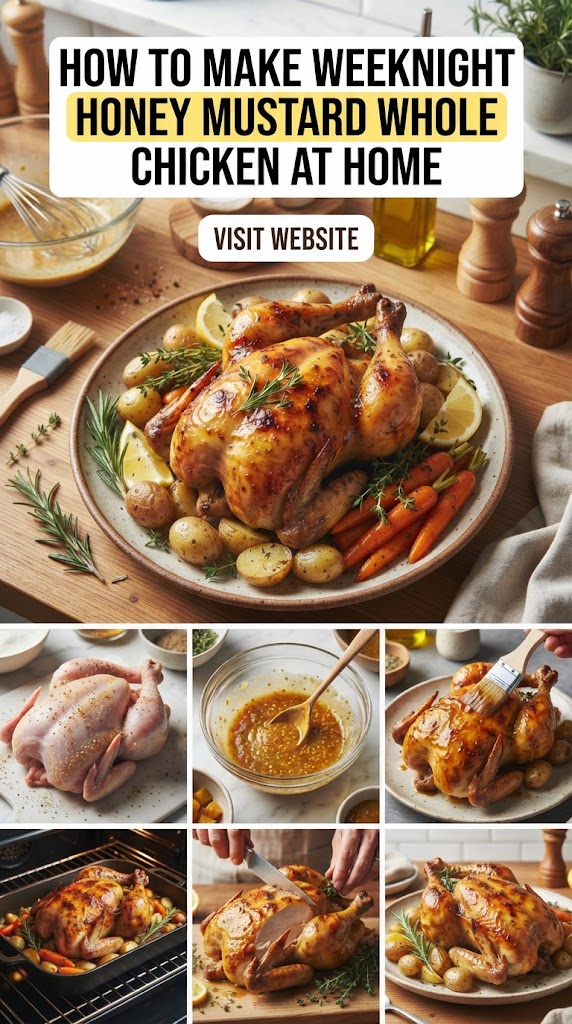
How to Make weeknight honey mustard whole chicken at Home
There is something inherently primal and deeply satisfying about a whole roasted chicken sitting in the center of the dinner table. It evokes memories of Sunday afternoons, family gatherings, and the comforting aroma of a home-filled kitchen. However, the misconception that a whole roast chicken is reserved strictly for weekends or special occasions is a culinary myth we are about to debunk.
With the right technique and a flavor profile as robust as honey mustard, you can transform a standard weeknight into a five-star dining experience. This guide will walk you through every nuance of creating the perfect Weeknight Honey Mustard Whole Chicken—from selecting the bird to achieving that elusive, crackling golden skin.
Why Honey Mustard and Whole Chicken are a Match Made in Heaven
Before we dive into the “how,” let’s talk about the “why.” Culinary balance is achieved through four pillars: salt, fat, acid, and heat. A honey mustard glaze hits three of these pillars with surgical precision.
- The Sweetness of Honey: Honey provides the sugar necessary for the Maillard reaction—the chemical process that gives browned food its distinctive flavor. It also acts as a thickener, allowing the glaze to cling to the chicken’s skin.
- The Tang of Mustard: Mustard brings acidity and a sharp, pungent “bite.” This cuts through the natural fat of the chicken, ensuring the dish feels light rather than greasy.
- The Depth of Spice: Mustard seeds contain complex oils that release heat when crushed. When combined with garlic and herbs, it creates a flavor profile that is both sophisticated and accessible.
When roasted together, the honey caramelizes into a sticky lacquer while the mustard infuses the meat with a zesty undertone. It is a foolproof combination that appeals to both children and adults.
Selecting Your Chicken: The Foundation of Flavor
Not all chickens are created equal. Since the bird is the star of the show, choosing a high-quality chicken is the first step toward success.
1. Size Matters
For a weeknight meal, aim for a chicken between 3.5 to 4.5 pounds. Anything larger takes too long to cook, potentially pushing your dinner past the “quick weeknight” window. A smaller bird also tends to stay juicier.
2. Air-Chilled vs. Water-Chilled
If your budget allows, always opt for air-chilled chicken. Most commercial chickens are cooled in a communal water bath, which causes the meat to absorb excess water. This water leaches out during roasting, leading to soggy skin and diluted flavor. Air-chilled chickens are cooled with cold air, preserving the natural juices and ensuring a crispier skin.
3. Organic and Free-Range
While not strictly necessary for a delicious meal, organic and free-range chickens often have a deeper, “chicken-y” flavor because the birds are more active and eat a more varied diet.
Essential Kitchen Tools for the Perfect Roast
You don’t need a professional kitchen to make a great roast chicken, but a few specific tools will make the process much easier:
- A Heavy-Duty Roasting Pan or Cast-Iron Skillet: A 12-inch cast-iron skillet is the secret weapon for weeknight roasting. It retains heat beautifully and helps crisp the bottom of the bird.
- A Meat Thermometer: This is non-negotiable. Cooking by time is a guessing game; cooking by temperature is a science.
- Kitchen Twine: For trussing the bird (don’t worry, we’ll explain how).
- A Small Whisk: To ensure your glaze is perfectly emulsified.
- Paper Towels: The most underrated tool for crispy skin.
The Ingredient List: Pantry Staples Turned Gourmet
To make this Honey Mustard Whole Chicken, you will need ingredients that are likely already in your pantry.
For the Chicken:
- 1 whole chicken (approx. 4 lbs)
- 2 tablespoons extra-virgin olive oil
- 1 tablespoon Kosher salt (do not use fine table salt; the texture of Kosher salt is better for drawing out moisture)
- 1 teaspoon freshly cracked black pepper
- 1 lemon, halved
- 1 head of garlic, sliced crosswise
- A bundle of fresh herbs (thyme, rosemary, or sage)
For the Honey Mustard Glaze:
- 1/4 cup Dijon mustard (smooth or grainy, depending on your texture preference)
- 3 tablespoons high-quality honey (clover or wildflower work best)
- 1 tablespoon apple cider vinegar (for extra tang)
- 1 teaspoon smoked paprika (for a hint of smokiness)
- 1/2 teaspoon garlic powder
- A pinch of cayenne pepper (optional, for a subtle kick)
Step-by-Step Instructions: The Masterclass
Step 1: Pre-Roasting Preparation
Take the chicken out of the refrigerator at least 30 to 45 minutes before cooking. Roasting a cold bird leads to uneven cooking—the outside will overcook before the inside reaches a safe temperature.
The Golden Rule of Crispy Skin: Remove the chicken from its packaging and pat it extremely dry with paper towels. Every bit of moisture on the skin will turn into steam in the oven, preventing the skin from becoming crisp. Spend a good three minutes doing this.
Step 2: Seasoning and Aromatics
Preheat your oven to 425°F (218°C). High heat is essential for a fast roast and golden skin.
Generously rub the entire chicken (including the cavity) with olive oil, salt, and pepper. Don’t be afraid of the salt; much of it will run off during the cooking process.
Stuff the cavity with the lemon halves, the garlic head, and the herb bundle. These aromatics won’t necessarily flavor the meat deeply, but they perfume the juices and create an incredible base for a pan sauce later.
Step 3: Trussing for Success
You don’t need to be a butcher to truss a chicken. Simply tuck the wingtips behind the back so they don’t burn, and tie the legs together with a bit of kitchen twine. This keeps the bird compact, ensuring the breasts don’t dry out before the legs are done.
Step 4: The First Roast
Place the chicken in your skillet or roasting pan. Do not apply the glaze yet. Honey contains high amounts of sugar, which will burn if left in a 425°F oven for an hour.
Slide the chicken into the oven and roast for 30 minutes.
Step 5: Preparing and Applying the Glaze
While the chicken is having its first roast, whisk together your Dijon mustard, honey, apple cider vinegar, smoked paprika, garlic powder, and cayenne.
After 30 minutes, remove the chicken from the oven. Using a pastry brush or a spoon, coat the entire bird generously with the honey mustard mixture.
Step 6: The Final Stretch
Return the chicken to the oven. Lower the temperature to 375°F (190°C). Roast for another 20–30 minutes.
Every 10 minutes, you can quickly brush on more glaze if you have any left. This creates layers of flavor.
Step 7: Testing for Doneness
The chicken is done when an instant-read thermometer inserted into the thickest part of the thigh (avoiding the bone) registers 165°F (74°C). The juices should run clear.
Step 8: The Most Important Step – Resting
Once the chicken reaches temperature, remove it from the oven and transfer it to a cutting board. Let it rest for at least 15–20 minutes.
If you cut into it immediately, the juices will flood out onto the board, leaving you with dry meat. Resting allows the fibers to relax and reabsorb those precious juices.
The Science of the “Skin Game”
Why does this recipe yield such incredible skin? It’s the combination of the initial high-heat blast and the sugar-vinegar balance of the glaze. The initial 425°F roast renders the subcutaneous fat. If you apply the honey mustard too early, the fat can’t escape through the sugary barrier, resulting in “rubber” skin. By waiting 30 minutes, you ensure the fat has rendered and the skin is already starting to crisp before the “lacquer” is applied.
What to Serve with Honey Mustard Chicken
This dish is versatile, but certain sides complement the sweet and tangy profile better than others.
1. The “One-Pan” Potato Method
For the ultimate weeknight hack, toss halved baby potatoes or fingerlings in salt and oil and place them in the skillet around the chicken before it goes in the oven. The potatoes will roast in the chicken fat (schmaltz) and the dripping honey mustard glaze. They will be the best potatoes you’ve ever eaten.
2. Roasted Root Vegetables
Carrots, parsnips, and red onions roasted alongside the bird provide a natural sweetness that mirrors the honey in the glaze.
3. A Crisp Green Salad
To balance the richness, a simple arugula or kale salad with a light lemon vinaigrette is perfection. The bitterness of the greens cuts through the honeyed glaze.
4. Grains
Quinoa, farro, or a simple garlic butter rice can soak up the pan juices, ensuring not a drop of flavor is wasted.
Pro Tips for the Home Cook
- The “Under the Skin” Trick: If you want even more flavor, gently lift the skin over the breast meat with your fingers and rub some of the mustard (minus the honey) and some softened butter directly onto the meat before roasting.
- Check the Color: If the honey glaze is browning too quickly, tent a piece of aluminum foil loosely over the chicken.
- The Pan Sauce: After removing the chicken and potatoes, place the skillet on the stovetop over medium heat. Add a splash of white wine or chicken broth, scrape up the browned bits (fond), and whisk in a teaspoon of cold butter. This creates a quick, luxurious gravy.
Troubleshooting Common Issues
“My chicken is dry.”
This usually happens for two reasons: overcooking or not resting. Use a thermometer to hit exactly 165°F. Remember that “carry-over cooking” occurs, meaning the internal temperature will rise about 5 degrees after you take it out of the oven.
“The skin isn’t crispy.”
Did you pat it dry? Did you use a water-chilled chicken? Next time, try leaving the chicken uncovered in the fridge for 4 hours (or overnight) before cooking. This air-dries the skin perfectly.
“The honey mustard glaze burnt.”
Every oven is different. If your oven runs hot, the honey might carbonize. If you see it getting too dark too fast, lower the heat to 350°F and cover the bird with foil.
Transforming Leftovers: Two Meals in One
One of the best things about a whole chicken is the leftover potential. A 4-pound chicken can easily provide a second meal for a family of four.
- Honey Mustard Chicken Salad: Shred the cold leftovers and mix with a little Greek yogurt, celery, and more Dijon for a high-protein lunch.
- Gourmet Sandwiches: Slice the breast meat and serve on a toasted baguette with brie cheese and apple slices.
- The Bone Broth: Do not throw away the carcass! Place the bones in a pot with water, an onion, a carrot, and some peppercorns. Simmer for 4 hours to create a rich, golden bone broth for soups later in the week.
Nutrition Profile: Is It Healthy?
A roast chicken is one of the healthiest ways to prepare poultry. By roasting, you allow much of the saturated fat to render out of the meat.
- Protein: Chicken is a lean, complete protein source, essential for muscle repair and satiety.
- Mustard: Mustard seeds are rich in phytonutrients and contain antioxidants like curcumin.
- Honey: While it is a sugar, honey in moderation offers enzymes and minerals that refined sugar lacks.
- Garlic and Herbs: These provide anti-inflammatory benefits and boost the immune system.
By controlling the ingredients at home, you avoid the excessive sodium and preservatives found in store-bought rotisserie chickens.
The Cultural Significance of the Roast Chicken
In many cultures, the roast chicken is the ultimate symbol of home. In France, the Poulet Rôti is a staple of Sunday lunch, often purchased from local markets where birds spin on rotisseries, dripping their juices onto beds of potatoes. In the United States, the roast chicken represents a return to “slow food” in a “fast food” world.
Choosing to roast a whole bird on a Tuesday or Wednesday is a small act of rebellion against the hectic pace of modern life. It forces us to slow down, to wait for the timer, and to sit down together.
Advanced Variations of the Honey Mustard Glaze
Once you have mastered the basic recipe, you can begin to experiment with different flavor profiles:
- The “Spicy Kick”: Swap the apple cider vinegar for rice vinegar and add a tablespoon of Sriracha or Gochujang to the honey mustard.
- The “Herbaceous” Version: Finely mince fresh tarragon and stir it into the glaze. Tarragon and mustard are a classic French pairing.
- The “Citrus Twist”: Replace the vinegar with fresh orange juice and add a teaspoon of orange zest to the honey mustard. This creates a brighter, more floral glaze.
Why This Recipe Works for Busy Families
The total “hands-on” time for this recipe is less than 15 minutes. The rest of the time, the oven is doing the heavy lifting. This allows you to help kids with homework, catch up on emails, or simply decompress with a glass of wine while dinner cooks itself.
It is also a “one-pot” wonder if you use the skillet-potato method, meaning cleanup is a breeze. In a world of complicated meal kits and expensive takeout, the Honey Mustard Whole Chicken stands as a testament to the power of simple, high-quality ingredients.
Final Thoughts: The Joy of Home Cooking
Cooking a whole chicken can feel intimidating the first time you do it. There’s the fear of it being raw inside or the skin being flabby. But like any skill, it becomes intuitive with practice.
The first time you pull that bird out of the oven—glistening with a mahogany-colored honey mustard glaze, the skin crackling as it hits the cool air, and the aroma of garlic and thyme filling your home—you will realize that you’ve unlocked a culinary superpower. You have turned a humble, affordable bird into a centerpiece that commands respect.
Weeknight dinners don’t have to be a chore. They don’t have to be repetitive. With this Honey Mustard Whole Chicken, they can be the highlight of your day. So, preheat your oven, grab your mustard, and get ready to enjoy the best chicken of your life.
Summary Checklist for Perfection:
- Dry the skin: Use paper towels until it’s bone-dry.
- Room temp: Let the bird sit out for 30 mins before roasting.
- High heat start: 425°F for the first 30 mins.
- Glaze late: Apply the honey mustard only after the first 30 mins to prevent burning.
- Use a thermometer: Pull it out at 160°F-162°F (it will reach 165°F while resting).
- REST: 20 minutes of resting is mandatory.
Enjoy your gourmet weeknight feast!