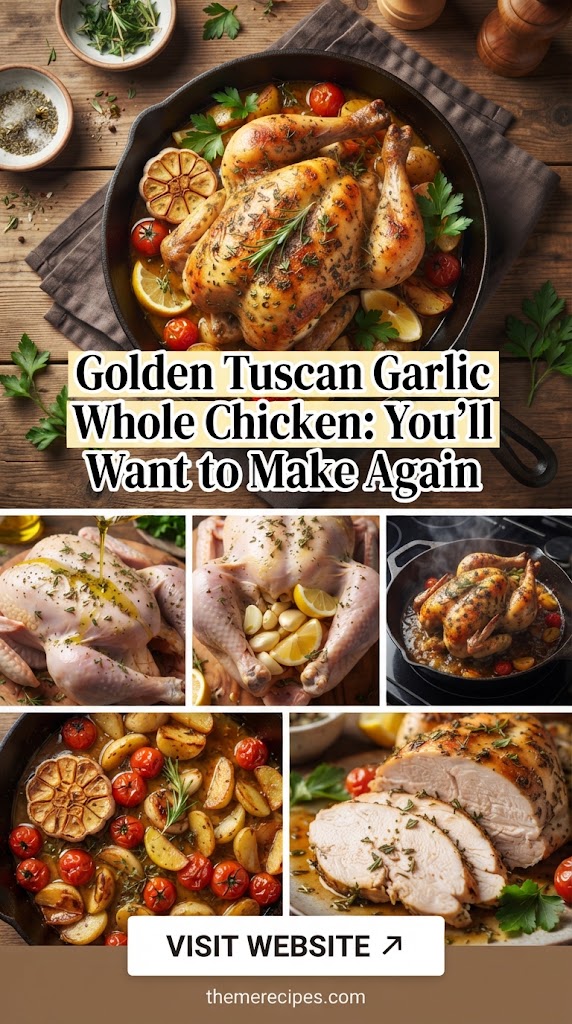
Golden Tuscan Garlic Whole Chicken: You’ll Want to Make Again
There is a specific kind of magic that happens in a kitchen when a whole chicken is roasting in the oven. It begins as a faint, savory whisper and eventually grows into a crescendo of aromatic garlic, earthy rosemary, and the unmistakable scent of rendering fat. But this isn’t just any roasted chicken; this is the Golden Tuscan Garlic Whole Chicken.
Inspired by the sun-drenched hills of central Italy, where ingredients are simple but quality is paramount, this recipe focuses on achieving two holy grails of home cooking: impossibly crispy, golden-brown skin and succulent, juice-dripping meat infused with the pungent sweetness of roasted garlic. Once you master this technique, the supermarket rotisserie chicken will become a distant memory. This is a dish designed for Sunday family dinners, impressive date nights, and leftovers that are arguably better than the main event.
The Essence of Tuscan Flavor: Why This Recipe Works
Tuscan cuisine is defined by la cucina povera—the kitchen of the poor—which emphasizes making the absolute most of what the land provides. In Tuscany, that means high-quality olive oil, pungent garlic, fragrant woody herbs, and citrus.
When these elements meet a whole bird, a chemical transformation occurs. The acidity of the lemon tenderizes the muscle fibers, the salt pulls moisture to the surface to create a “dry brine” effect for crunchier skin, and the garlic mellows out in the oven, losing its sharp bite and becoming a buttery, spreadable delight.
The “Golden” in the title isn’t just marketing; it’s a promise. By using a combination of high-smoke-point oils and real butter, we create a Maillard reaction—the chemical reaction between amino acids and reducing sugars that gives browned food its distinctive flavor—that is deep, complex, and visually stunning.
Selecting Your Bird: Quality Matters
You cannot build a cathedral on a weak foundation, and you cannot make a world-class Tuscan chicken with a subpar bird. When shopping for your chicken, keep these factors in mind:
- Size: Aim for a 3.5 to 4.5-pound chicken. Larger birds often cook unevenly, leaving the breast dry by the time the thighs are safe to eat.
- Air-Chilled: If possible, look for “air-chilled” chicken. Most commercial chickens are water-chilled, meaning they soak up excess water weight. Air-chilled birds have less water retention, which leads to much crispier skin.
- Freshness: Check the sell-by date. A fresh chicken should have a neutral scent and skin that looks moist but not slimy.
- Pasture-Raised/Organic: While more expensive, these birds often have a deeper “chicken” flavor due to their varied diet and lifestyle.
The Golden Tuscan Ingredient List
To achieve that authentic Mediterranean profile, you need a specific set of pantry staples and fresh aromatics.
The Aromatics
- Garlic: You will need two entire heads. One will be minced for the rub, and the other will be halved to stuff inside the cavity.
- Fresh Rosemary & Thyme: Avoid dried herbs here if possible. Fresh woody herbs release oils slowly during the roasting process.
- Lemon: Two large lemons. One for zest and juice, the other to be sliced and tucked under the bird.
The Fats
- Extra Virgin Olive Oil: For that authentic Tuscan fruity undertone.
- Unsalted Butter: Softened to room temperature. Butter provides the milk solids that help the skin turn that iconic golden hue.
The Seasoning
- Kosher Salt: The large grains are easier to distribute and better for drawing out moisture.
- Freshly Cracked Black Pepper: The pre-ground stuff lacks the floral heat of freshly cracked peppercorns.
- Smoked Paprika: A “secret” addition that enhances the golden color and adds a hint of depth without making it taste “smoky.”
Preparation: The Secret is in the Surface
Most people fail at roasting chicken because they skip the preparation steps. For a truly golden bird, moisture is your enemy.
Step 1: The Dry-Down
Take your chicken out of the refrigerator 45 minutes before you plan to cook. Remove any giblets from the cavity. Pat the chicken bone-dry with paper towels—and when you think it’s dry, pat it again. Dry skin is the only way to get crispy skin. If the skin is wet, it will steam rather than fry in its own fat.
Step 2: The Tuscan Compound Butter
In a small bowl, mix:
- 4 tablespoons of softened butter
- 2 tablespoons of olive oil
- 6 cloves of minced garlic
- 1 tablespoon of finely chopped rosemary
- 1 tablespoon of thyme leaves
- The zest of one lemon
- 1 teaspoon of smoked paprika
- Generous amounts of salt and pepper
Step 3: Beneath the Skin
This is the professional’s secret. Carefully use your fingers to separate the skin from the breast meat, being careful not to tear it. Reach down toward the thighs. Take about half of your compound butter and rub it directly onto the meat under the skin. This ensures the meat is seasoned and basted from the inside out.
Step 4: Seasoning the Cavity
Don’t ignore the inside. Season the cavity heavily with salt and pepper. Stuff it with the halved head of garlic, half a lemon, and several sprigs of rosemary and thyme. As the chicken roasts, these aromatics will steam inside the bird, flavoring the meat from the internal side.
The Roasting Process: Heat Management
The Golden Tuscan Garlic Whole Chicken requires a two-stage temperature approach to ensure the meat stays juicy while the skin becomes a golden crust.
The High-Heat Start
Preheat your oven to 425°F (218°C). Place the chicken in a heavy-bottomed cast-iron skillet or a roasting pan. Placing it in a skillet allows the heat to circulate more effectively around the legs and wings.
Rub the remaining compound butter all over the outside of the skin. Tuck the wing tips behind the back to prevent them from burning.
The Roasting Duration
- Initial Blast: Roast at 425°F for 20 minutes. This high heat jumpstarts the rendering of the fat and begins the browning process.
- The Mellow Roast: Lower the oven temperature to 375°F (190°C). Continue roasting for another 45–60 minutes, depending on the weight.
- The Baste: Every 20 minutes, use a spoon or a brush to scoop up the juices from the bottom of the pan and pour them over the bird. This “liquid gold” is a mix of melted butter, olive oil, and chicken fat (schmaltz).
Determining Doneness
Don’t guess. Use an instant-read meat thermometer. The chicken is done when the thickest part of the thigh (avoiding the bone) reaches 165°F (74°C). The breast meat should be around 160°F, as it will continue to rise in temperature during the resting phase.
The Resting Phase: The Most Critical Step
You’ve spent over an hour preparing and roasting this masterpiece. Do not cut into it immediately. If you do, all those precious juices will run out onto the cutting board, leaving you with dry meat.
Transfer the chicken to a warm platter. Tent it loosely with aluminum foil—don’t wrap it tightly, or the steam will soften the crispy skin you worked so hard for. Let it rest for at least 15 to 20 minutes. During this time, the muscle fibers relax and reabsorb the juices, ensuring every bite is succulent.
Transforming Pan Drippings into Tuscan Liquid Gold
While the chicken is resting, look at your roasting pan. You have a goldmine of flavor sitting there.
- Place the pan or skillet over a medium burner on your stove.
- Add a splash of dry white wine (like a Vermentino or Pinot Grigio) to deglaze the pan, scraping up all the brown bits (the fond).
- Add half a cup of chicken stock and a squeeze of lemon juice.
- Reduce the liquid by half until it thickens slightly.
- Strain this into a small gravy boat. This is your “jus,” and it tastes like the concentrated essence of Tuscany.
Perfect Pairings for Your Tuscan Feast
A Golden Tuscan Garlic Whole Chicken is a versatile centerpiece. To stay with the Italian theme, consider these accompaniments:
1. Garlic Herb Polenta
Creamy polenta is the perfect bed for roasted chicken. The cornmeal absorbs the pan juices, and the smooth texture contrasts beautifully with the crispy chicken skin.
2. Roasted Root Vegetables with Fennel
Toss carrots, parsnips, and sliced fennel in the same herbs used for the chicken. Roast them in the same oven (on a separate tray) so they finish at the same time. The anise-like flavor of fennel is a classic Tuscan pairing with poultry.
3. Arugula and Shaved Parmesan Salad
Because the chicken is rich and buttery, a bright, peppery salad helps balance the palate. A simple dressing of lemon juice and high-quality olive oil is all you need.
4. Wine Recommendation
Pair this dish with a medium-bodied Italian white like a Vernaccia di San Gimignano or a light red like a Chianti Classico. The acidity in these wines cuts through the richness of the garlic butter and chicken fat.
Advanced Techniques: Spatchcocking for Speed
If you are short on time but still want the Golden Tuscan experience, consider spatchcocking (butterflying) the bird.
Using kitchen shears, cut out the backbone of the chicken and press it flat. This increases the surface area exposed to the heat. A spatchcocked chicken cooks in nearly half the time (usually 35–45 minutes) and ensures that every inch of skin is exposed to the direct heat, resulting in maximum “golden” coverage. You can still apply the Tuscan garlic rub under and over the skin using the same method.
Common Pitfalls and How to Avoid Them
- Soggy Bottom: If you roast the chicken directly on the bottom of a flat pan, the bottom skin will sit in juices and become soggy. Use a roasting rack or a bed of thick-sliced onions and lemons to elevate the bird.
- Burned Garlic: If your minced garlic is on the very top of the skin, it might burn at 425°F. This is why we mix it into the butter or put it under the skin. If you see the garlic browning too quickly, tent the bird with foil.
- Dry Breast Meat: This usually happens from overcooking. Always pull the chicken out at 160°F internal temperature; “carry-over cooking” will bring it to the safe 165°F while it rests.
The Magic of Leftovers: The Gift That Keeps on Giving
One of the reasons you will want to make this again is because one chicken can provide three distinct meals.
- The Roast Dinner: The initial feast of drumsticks, thighs, and wings with sides.
- The Tuscan Chicken Salad: Use the leftover breast meat the next day. Mix it with sun-dried tomatoes, capers, a little mayo or Greek yogurt, and fresh basil. Serve it on crusty ciabatta.
- The Golden Bone Broth: Do not throw away the carcass! Place the bones, the roasted garlic halves from the cavity, and any leftover herbs in a pot. Cover with water and simmer for 4 hours. You will have a rich, garlic-infused broth that makes the best base for a Minestrone or Stracciatella soup.
Why This Recipe is a Household Favorite
In an era of fast food and “dump-and-go” slow cooker meals, the Golden Tuscan Garlic Whole Chicken stands as a testament to the beauty of slow, intentional cooking. It teaches a cook about heat, about the importance of aromatics, and about the patience required to let meat rest.
But beyond the technique, it is the flavor that brings people back. The way the lemon zest brightens the heavy garlic, the way the rosemary perfume fills the house, and the way the skin shatters under a knife—it is a sensory experience that defines “comfort food.”
When you bring this bird to the table, glowing in its golden-brown glory, you aren’t just serving dinner; you’re creating a memory. Whether it’s for a rainy Tuesday or a celebratory Sunday, this Tuscan chicken is a recipe you will return to, refine, and eventually pass down. It is, quite simply, the perfect roast.
Detailed Troubleshooting Guide for the Home Cook
Even with the best instructions, things can go sideways in the kitchen. Here is how to handle common issues:
“My skin isn’t getting brown enough.”
If your chicken is cooked through but the skin looks pale, turn on your broiler for 2–3 minutes at the very end. Stay in the kitchen and watch it like a hawk—it can go from golden to burnt in seconds.
“The pan is smoking!”
This usually happens if you have loose bits of herbs or butter solids burning on the bottom of the pan. Add a splash of water or chicken stock to the bottom of the pan to lower the temperature of the drippings. This will stop the smoke without affecting the chicken’s crispiness.
“The garlic in the cavity is still hard.”
The garlic inside the bird cooks via steam. If you prefer it to be “mushy” and spreadable like roasted garlic, you can pre-roast the garlic head for 15 minutes before stuffing it into the bird.
Customizing Your Tuscan Rub
While rosemary and thyme are the classic Tuscan duo, feel free to experiment with other Mediterranean flavors:
- Sage: Adds a wonderful earthy note that pairs perfectly with the lemon.
- Chili Flakes: For those who like a “Tuscan Heat” (Arrabbiata style), add half a teaspoon of red pepper flakes to the butter rub.
- Fennel Pollen: If you can find it, a dusting of fennel pollen over the skin before roasting adds an incredibly sophisticated, sweet-savory aroma that is quintessential to high-end Tuscan cooking.
Nutritional Benefits: A Healthy Powerhouse
Beyond its incredible taste, this Golden Tuscan Garlic Whole Chicken is a nutritional powerhouse.
- Garlic: Known for its immune-boosting properties and ability to support heart health.
- High Protein: A whole chicken provides lean protein that is essential for muscle repair and satiety.
- Healthy Fats: By using olive oil as a primary fat source, you are incorporating monounsaturated fats, which are key components of the heart-healthy Mediterranean diet.
- Low Carb: This recipe is naturally keto and paleo-friendly, making it a great option for various dietary needs.
Final Thoughts: The Joy of the Roast
Cooking a whole chicken is a rite of passage for any home chef. It is a skill that speaks to your ability to nourish and provide. The Golden Tuscan Garlic Whole Chicken is more than just a set of instructions; it is an invitation to slow down. It invites you to smell the herbs, to listen to the sizzle of the pan, and to gather the people you love around a table for a meal that feels like a warm embrace.
Once you see the golden hue of that skin and taste the garlic-infused succulent meat, you won’t just want to make it again—you’ll find yourself looking for any excuse to get another bird in the oven. Enjoy the process, and more importantly, enjoy every golden bite.