
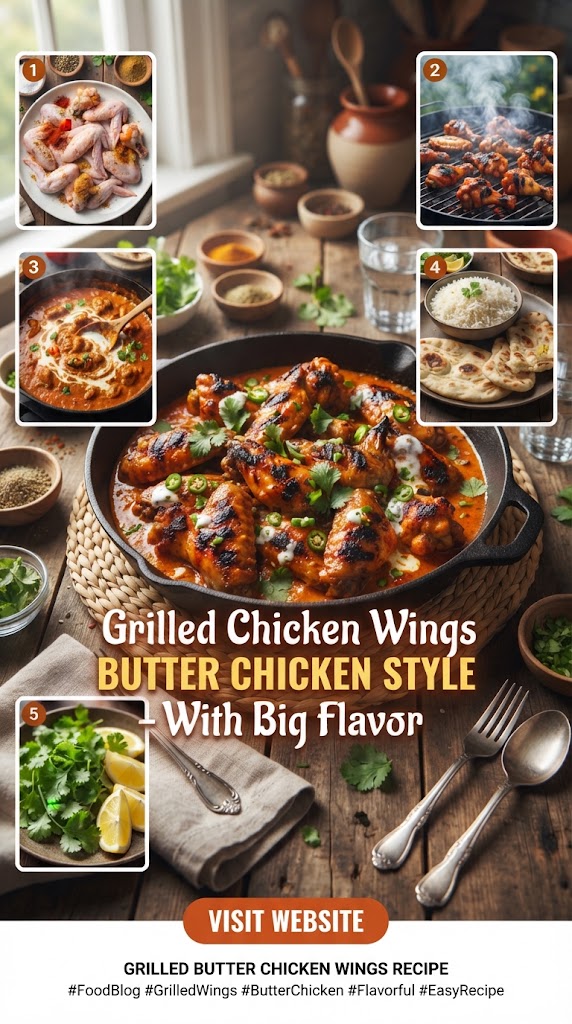
Grilled Chicken Wings Butter Chicken Style – With Big Flavor
In the vast and flavorful world of culinary arts, few things are as universally beloved as a perfectly grilled chicken wing. On the other side of the globe, few dishes command as much respect and devotion as the legendary Indian Murgh Makhani, or “Butter Chicken.” When these two titans of taste collide, the result is nothing short of spectacular.
Grilled Chicken Wings Butter Chicken Style are the ultimate fusion snack. They bring together the smoky, charred exterior of a traditional American BBQ staple with the rich, creamy, and aromatic spices of Northern India. This isn’t just a recipe; it’s a journey of flavors that balances heat, acidity, creaminess, and smoke.
In this comprehensive guide, we will dive deep into the origins, the science of the marinade, the secret to the velvet sauce, and the grilling techniques required to achieve wing perfection. Whether you are preparing for a Super Bowl party, a summer backyard BBQ, or just a Tuesday night craving, these wings are destined to be the star of the show.
The Cultural Significance of the Fusion
To understand why this dish works so well, one must look at the components. Butter Chicken was born in the 1950s in the kitchens of Moti Mahal in Delhi, India. It was a genius way to repurpose leftover tandoori chicken, simmering the dry, charred meat in a gravy rich with butter, cream, and tomatoes.
Chicken wings, conversely, are the quintessential American finger food. Traditionally deep-fried and tossed in vinegar-based sauces like Buffalo, they are designed for high-impact flavor and social sharing. By applying the “Makhani” (buttery) logic to the chicken wing, we create a dish that feels familiar yet exotic—a high-protein, flavor-packed bite that bridges the gap between East and West.
The Anatomy of the Perfect Grilled Wing
Before we even touch a spice jar, we must address the wing itself. A great Butter Chicken Wing must have three things:
- Crispy Skin: Even though it will be tossed in a rich sauce, the skin must be rendered and slightly charred to provide texture.
- Juicy Meat: The interior must remain succulent, a feat achieved through proper marination.
- Complex Flavor Layering: The spice should be infused into the meat, not just sitting on top of it.
Selecting Your Wings
When shopping, look for “party wings,” which are already split into drumettes and flats. If you buy whole wings, you’ll need to separate them at the joints. Fresh is always better than frozen, as frozen wings tend to release more moisture, making it harder to get that sought-after char.
The Two-Stage Flavor Process: Marination and Sauce
The secret to why this recipe tastes better than a standard wing is the two-stage approach. We treat the chicken like it’s going into a tandoor (Indian clay oven) first, then finish it with the signature Makhani glaze.
Phase 1: The Tandoori-Style Marinade
The marinade serves two purposes: tenderizing the meat and building the foundation of flavor.
- Yogurt (The Tenderizer): Use full-fat Greek yogurt. The lactic acid gently breaks down the muscle fibers without making the meat mushy.
- Ginger-Garlic Paste: This is the “Holy Trinity” of Indian cooking. It provides a sharp, aromatic bite.
- Kashmiri Red Chili Powder: This is crucial. It offers a vibrant red color and a mild, smoky heat rather than the scorching burn of cayenne.
- Garam Masala: A warming blend of cinnamon, cardamom, and cloves.
- Kasuri Methi (Dried Fenugreek Leaves): This is the “secret ingredient.” It provides that unmistakable “restaurant smell” and a nutty, slightly bitter finish that balances the richness.
- Lemon Juice: For acidity and to help the spices penetrate.
Phase 2: The Butter Chicken Glaze
The sauce is where the “Butter” in Butter Chicken comes from. Unlike a traditional curry which is meant to be eaten with naan, this glaze is reduced to be thicker, ensuring it clings to every nook and cranny of the wing.
- Tomato Puree: Provides the tangy base.
- Unsalted Butter: Adds the signature velvety mouthfeel.
- Heavy Cream: Rounds out the acidity of the tomatoes.
- Honey or Sugar: A touch of sweetness to balance the spices.
- More Kasuri Methi: To reinforce that herbal aroma.
Detailed Ingredient List
For the Wings and Marinade:
- 3 lbs Chicken Wings (flats and drumettes)
- 1/2 cup Greek Yogurt (plain, full-fat)
- 2 tbsp Ginger-Garlic Paste
- 1 tbsp Kashmiri Red Chili Powder
- 1 tsp Turmeric Powder
- 1 tsp Garam Masala
- 1 tbsp Lemon Juice
- 1 tbsp Vegetable Oil (to help with browning)
- Salt to taste
For the Butter Chicken Sauce:
- 4 tbsp Unsalted Butter
- 1 cup Tomato Puree (passata)
- 1/2 cup Heavy Cream
- 1 tsp Kashmiri Red Chili Powder
- 1 tsp Garam Masala
- 1 tbsp Kasuri Methi (crushed between palms)
- 1 tbsp Honey
- Salt to taste
For Garnish:
- Fresh Cilantro (chopped)
- Thinly sliced Red Onions (soaked in ice water for crunch)
- Lime Wedges
Step-by-Step Cooking Instructions
Step 1: Prepping and Marinating
Pat the wings dry with paper towels. Any excess moisture will steam the chicken rather than grill it. In a large bowl, whisk together the yogurt, spices, ginger-garlic paste, and lemon juice. Add the chicken wings and toss until every piece is thoroughly coated.
Pro Tip: Let the wings marinate for at least 4 hours, but ideally overnight. This allows the enzymes in the yogurt to truly transform the texture of the chicken.
Step 2: Preparing the Sauce
While the grill is heating up, prepare your sauce. In a saucepan over medium heat, melt the butter. Add the tomato puree and Kashmiri chili powder. Simmer for 10-12 minutes until the sauce thickens and the oil starts to separate at the edges.
Whisk in the heavy cream and honey. Let it simmer for another 5 minutes on low heat. Finally, stir in the Garam Masala and the crushed Kasuri Methi. Keep the sauce warm on the lowest setting.
Step 3: Setting Up the Grill
You want a “Two-Zone” setup.
- Direct Heat Zone: For searing and getting that char.
- Indirect Heat Zone: For cooking the wings through without burning the yogurt marinade.
Clean your grates and oil them lightly.
Step 4: Grilling the Wings
Place the wings on the indirect heat side of the grill. Close the lid and let them cook for about 20-25 minutes at 375°F (190°C). Flip them halfway through.
Once the internal temperature reaches 160°F, move the wings to the direct heat zone. Grill them for 2-3 minutes per side. The yogurt will caramelize, creating beautiful dark spots and a slightly smoky flavor. Be careful, as the marinade can burn quickly due to the sugars and dairy.
Step 5: The Toss
Transfer the hot, charred wings into a large metal bowl. Pour the warm Butter Chicken sauce over them. Use a spatula or the “chef’s toss” technique to ensure every wing is glistening with that orange, creamy goodness.
Step 6: The Final Touch
Plate the wings and garnish generously with chopped cilantro and a squeeze of lime. Serve immediately.
The Science of Flavor: Why This Recipe Works
The success of Butter Chicken Wings lies in the Maillard Reaction and Emulsification.
- The Maillard Reaction: When the amino acids in the chicken and the sugars in the yogurt react with high heat on the grill, hundreds of different flavor compounds are created. This gives the wings their “grilled” depth.
- Emulsification: The sauce is an emulsion of fat (butter and cream) and water (tomato puree). By simmering it slowly, you create a stable, thick coating that doesn’t just slide off the wing. The fat also acts as a carrier for the fat-soluble spices in the Garam Masala, delivering flavor directly to your taste buds.
Troubleshooting Common Issues
“My wings aren’t crispy enough.”
Yogurt marinades are notoriously difficult for crispiness because they introduce moisture. To fix this, ensure you grill over high heat at the very end to “set” the skin. Alternatively, you can add 1 teaspoon of baking powder to the marinade to help the skin render and crisp up.
“The sauce is too sour.”
This usually happens if the tomatoes aren’t cooked long enough or if they were particularly acidic. Add an extra teaspoon of honey or a splash more heavy cream to balance it out.
“The chicken is dry inside.”
This is a sign of overcooking. Use a meat thermometer. Chicken wings are forgiving because of their high fat-to-meat ratio, but they are best pulled at 165°F-170°F internal temperature.
Alternative Cooking Methods
Not everyone has access to a grill year-round. Here is how to adapt this recipe for other appliances:
Oven-Baked Method
- Preheat your oven to 425°F (220°C).
- Place a wire rack over a baking sheet. This allows air to circulate under the wings.
- Bake for 35-40 minutes, flipping once.
- Broil for the last 2 minutes to get the charred effect.
- Toss in sauce as usual.
Air Fryer Method
- Set the Air Fryer to 380°F.
- Place wings in a single layer (do not overcrowd).
- Air fry for 18-20 minutes, shaking the basket halfway.
- Increase heat to 400°F for the last 2 minutes for extra crunch.
- Toss in sauce.
Pairing Recommendations
What you serve with these wings can elevate the entire experience.
Side Dishes:
- Garlic Naan Strips: Use naan bread as “fries” to scoop up the extra sauce.
- Jeera Rice: If you want to turn this into a full meal, serve the wings over cumin-scented basmati rice.
- Kachumber Salad: A refreshing mix of diced cucumber, tomato, and onion with lemon and chaat masala to cut through the richness.
Drinks:
- Mango Lassi: The classic pairing. The sweetness and dairy help cool the palate.
- Craft Beer: Look for a citrusy IPA. The hops cut through the fat of the butter sauce, while the citrus notes complement the lemon and ginger.
- Off-dry Riesling: A white wine with a hint of sweetness works beautifully with spicy Indian flavors.
Nutritional Breakdown (Per Serving)
While Butter Chicken Wings are an indulgent treat, they offer several nutritional benefits:
- High Protein: Chicken wings are an excellent source of protein, essential for muscle repair.
- Spices: Ginger, garlic, and turmeric are known for their anti-inflammatory properties.
- Keto-Friendly: If you swap the honey for a keto-friendly sweetener, this dish is very low in carbs and high in healthy fats.
Note: A standard serving of 6 wings contains approximately 450-500 calories, depending on the amount of butter and cream used.
Ingredient Deep Dive: Finding the Authentic Stuff
To get the “Big Flavor” promised in the title, ingredient quality matters.
- Ginger-Garlic Paste: While you can buy this in jars at Indian grocery stores, making it at home is superior. Simply blend equal parts fresh peeled ginger and garlic with a tiny bit of oil until smooth.
- Kashmiri Mirch: If you can’t find this, do not substitute with standard “chili powder” from a typical American grocery store (which is a blend). Use a mix of 3 parts sweet paprika and 1 part cayenne pepper.
- The Butter: Use high-quality European-style butter if possible. It has a higher fat content and less water, which makes the sauce more stable and flavorful.
The Evolution of the Wing: Why Butter Chicken is Winning
In the United States, the “Wing Culture” has evolved. People are moving away from just “hot” and “extra hot.” They want complexity. They want “Umami.”
Butter Chicken style wings provide that umami through the cooked-down tomatoes and the fermented notes of the yogurt. It satisfies the craving for something savory, creamy, and slightly spicy all at once. This is why this particular fusion has become a staple in high-end gastropubs in cities like New York, Chicago, and San Francisco.
Mastering the Grill: Charcoal vs. Gas
The Charcoal Experience
If you use a charcoal grill (like a Weber Kettle), you get the added benefit of wood smoke. For Butter Chicken wings, use a mild wood like Apple or Cherry. The sweetness of the fruitwood smoke pairs perfectly with the aromatic spices of the marinade.
The Gas Convenience
Gas grills offer better temperature control. To get the best results, use a smoker box with some wood chips to mimic that authentic tandoori flavor. Ensure you keep the lid closed as much as possible to maintain a convection environment.
Step-by-Step Summary for Success
- Dry the wings completely.
- Marinate for at least 4 hours with yogurt and spices.
- Simmer the sauce until it is thick and the butter separates.
- Grill using indirect heat first to cook through.
- Sear over high heat to get the char.
- Toss while the wings are screaming hot so they “drink” the sauce.
- Garnish with fresh herbs and acid (lime).
Why This Recipe is Perfect for Game Day
Game day food needs to be three things: easy to eat, crowd-pleasing, and durable.
- Easy to eat: These are classic finger foods.
- Crowd-pleasing: Almost everyone loves Butter Chicken, even those who aren’t fans of intense heat. It’s a “safe” way to introduce people to Indian flavors.
- Durable: Unlike Buffalo wings, which can get soggy quickly due to the vinegar content in the sauce, the fat-based Butter Chicken sauce actually protects the wing, keeping it moist even if it sits out for 20 minutes during a halftime show.
Storage and Reheating
If you happen to have leftovers (which is rare!), here is how to handle them:
- Storage: Keep them in an airtight container in the fridge for up to 3 days.
- Reheating: Avoid the microwave; it will make the skin rubbery and the sauce oily. Instead, put them back in an air fryer or oven at 350°F for about 5-8 minutes. This will re-crisp the skin and bring the sauce back to life.
Final Thoughts
Grilled Chicken Wings Butter Chicken Style are more than just a meal; they are a conversation starter. They represent the beautiful melting pot of global cuisine. By taking the time to marinate properly, source the right spices like Kasuri Methi, and master the two-zone grilling technique, you are creating a dish that rivals any professional kitchen.
The richness of the butter, the tang of the tomatoes, the char of the grill, and the succulence of the chicken all work in perfect harmony. Once you try wings this way, the standard Buffalo wing might just feel like it’s missing something.
So, fire up the grill, get your spices ready, and prepare for a flavor explosion that brings the best of Delhi and the best of the American BBQ tradition right to your plate. Your taste buds—and your guests—will thank you.