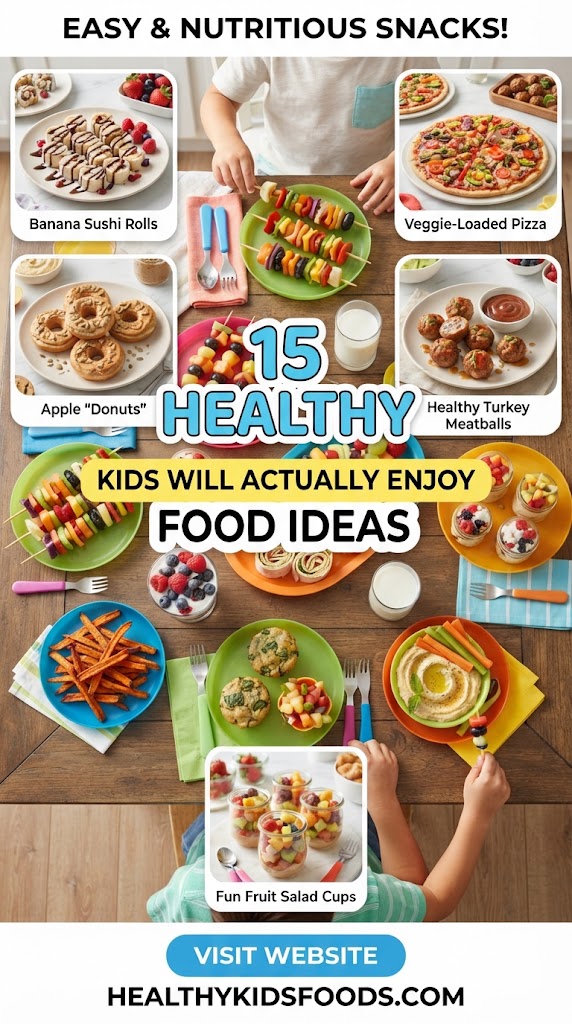
15 Healthy Food Ideas Kids Will Actually Enjoy
Finding healthy food ideas kids will actually enjoy can feel like a daily challenge. Parents want to serve nutritious meals, but children often have strong opinions about vegetables, textures, flavors, and even how food looks on the plate. The good news is that healthy eating does not have to mean boring salads or foods kids refuse to touch.
With a little creativity, you can turn everyday ingredients into colorful, delicious, kid-friendly meals that provide protein, whole grains, fruits, vegetables, and other important nutrients.
The USDA MyPlate approach recommends offering children a variety of fruits, vegetables, grains, protein foods, and dairy or fortified soy alternatives. It also encourages families to focus on nutrient-rich choices while limiting added sugars, saturated fat, and sodium. (MyPlate)
This guide shares 15 healthy food ideas for kids that are easy enough for busy parents and appealing enough for selective eaters. Whether you’re preparing breakfast, lunch, an after-school snack, or dinner, these ideas can help make healthy eating more enjoyable.
Why Healthy Food Matters for Kids
Children are constantly growing, learning, playing, and developing. Their bodies need a variety of nutrients to support normal growth and everyday activity.
A balanced eating pattern can include:
- Fruits
- Vegetables
- Whole grains
- Protein foods
- Dairy or fortified alternatives
- Healthy fats
- Plenty of water
Instead of focusing on whether your child eats a “perfect” meal every time, think about variety over the course of a day or week.
For example, one meal might include whole-grain toast, eggs, and strawberries, while another could include chicken, brown rice, cucumber, and yogurt.
The goal is to make nutritious foods familiar, accessible, and enjoyable.
The American Academy of Pediatrics notes that picky eating is common during childhood, especially in the toddler years. Parents can help by continuing to offer nutritious foods without turning mealtimes into battles. (HealthyChildren.org)
15 Healthy Food Ideas Kids Will Actually Enjoy
1. Fruit and Yogurt Parfait
A fruit and yogurt parfait is one of the easiest healthy breakfast or snack ideas for kids.
Layer plain or lightly sweetened Greek yogurt with colorful fruit and a small amount of granola or whole-grain cereal.
Ingredients
- Greek yogurt
- Strawberries
- Blueberries
- Banana slices
- Whole-grain granola
- Optional chia seeds
Why Kids Like It
Children often enjoy parfaits because they look like a dessert. The different colors and layers also make the meal more exciting.
For younger children, choose soft fruits and age-appropriate textures. If using granola, consider whether the texture is suitable for your child’s age.
You can also let kids build their own parfait. Place several ingredients on the table and allow them to choose what goes into their cup.
Giving children simple choices can make them more interested in eating the food they helped create.
2. Homemade Mini Chicken Quesadillas
Quesadillas are a great way to combine protein, whole grains, and vegetables in a meal kids already recognize.
Use whole-wheat tortillas, shredded chicken, cheese, and finely chopped vegetables.
Easy Ingredients
- Whole-wheat tortillas
- Cooked shredded chicken
- Shredded cheese
- Finely chopped bell peppers
- Corn
- Avocado
- Mild salsa
Place the filling inside a tortilla, fold it, and cook until the cheese melts.
Cut the quesadilla into triangles and serve with fruit or cucumber slices.
For picky eaters, start with a familiar filling such as chicken and cheese. Once your child is comfortable with the meal, introduce small amounts of new vegetables.
This is a useful strategy because children may need repeated exposure before accepting unfamiliar foods. The AAP notes that children may need multiple opportunities to try a new food. (HealthyChildren.org)
3. Banana Peanut Butter Toast
Banana peanut butter toast makes a quick breakfast or afternoon snack.
Spread peanut butter or another suitable nut or seed butter over whole-grain toast and top with thin banana slices.
Simple Combination
Whole-grain toast + nut butter + banana
The creamy peanut butter pairs naturally with the sweetness of banana, making this a satisfying option for children who enjoy sweet flavors.
For children with peanut or tree-nut allergies, use an appropriate allergy-safe alternative.
You can make this meal more fun by cutting the toast into small squares, triangles, or other shapes.
For very young children, make sure the texture and preparation are appropriate for their developmental stage and choking-risk guidance.
4. Rainbow Fruit Skewers
Fruit becomes more exciting when it is presented in a fun way.
Create colorful fruit combinations using:
- Strawberries
- Blueberries
- Melon
- Pineapple
- Grapes prepared appropriately for the child’s age
- Banana
- Mango
Arrange the fruit in rainbow colors or allow children to make their own combinations.
For toddlers and younger children, avoid serving whole grapes or other choking hazards; prepare foods according to age-appropriate safety recommendations.
You can serve the fruit with plain yogurt for dipping.
This simple presentation can transform an ordinary fruit snack into something children are excited to eat.
5. Healthy Homemade Pizza
Pizza night does not have to disappear when you’re trying to encourage healthier eating.
Make individual mini pizzas using whole-wheat English muffins, whole-grain pita bread, or whole-wheat tortillas.
Topping Ideas
- Tomato sauce
- Mozzarella cheese
- Grilled chicken
- Bell peppers
- Mushrooms
- Corn
- Spinach
- Tomatoes
Let each child create their own pizza.
Kids may be more interested in trying vegetables when they participate in assembling the meal.
USDA MyPlate also suggests homemade pizza using whole-wheat English muffins or tortillas as one way to vary pizza night. (MyPlate)
6. Colorful Chicken and Rice Bowls
A chicken rice bowl is an easy family meal that can be customized for different preferences.
Start with:
- Brown rice or another whole grain
- Grilled or baked chicken
- Corn
- Cucumber
- Carrots
- Avocado
- Mild salsa or yogurt-based sauce
Instead of mixing everything together, serve the ingredients separately.
This works particularly well for picky eaters because children can choose which foods they want on their plate.
For example, one child may choose chicken, rice, and corn, while another may add cucumber and avocado.
The basic meal stays the same, but everyone gets some control over what they eat.
7. Veggie Mac and Cheese
Mac and cheese is a classic kid favorite. You can make it more nutrient-rich by adding vegetables.
Try blending cooked:
- Butternut squash
- Carrots
- Cauliflower
- Sweet potato
into the cheese sauce.
You can also add finely chopped broccoli or peas if your child enjoys them.
Use whole-grain pasta when your family likes the taste and texture.
The goal isn’t to completely change a familiar meal. Instead, you can gradually add nutritious ingredients while keeping some familiar flavors.
8. Banana Berry Smoothie
Smoothies are an easy way to combine fruit, yogurt, and other nutritious ingredients.
Basic Smoothie
Blend:
- One banana
- A handful of berries
- Plain yogurt
- Milk or fortified soy beverage
- A small amount of oats
- Optional spinach
Frozen fruit can make the smoothie thick and creamy without needing much added sweetener.
If you’re adding vegetables, start with a small amount and use naturally sweet fruits such as banana or berries.
USDA MyPlate recommends using fruit to add sweetness to foods such as yogurt, oatmeal, and smoothies instead of relying heavily on added sugar. (MyPlate)
9. Baked Sweet Potato Fries
Many kids love fries, so homemade sweet potato fries can be a fun alternative.
Slice sweet potatoes into sticks, lightly coat them with oil, and bake until tender and lightly crisp.
Serve with:
- Greek yogurt dip
- Hummus
- Homemade bean dip
- Mild tomato sauce
Sweet potatoes have a naturally sweet flavor, which may appeal to children who are hesitant about vegetables.
You can also try regular potato wedges, carrot fries, or roasted zucchini sticks.
The important part is to experiment with different shapes and textures.
10. Breakfast Egg Muffins
Egg muffins are convenient for busy mornings.
Whisk eggs and add small amounts of:
- Spinach
- Bell peppers
- Cheese
- Tomatoes
- Cooked chicken
- Broccoli
Pour the mixture into muffin cups and bake until fully cooked.
The individual portions make the food easy for children to hold and eat.
You can prepare them ahead of time for quick breakfasts during busy school mornings.
Serve with fresh fruit and whole-grain toast for a more complete meal.
11. Turkey and Cheese Roll-Ups
Turkey and cheese roll-ups are simple enough for lunchboxes, snacks, or quick meals.
Place turkey and cheese inside a whole-grain tortilla, roll tightly, and slice into small pieces.
Serve with:
- Apple slices
- Cucumber
- Baby carrots prepared appropriately
- Strawberries
- Yogurt
For children who don’t enjoy sandwiches, roll-ups can provide familiar ingredients in a different shape.
Presentation can make a surprising difference.
Cut the roll-ups into bite-sized spirals and arrange them next to colorful fruits and vegetables.
12. Homemade Chicken Nuggets
Chicken nuggets are popular with children, but making them at home gives parents more control over the ingredients.
Cut chicken breast into small pieces and coat with whole-grain breadcrumbs.
Bake until completely cooked.
Serve with:
- Roasted vegetables
- Apple slices
- Corn
- Cucumber
- Sweet potato wedges
- Yogurt-based dipping sauce
Instead of forcing children to eat vegetables before getting nuggets, simply place a small serving of vegetables alongside a familiar food.
The AAP recommends avoiding mealtime battles and offering at least one food a child enjoys alongside other nutritious foods. (HealthyChildren.org)
13. Peanut Butter Apple Sandwiches
For a fun twist on the traditional sandwich, spread peanut butter between thin apple slices.
You can also use whole-grain bread and add banana slices.
Try These Combinations
- Apple + peanut butter
- Banana + peanut butter
- Strawberry + cream cheese
- Apple + sunflower seed butter
- Banana + Greek yogurt
Always consider food allergies and age-appropriate preparation.
For younger children, apples should be prepared in a texture and size appropriate for their developmental stage.
14. Build-Your-Own Taco Bowls
Taco bowls are excellent for family dinners because children can customize their own meals.
Prepare small bowls of:
- Brown rice
- Black beans
- Shredded chicken
- Corn
- Avocado
- Tomato
- Lettuce
- Shredded cheese
- Mild salsa
- Plain Greek yogurt
Let each child select a few ingredients.
This makes dinner interactive and can encourage children to explore foods they might otherwise reject.
You don’t need to pressure your child to try everything. Simply keep offering healthy options and allow them to become familiar with different foods over time.
15. Frozen Yogurt Fruit Bites
Frozen yogurt fruit bites make a fun snack, especially during warmer months.
Place small portions of yogurt on a tray, add pieces of fruit, and freeze until firm.
Try combinations such as:
- Strawberry and yogurt
- Blueberry and yogurt
- Banana and yogurt
- Mango and yogurt
These little bites can feel like a treat while being made from simple ingredients.
Choose yogurt with less added sugar when possible.
How to Get Kids Excited About Healthy Food
Healthy food ideas for kids work best when children are given opportunities to participate.
Instead of simply putting a plate in front of your child, involve them in the process.
Let Kids Choose
Give children two or three healthy choices.
For example:
“Would you like strawberries or blueberries?”
“Do you want chicken or beans?”
“Would you like cucumber or carrots?”
This gives children some independence without turning the meal into an unlimited menu.
Let Kids Help Cook
Depending on age and ability, children can help:
- Wash fruits and vegetables
- Stir ingredients
- Measure ingredients
- Arrange food
- Sprinkle cheese
- Mix yogurt dips
- Assemble tacos
- Build sandwiches
- Choose produce at the grocery store
USDA MyPlate encourages children to participate in food preparation and grocery shopping. (MyPlate)
Make Food Colorful
Kids often respond to colorful meals.
Try creating a plate with:
- Red strawberries
- Orange carrots
- Yellow corn
- Green cucumber
- Blueberries
A colorful plate naturally looks more interesting.
You can also use cookie cutters to create fun shapes from sandwiches, fruit, or whole-grain tortillas.
Serve Familiar Foods With New Foods
If your child loves chicken, serve chicken alongside a small portion of roasted broccoli.
If your child likes pasta, serve pasta with peas.
If your child loves yogurt, offer yogurt with berries.
The familiar food can make a new food feel less intimidating.
Don’t Force Children to Eat
Pressure can make mealtimes stressful.
The AAP recommends a responsive approach in which parents provide nutritious food choices while children have some control over what and how much they eat. (HealthyChildren.org)
A child refusing broccoli today doesn’t necessarily mean they will refuse it forever.
Keep offering healthy foods without turning every meal into a negotiation.
Healthy Snack Ideas Kids Can Enjoy
Snacks can be a useful part of a child’s daily eating routine.
Try:
- Apple slices with nut or seed butter
- Greek yogurt with berries
- Banana with whole-grain toast
- Hummus with vegetables
- Cheese with whole-grain crackers
- Homemade trail mix using age-appropriate ingredients
- Fresh fruit
- Smoothies
- Hard-boiled egg with fruit
- Avocado toast
For preschoolers, the American Academy of Pediatrics recommends planned snack times rather than continuous all-day grazing. (AAP)
Healthy Breakfast Ideas for Kids
Breakfast doesn’t need to be complicated.
Here are quick ideas:
Oatmeal Bowl
Top oatmeal with banana, berries, cinnamon, and nut or seed butter.
Egg and Toast
Serve scrambled eggs with whole-grain toast and fruit.
Yogurt Bowl
Combine yogurt, fruit, and whole-grain cereal.
Smoothie
Blend fruit, yogurt, and milk or a fortified alternative.
Banana Pancakes
Make pancakes using mashed banana, eggs, and oats.
Breakfast can be simple while still providing a combination of nutritious foods.
Healthy Lunch Ideas for School
Packing a healthy lunch doesn’t have to mean making elaborate recipes.
Try a lunchbox with:
Option 1: Chicken roll-ups + strawberries + cucumber + yogurt
Option 2: Whole-grain quesadilla + apple slices + corn
Option 3: Pasta salad + fruit + cheese
Option 4: Homemade chicken bites + sweet potato wedges + berries
Option 5: Hummus + pita + vegetables + fruit
When packing lunches, remember food safety. Perishable foods should be kept at appropriate temperatures using an insulated lunch bag and cold pack when needed.
Healthy Dinner Ideas for Picky Eaters
Dinner can be easier when you use a “build-your-own” approach.
Good options include:
- Taco bowls
- Rice bowls
- Homemade pizza
- Chicken quesadillas
- Pasta with vegetables
- Baked chicken with potatoes
- Breakfast-for-dinner
- Turkey roll-ups
- Homemade burgers with whole-grain buns
- Chicken and vegetable skewers prepared safely
Rather than creating completely separate dinners for each family member, serve a shared meal with at least one familiar option.
The AAP recommends family meals and suggests including a food the child likes while continuing to offer a balanced meal. (HealthyChildren.org)
How to Make Vegetables More Appealing to Kids
Vegetables can be challenging for many children.
Try changing the preparation method.
A child who dislikes steamed broccoli might enjoy:
- Roasted broccoli
- Broccoli mixed with cheese
- Broccoli in pasta
- Finely chopped broccoli in quesadillas
- Broccoli with a yogurt dip
You can also experiment with different vegetables.
If green vegetables are unpopular, try:
- Sweet potatoes
- Carrots
- Corn
- Pumpkin
- Butternut squash
- Red bell peppers
Different colors often have different flavors and textures.
Healthy Food Swaps Kids May Actually Accept
Small changes can make familiar meals more nutritious.
Instead of:
Sugary cereal → lower-sugar whole-grain cereal with fruit
Regular fries → baked potato or sweet potato wedges
Sugary yogurt → plain or lower-added-sugar yogurt with fruit
Sweet drinks → water or milk/fortified alternatives
Refined bread → whole-grain bread
Candy snack → fruit with yogurt or nut/seed butter
You don’t have to make every change at once.
Choose one or two swaps that your family will realistically enjoy.
Tips for Parents of Picky Eaters
Picky eating is common, especially among toddlers and preschoolers.
Here are practical strategies that can make meals easier.
1. Keep Offering Variety
Don’t remove a food permanently because your child rejected it once.
Children’s preferences can change.
2. Serve Small Portions
Large portions of unfamiliar foods can feel overwhelming.
Start with a small amount.
3. Avoid Pressure
Try not to force children to clean their plates.
4. Eat Together
Children learn by watching adults.
If they see parents eating vegetables, fruits, whole grains, and other nutritious foods, healthy eating becomes normal.
5. Keep Mealtimes Calm
Avoid turning dinner into a battle.
6. Be Patient
A child may need repeated exposure to a new food before accepting it. The AAP notes that repeated exposure can help children become more comfortable with foods they initially reject. (HealthyChildren.org)
A Simple 7-Day Healthy Kids Meal Plan
Here’s an example of how you can combine these healthy food ideas throughout a week.
Monday
Breakfast: Banana oatmeal with berries
Lunch: Chicken and cheese roll-ups with cucumber
Snack: Yogurt and strawberries
Dinner: Chicken rice bowl with corn and avocado
Tuesday
Breakfast: Eggs, whole-grain toast, and fruit
Lunch: Homemade mini pizza with vegetables
Snack: Apple slices with nut or seed butter
Dinner: Turkey tacos with beans and corn
Wednesday
Breakfast: Berry yogurt parfait
Lunch: Chicken quesadilla with fruit
Snack: Banana smoothie
Dinner: Baked chicken nuggets with sweet potato wedges
Thursday
Breakfast: Banana oat pancakes
Lunch: Turkey and cheese roll-ups
Snack: Hummus with vegetables
Dinner: Homemade veggie mac and cheese
Friday
Breakfast: Egg muffins with fruit
Lunch: Chicken rice bowl
Snack: Frozen yogurt fruit bites
Dinner: Build-your-own taco bowls
Saturday
Breakfast: Whole-grain toast with banana and peanut butter
Lunch: Homemade pizza
Snack: Greek yogurt with berries
Dinner: Baked chicken with potatoes and vegetables
Sunday
Breakfast: Fruit smoothie and whole-grain toast
Lunch: Chicken quesadilla
Snack: Fresh fruit
Dinner: Family-style rice bowls with chicken, beans, vegetables, and avocado
Frequently Asked Questions
What are the healthiest foods for kids?
Healthy foods for kids include fruits, vegetables, whole grains, protein foods, dairy or fortified alternatives, and foods containing healthy unsaturated fats. Variety is important because different foods provide different nutrients. USDA MyPlate recommends including choices from the major food groups throughout the day. (MyPlate)
How do I get my picky child to eat healthy food?
Start by offering familiar foods alongside small portions of new foods. Avoid pressure and continue offering nutritious choices. Involving children in shopping and cooking can also make them more interested in trying foods. (HealthyChildren.org)
What are easy healthy snacks for kids?
Easy choices include fruit and yogurt, apple slices with nut or seed butter, hummus with vegetables, cheese with whole-grain crackers, smoothies, and homemade fruit bites.
How can I make vegetables more appealing?
Try different cooking methods, shapes, dips, and combinations. Roasting vegetables can produce a different flavor and texture than steaming. Pairing a new vegetable with a familiar favorite can also make it less intimidating.
Should I force my child to finish their food?
Generally, mealtimes are better when children aren’t pressured to eat a specific amount. Parents can provide nutritious foods and children can learn to recognize hunger and fullness cues. If you have concerns about your child’s growth, appetite, or nutrition, speak with their pediatrician.
How often should kids eat snacks?
Snack needs vary by age and individual child. Planned snack times can be more useful than allowing children to graze continuously. The American Academy of Pediatrics recommends planned, supervised snacks for preschoolers. (AAP)
Are smoothies healthy for kids?
Smoothies can be a convenient way to combine fruit, yogurt, and other nutritious ingredients. Keep portions appropriate for the child and avoid relying on added sugars. Whole fruits are also valuable because they provide texture and can encourage children to practice eating a variety of foods.
What should kids drink?
Water should be an easy everyday choice. Depending on age and dietary needs, milk or an appropriate fortified alternative can also provide important nutrients. USDA MyPlate includes dairy and fortified soy alternatives as part of a healthy eating pattern. (MyPlate)
Final Thoughts
Healthy eating for children doesn’t have to be complicated.
The best healthy food ideas kids will actually enjoy are often simple meals made with familiar ingredients, colorful fruits and vegetables, whole grains, protein foods, and nutritious dairy or fortified alternatives.
Try homemade mini pizzas, chicken quesadillas, fruit parfaits, smoothies, taco bowls, homemade chicken nuggets, sweet potato fries, and colorful rice bowls. Most importantly, give children opportunities to participate in choosing and preparing food.
Remember that picky eating can be a normal part of childhood. A child doesn’t have to love every food immediately. Continue offering a variety of nutritious choices, keep mealtimes relaxed, and model healthy eating yourself.
Healthy habits are built gradually, one meal and one bite at a time.
If you have concerns about allergies, choking risks, growth, nutrient intake, or your child’s eating habits, consult your child’s pediatrician or a qualified registered dietitian