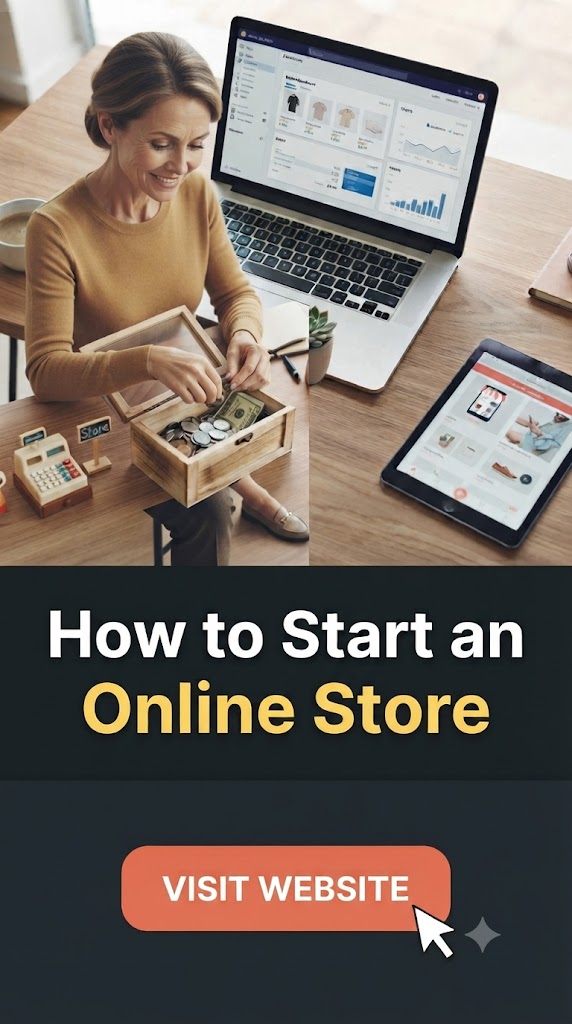
How to Start an Online Store
The Ultimate Blueprint to Starting a High-Converting Online Store
Starting an online store is one of the most accessible paths to financial independence and business ownership today. However, the days of simply throwing a product onto a generic website and waiting for the money to roll in are long gone. The modern e-commerce landscape requires a calculated blend of strategic research, seamless user experience, bulletproof logistics, and aggressive data-driven marketing.
This comprehensive guide breaks down the exact phase-by-phase framework required to conceptualize, build, launch, and scale a highly profitable online storefront from scratch.
Phase 1: Niche Selection and Product Sourcing
Every successful e-commerce brand sits at the intersection of market demand, healthy profit margins, and sustainable supply chains. If you get this phase wrong, no amount of brilliant marketing or beautiful web design can save your business.
Step 1: Finding a High-Potential Niche
The biggest mistake amateur e-commerce entrepreneurs make is trying to become the next Amazon. Broad stores dilute your marketing budget and force you to compete directly with retail giants. Instead, aim to be a big fish in a small pond.
- Look for Fragmentation: Search for industries where there is no dominant, household-name brand controlling the space.
- Target Passion or Pain: Passionate hobbyists (e.g., mechanical keyboard builders, specialized pet owners) spend money freely. Similarly, products that solve an acute, frustrating problem (e.g., ergonomic tools for chronic wrist pain) command high conversion rates.
- Evaluate Search Intent: Use SEO tools to find search terms with decent volume (greater than 5,000 monthly searches) but relatively low competition. Look for long-tail keywords that signal a strong intent to buy.
Step 2: Validating Market Demand
Before spending a single dollar on inventory, you must prove people want your product.
- Google Trends: Ensure the interest in your niche is stable or growing, not a passing fad (like fidget spinners).
- Competitor Audits: Analyze active competitors. Look at their social media engagement, read their negative reviews on Trustpilot to spot product gaps, and use tools like the Meta Ad Library to confirm they are actively spending money on ads. If they are spending on ads over months, they are likely profitable.
- The Unit Economics Test: A viable e-commerce product should generally follow the Rule of 3x to 5x. If a product costs $10 to manufacture or source, you need to be able to sell it for $30 to $50. This leaves enough room for shipping costs, customer acquisition costs (CAC), and profit margins.
Step 3: Choosing a Sourcing Model
How you source your products will define your daily operations, upfront capital requirements, and risk profile.
| Sourcing Model | Upfront Cost | Profit Margins | Control Over Quality | Risk Level |
| Dropshipping | Very Low | Low (10-20%) | Low | Low |
| Print-on-Demand (POD) | Very Low | Medium (20-30%) | Medium | Low |
| Wholesale / Reselling | Medium | Medium (30-50%) | High | Medium |
| Private Label (OEM) | High | High (50-80%) | Maximum | High |
- Dropshipping: You act as the middleman. When a customer buys from you, the supplier ships it directly to them. Best for testing concepts with minimal capital.
- Private Labeling: You work with a manufacturer to produce a product under your own brand name, often making slight modifications to improve upon existing marketplace versions. Best for building long-term equity and maximum margins.
Phase 2: Business Registration, Legalities, and Branding
Treat your store like a real business from day one. Skipping the legal and branding fundamentals will create massive headaches once your store begins processing real transaction volumes.
Step 1: Legal Structure and Financial Foundations
- Incorporate Your Business: Set up a formal legal entity, such as an LLC (Limited Liability Company) or your local equivalent. This protects your personal assets from business liabilities.
- Obtain an EIN and Tax Permits: In the US, secure an Employer Identification Number (EIN) from the IRS. Register for a Sales Tax Permit in your home state so you can legally collect and remit sales tax.
- Open a Dedicated Business Bank Account: Never mix personal and business finances. Link your business account to credit card processors like Stripe, PayPal, or Shopify Payments.
Step 2: Branding That Commands Premium Prices
Branding is not just a logo; it is the emotional shortcut a customer takes to trust you.
- The Domain Name: Keep it short, memorable, easy to spell, and ideally a
.com. Avoid hyphens or numbers. - Visual Identity: Design a clean, scalable logo. Pick a cohesive color palette (maximum of three primary colors) that aligns with your market psychology. For example, blues project trust, greens project sustainability, and matte black projects luxury.
Phase 3: Choosing and Building Your E-Commerce Platform
Your website is your digital storefront. It needs to load quickly, look impeccable on mobile devices, and seamlessly guide users toward the checkout button.
Step 1: Selecting the Right Platform
While there are dozens of options available, the modern e-commerce market is largely divided into two primary solutions depending on your technical comfort level.
- Shopify (Hosted Solution): The gold standard for most e-commerce businesses. It handles hosting, security (PCI compliance), and payment gateways out of the box for a fixed monthly fee. It is highly reliable, scales instantly, and boasts a massive app ecosystem.
- WooCommerce + WordPress (Self-Hosted): Perfect for those who want absolute control over their code, data, and customization without recurring software fees. However, you are entirely responsible for managing your own hosting, site speed optimizations, and security updates.
Step 2: High-Converting Store Architecture
Regardless of the platform you choose, your backend analytics and frontend user experience (UX) dashboard should look clean, intuitive, and conversion-focused.
To maximize conversions, construct your store using this rigid structural hierarchy:
- Homepage: Keep it clean. Display a clear value proposition above the fold, followed by your best sellers and social proof (e.g., “As Seen In” logos or top customer reviews).
- Collection/Category Pages: Implement deep filtering systems (size, color, price, availability) so users can find products within three clicks.
- The Perfect Product Page:
- Visuals: High-resolution images on clean backgrounds, a 360-degree video, or user-generated content (UGC) videos showing the product in action.
- The Copy: Focus on benefits over features. Don’t just list technical specifications; explain exactly how those specifications make the customer’s life better.
- The Add-to-Cart (ATC) Zone: Keep the ATC button sticky, bright, and prominent. Place clear shipping timelines and trust badges right below it.
- Frictionless Checkout: Eliminate unnecessary form fields. Enable one-click checkout options like Apple Pay, Google Pay, and Shop Pay. Standard guest checkouts should require nothing more than an email address and shipping details.
Phase 4: Logistics, Fulfillment, and Customer Operations
A beautiful site means nothing if your shipping times are unpredictable or your customer support is non-existent.
Step 1: Inventory Management and Warehousing
If you aren’t dropshipping, you need a strategy for holding stock:
- Self-Fulfillment: Packing orders out of your garage or office. Excellent for quality control when you are processing fewer than 20 orders a day.
- Third-Party Logistics (3PL): Once you scale, outsource fulfillment to a 3PL partner. You ship your bulk inventory to their warehouse, and their team automatically picks, packs, and ships individual orders the moment they are placed on your store.
Step 2: Defining Your Shipping Strategy
Shipping costs are the number one driver of shopping cart abandonment.
- Free Shipping: Incorporate the cost of shipping directly into the product retail price. Consumers are significantly more likely to buy a $40 product with free shipping than a $32 product with $8 shipping.
- Flat Rate: Charge a single flat fee for all orders, which encourages larger cart sizes to offset the shipping fee.
Phase 5: The Launch and Driving Target Traffic
You cannot rely on organic search engine optimization (SEO) alone when you first launch. You need to proactively inject highly targeted traffic into your brand funnel.
Step 1: Performance Marketing (Paid Advertising)
Paid ads act as an immediate feedback loop for your store.
- Meta Ads (Facebook & Instagram): Unrivaled for visual storytelling and impulse purchases. Focus on building engaging short-form video reels that call out user pain points within the first three seconds.
- Google Shopping Ads: Target users who are already actively searching for your product. When someone types “buy waterproof hiking boots,” your product photo and price appear at the very top of their search page.
Step 2: Retention Marketing (Email & SMS)
Your customer acquisition cost (CAC) is expensive. True profitability happens on the second, third, and fourth purchases.
1.The Welcome Flow:Triggers immediately upon email signup.
Introduce your brand story, set expectations for future content, and deliver a small introductory discount code (e.g., 10% off) to drive the first purchase.
2.The Abandoned Cart Recovery Sequence:Triggers 1 hour, 12 hours, and 24 hours after abandonment.
Remind the user what they left behind. Address potential objections, highlight your return policy, and offer a limited-time discount in the final email to close the sale.
3.The Post-Purchase Nurture:Triggers post-delivery.
Send transactional updates, request product reviews, offer educational tips on how to care for the item, and cross-sell complementary accessories.
Phase 6: Optimization and Data Analytics
Once your store begins receiving traffic, stop guessing and start reading the data. Optimize your website performance continuously based on three core pillars.
The E-Commerce Growth Equation
Every dollar your store generates is dictated by a simple mathematical formula:
$$\text{Gross Revenue} = \text{Traffic} \times \text{Conversion Rate (CR)} \times \text{Average Order Value (AOV)}$$
To scale your store, focus on improving these three primary metrics systematically:
- Traffic: Increasing the raw number of targeted users visiting your site via SEO, social media, and paid ads.
- Conversion Rate (CR): The percentage of visitors who complete a purchase. A healthy e-commerce conversion rate sits between 1.5% and 3.0%. Optimize this by improving site speed, fixing broken mobile elements, and refining your value propositions.
- Average Order Value (AOV): The average amount spent per transaction. Boost this by setting up upsells at checkout (e.g., “Add a protection plan for $5”), bundling related items together, or offering free shipping thresholds (e.g., “Free shipping on orders over $75”).
Monitored closely week over week, these metrics will pinpoint exactly where your store is leaking money, allowing you to transition from an unranked startup to a highly profitable, self-sustaining brand.