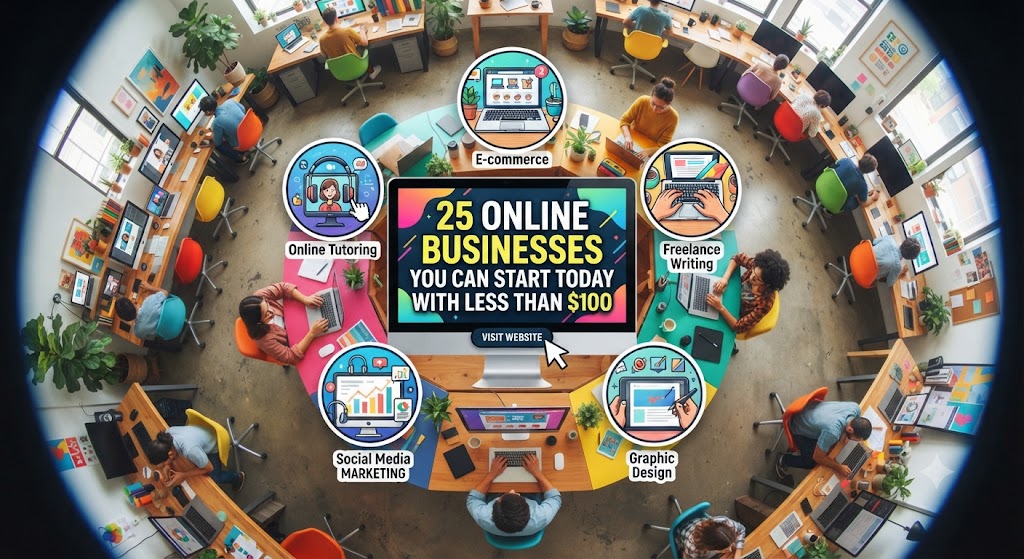
Online Businesses You Can Start Today
The Digital Gold Rush: 25+ Profitable Online Businesses You Can Start Today
The landscape of work has fundamentally shifted. We are no longer tethered to cubicles, nine-to-five schedules, or geographical limitations. The barrier to entry for starting a business has never been lower, and the potential for scale has never been higher. Whether you are looking to escape the corporate grind, supplement your income, or build a global empire from your spare bedroom, the internet is your greatest ally.
This isn’t about “get rich quick” schemes. This is about leveraging digital infrastructure to build sustainable, scalable, and profitable ventures. In this comprehensive guide, we will explore the most viable online businesses you can launch today, categorized by their business models, required skill sets, and potential for growth.
Part 1: The Service-Based Economy (Skills into Cash)
Service-based businesses are the fastest way to go from zero to profit. Since you are selling your time or expertise, the overhead is virtually zero.
1. Freelance Writing and Content Strategy
Content is the fuel of the internet. Brands, blogs, and news outlets are in a constant state of hunger for high-quality written material.
- The Niche Factor: Generalists get paid pennies; specialists get paid premiums. If you can write about FinTech, SaaS, or healthcare, your rates can skyrocket.
- How to Start: Build a portfolio on Medium or a personal blog. Use platforms like Upwork for initial traction, but move to LinkedIn and cold pitching for high-ticket clients.
2. High-End Video Editing
With the explosion of TikTok, Reels, and YouTube, video is the dominant medium. Businesses need editors who don’t just “cut” clips but understand storytelling and retention.
- The Opportunity: Specializing in short-form “viral” edits for creators can command high monthly retainers.
- Tools: Adobe Premiere Pro, DaVinci Resolve, or CapCut for mobile-first content.
3. Virtual Assistant (VA) for Executives
A VA today is more than just a secretary. You are a “right-hand” person managing calendars, emails, basic project management, and even social media engagement.
- Scalability: Once you have too many clients, you can hire other VAs and transition into a VA Agency.
4. Ghostwriting for Thought Leaders
Many CEOs and founders want to build a “Personal Brand” on LinkedIn or X (Twitter) but don’t have the time to write.
- The Value Prop: You capture their voice and turn their ideas into viral threads or insightful articles. This is a high-ticket service because it directly impacts their authority and deal flow.
Part 2: The E-commerce Revolution (Physical and Digital Products)
Selling products allows you to decouple your time from your income. Once the system is set up, it can run while you sleep.
5. Print on Demand (POD)
Unlike traditional retail, POD requires no inventory. You create a design, upload it to a platform (like Printful or Printify), and the product is only created and shipped when a customer buys it.
- The Key: Hyper-niche designs. Don’t just sell “T-shirts.” Sell “T-shirts for left-handed organic gardeners.”
6. Dropshipping (The 2.0 Version)
The old “cheap junk from China” model is dying. Modern dropshipping focuses on high-ticket items or “white-labeling” where you partner with quality suppliers to provide a seamless brand experience.
- Focus: Master Facebook and TikTok ads. Your business is essentially a marketing engine.
7. Digital Products (E-books, Templates, Presets)
This is the holy grail of “passive” income. You create a product once—like a Notion template for project management or a set of Lightroom presets—and sell it infinitely.
- Platforms: Gumroad, Etsy, or your own Shopify store.
8. Curated Subscription Boxes
People love the “surprise and delight” of a monthly box. You can start by curating niche products (e.g., rare snacks, eco-friendly office supplies) and managing the logistics.
- Revenue Model: Recurring monthly revenue (MRR) is the most stable form of business income.
Part 3: The Knowledge Economy (Monetizing Expertise)
If you know how to do something better than 90% of the population, you have a business.
9. Online Course Creation
The e-learning market is projected to reach hundreds of billions in the coming years.
- Don’t Overthink It: You don’t need a professional studio. High-value information delivered via simple screen-shares or “talking head” videos is often more effective than high-production fluff.
- Platforms: Teachable, Kajabi, or Skool.
10. Paid Newsletters
With platforms like Substack and Beehiiv, you can charge a monthly fee for premium insights.
- The Strategy: Offer a free weekly newsletter to build trust, then put your “deep dives” or “market signals” behind a paywall.
11. Cohort-Based Coaching
Unlike a self-paced course, cohort-based coaching involves teaching a group of students live over 4–6 weeks.
- Why it Works: It offers accountability and community, which leads to higher completion rates and higher prices (often $500–$5,000 per student).
12. Membership Communities
Create a private space where like-minded individuals can network and learn.
- Value Add: Exclusive resources, monthly Q&A sessions, and a curated network.
Part 4: The Technical & Agency Route
For those with a knack for strategy and technical execution, the agency model offers the fastest path to six and seven figures.
13. Social Media Management (SMM)
Businesses know they need to be on social media, but they are often terrible at it. You manage their posting schedule, engagement, and growth strategy.
- Upsell: Offer “Growth Audits” or “Paid Ad Management” for extra fees.
14. SEO Consulting
Search Engine Optimization is a long game, which makes it perfect for recurring monthly retainers. Helping a business rank on the first page of Google is worth thousands of dollars in “free” traffic to them.
15. The “No-Code” Developer
You don’t need to be a software engineer to build apps anymore. Using tools like Bubble, Webflow, or Zapier, you can build complex business automations or MVPs (Minimum Viable Products) for startups.
16. AI Implementation Agency
This is the newest and most lucrative frontier. Businesses are terrified of being left behind by AI. You can consult with them to integrate ChatGPT, Claude, or Midjourney into their workflows to save time and money.
Part 5: Content Creation and Audience Building
This model takes the longest to gain traction but has the highest “moat” (it’s the hardest to replicate).
17. Niche YouTube Channel
YouTube is the world’s second-largest search engine. By creating content around a specific interest (coding, DIY, financial literacy), you earn through ad revenue, sponsorships, and affiliate links.
18. Faceless “Theme” Pages
You don’t have to show your face to succeed on Instagram or TikTok. Curate high-performing content in a specific niche (travel, luxury, motivation), grow the following, and sell shoutouts or products.
19. Podcasting
Podcasting allows for deep connection. While harder to monetize initially, a loyal podcast audience is highly valuable for high-ticket sponsorships and selling your own products.
20. Affiliate Marketing (Niche Sites)
Build a website that reviews products in a specific category (e.g., “Best Outdoor Gear”). When people click your links and buy, you get a commission.
- Modern Twist: Use Pinterest or YouTube to drive traffic to your affiliate offers instead of relying solely on Google SEO.
Part 6: Micro-Niche and Emerging Opportunities
21. Remote Event Planning
Webinars, virtual summits, and online workshops require meticulous planning. If you are organized, you can run the logistics for these digital events.
22. Resume and LinkedIn Profile Optimization
In a competitive job market, people are willing to pay for an edge. Transforming a boring CV into a recruitment magnet is a high-demand service.
23. Voiceover Artistry
With the rise of audiobooks and YouTube “explainer” videos, there is a massive demand for unique voices. You can set up a home studio for under $500 and find work on platforms like ACX or Voices.com.
24. Etsy Printables
Selling digital planners, wedding invitations, or coloring pages on Etsy is a fantastic way to earn passive income. You design it once, and customers download the file.
25. User Testing and Research
Companies will pay you to test their websites and apps and provide feedback. While not a “full-scale” business, it’s a great way to earn initial capital to fund your bigger ventures.
The “Success Framework”: How to Actually Start Today
Most people fail because they spend too much time “learning” and not enough time “doing.” Here is the step-by-step framework to launch.
Step 1: The “Ikigai” Selection
Don’t just pick a business because it sounds profitable. Look for the intersection of:
- What you are good at.
- What you can be paid for.
- What the market actually needs.
- (Optional) What you enjoy.
Step 2: The “Minimum Viable Offer” (MVO)
Do not spend three months building a website.
- If you’re a freelancer: Your MVO is a LinkedIn profile and 3 samples.
- If you’re in E-commerce: Your MVO is a single-product landing page.
- If you’re a Creator: Your MVO is your first 5 pieces of content.
Step 3: Validate Before You Scale
Before investing thousands in ads or inventory, get your first “yes.” Send cold emails, post in Facebook groups, or talk to people in your network. If you can’t sell it manually, you can’t sell it with automation.
Step 4: Systematize and Delegate
Once you hit $5,000/month, you will hit a “time wall.” This is where you must transition from a solopreneur to a business owner. Start by outsourcing the tasks you hate or those that have the lowest hourly value.
Essential Tools for Your Online Business
To run a professional operation, you need the right “tech stack.” Here are the essentials:
- Communication: Slack (internal), Zoom/Google Meet (external).
- Project Management: Notion, Trello, or Asana.
- Payments: Stripe, PayPal, or Wise.
- Marketing: Canva (design), Mailchimp or ConvertKit (email).
- Website/Hosting: Shopify (E-commerce), Carrd (Simple landing pages), or WordPress (Blogs).
Overcoming the “Fear of Starting”
The biggest hurdle isn’t the technology or the competition—it’s the psychology.
- The Imposter Syndrome: Everyone starts as a “fraud.” You gain expertise by doing the work, not by waiting until you feel ready.
- The Fear of Failure: In the digital world, the cost of failure is almost zero. If a blog fails, you lose $20 for the domain. If a physical shop fails, you lose $50,000. Embrace the low-risk nature of the internet.
- The Paradox of Choice: Don’t try to do 5 of these businesses at once. Pick one and commit to it for 6 months.
Conclusion: Your Future Starts at the Keyboard
The internet has democratized opportunity. We are living through the greatest wealth transfer in history, moving from traditional institutions to independent creators and digital entrepreneurs.
The question isn’t whether these businesses work—thousands of people are already making six and seven figures from them. The question is: Will you be the one providing the service, selling the product, or creating the content?
Pick a model from this list that resonates with you. Set a timer for 60 minutes. Start your first draft, build your first page, or send your first pitch. The “perfect time” is a myth. Today is the only day that matters.
Go build something.