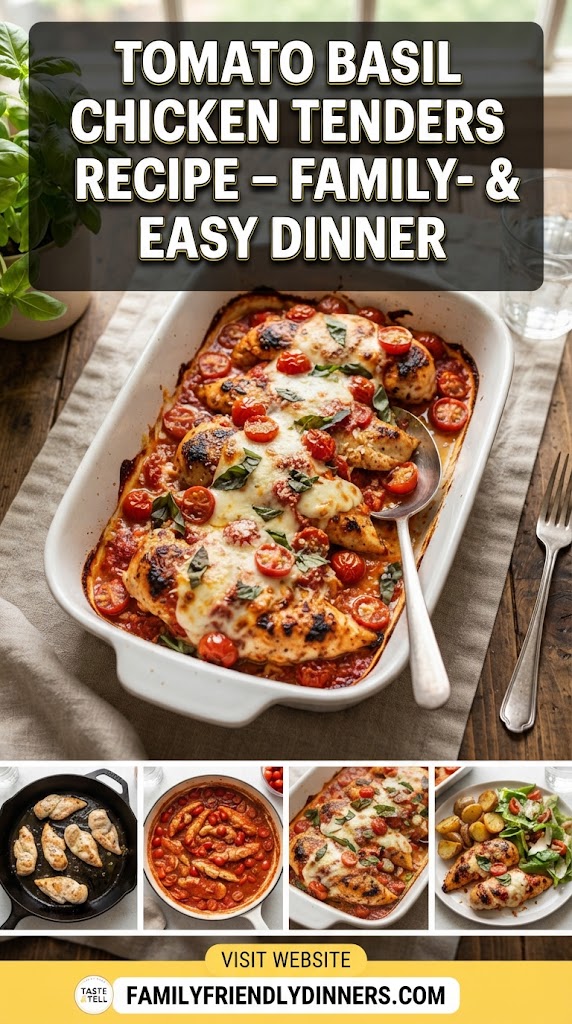
Tomato Basil Chicken Tenders Recipe – Family-Friendly and Easy Dinner
Finding a dinner recipe that satisfies the sophisticated palate of an adult while remaining accessible enough for the pickiest of toddlers is the “holy grail” of home cooking. Enter the Tomato Basil Chicken Tender. This dish is not just a meal; it is a symphony of Mediterranean flavors, combining the brightness of sun-ripened tomatoes, the aromatic punch of fresh basil, and the lean, protein-packed goodness of chicken breast.
In this comprehensive guide, we will explore every facet of creating the perfect tomato basil chicken tenders. From the science of the perfect sear to the art of the homemade marinara, this article provides everything you need to transform a simple package of chicken into a gourmet experience that takes less than 30 minutes to prepare.
Why Tomato Basil Chicken Tenders Are the Perfect Modern Meal
In the fast-paced world of modern parenting and professional life, time is the most valuable currency. However, the desire for high-quality, nutritious, and flavorful food has never been higher. This recipe bridges that gap for several key reasons:
- Nutritional Balance: Chicken tenders are a lean source of protein. When paired with the lycopene in tomatoes and the antioxidants in fresh basil, you have a powerhouse of nutrition on a single plate.
- Versatility: This dish can be served over pasta, alongside a crisp salad, tucked into a sub roll, or eaten on its own for a low-carb, keto-friendly option.
- Kid-Approved: Almost every child loves chicken tenders. By introducing the tomato and basil element, you are expanding their palate with familiar textures but elevated flavors.
- Minimal Cleanup: When executed correctly, this can be a one-pan meal, reducing the dreaded post-dinner mountain of dishes.
The Anatomy of the Ingredients: Choosing the Best for Your Table
The secret to any “easy” recipe that tastes like a five-star meal lies in the quality of the raw ingredients. Let’s break down what you need and why it matters.
The Chicken: Tenders vs. Breasts
While you can certainly slice a chicken breast into strips, true “chicken tenders” are the pectoralis minor muscles found underneath the breast. They are naturally more succulent and cook faster. If you are using full breasts, ensure you slice them against the grain to maintain tenderness.
The Tomatoes: Fresh or Canned?
For a quick weeknight version, a high-quality canned crushed tomato (like San Marzano) provides a deep, concentrated flavor. However, during the summer months, using fresh cherry tomatoes that burst in the pan creates a rustic, sweet sauce that is hard to beat.
The Basil: Fresh is Non-Negotiable
Dried basil has its place in stews, but for this recipe, you need fresh leaves. The essential oils in fresh basil provide a peppery, sweet aroma that dissipates when dried. Look for vibrant green leaves without black spots.
The Aromatics: Garlic and Shallots
Garlic is the backbone of Mediterranean cooking. Using fresh cloves rather than pre-minced jarred garlic will provide a sharper, cleaner bite. Shallots offer a subtle sweetness that bridges the gap between the garlic and the acidic tomatoes.
Step-by-Step Recipe: Easy Tomato Basil Chicken Tenders
Ingredients List
- 1.5 lbs Chicken Tenders (approx. 8–12 pieces)
- 2 tablespoons Extra Virgin Olive Oil
- 1 tablespoon Unsalted Butter (for browning)
- 3 cloves Garlic, minced
- 1 small Shallot, finely diced
- 1 can (14.5 oz) Fire-roasted Diced Tomatoes or 2 cups fresh Cherry Tomatoes
- 1/4 cup Dry White Wine (optional, for deglazing)
- 1/2 cup Fresh Basil leaves, chiffonade (cut into thin ribbons)
- 1/2 teaspoon Red Pepper Flakes (optional for a kick)
- Salt and Black Pepper to taste
- 1/4 cup Freshly grated Parmesan cheese (optional garnish)
Phase 1: Prepping the Protein
Begin by patting the chicken tenders dry with paper towels. This is a crucial step; moisture is the enemy of a good sear. If the chicken is wet, it will steam rather than brown. Season both sides generously with salt and cracked black pepper.
Phase 2: The Perfect Sear
Heat a large skillet over medium-high heat. Add the olive oil and butter. Once the butter stops foaming, place the chicken tenders in the pan. Do not crowd the pan; work in batches if necessary. Sear for 3–4 minutes per side until golden brown and cooked through. Remove the chicken from the pan and set it aside on a plate, tented with foil to keep warm.
Phase 3: Building the Sauce
In the same skillet (don’t wash it—those brown bits are flavor gold!), add the shallots. Sauté for 2 minutes until translucent. Add the minced garlic and red pepper flakes, cooking for just 30 seconds until fragrant.
If using wine, pour it in now to deglaze the pan, scraping the bottom with a wooden spoon. Let the liquid reduce by half. Add the tomatoes (and their juices). Simmer for 8–10 minutes until the sauce begins to thicken and the flavors meld.
Phase 4: The Finishing Touch
Return the chicken tenders and any accumulated juices to the skillet. Toss gently to coat the chicken in the sauce. Turn off the heat and fold in the fresh basil ribbons. The residual heat will wilt the basil just enough to release its oils without turning it bitter.
Pro-Tips for the Best Chicken Tenders You’ve Ever Had
To elevate this dish from “good” to “extraordinary,” consider these professional kitchen secrets:
1. The Brine Secret
If you have an extra 30 minutes, soak your chicken tenders in a simple saltwater brine (1/4 cup salt to 4 cups water). This breaks down the muscle fibers and ensures that even if you slightly overcook the chicken, it remains incredibly juicy.
2. Flour Dusting for Texture
For a slightly thicker sauce and a more crust-like exterior on the chicken, lightly dredge the tenders in all-purpose flour (shaking off the excess) before searing. The flour that sticks to the pan will act as a natural thickener once the tomatoes are added.
3. Balanced Acidity
If your tomatoes are particularly acidic, the sauce might taste a bit sharp. A tiny pinch of granulated sugar (literally 1/4 teaspoon) can neutralize that acid and bring out the natural sweetness of the basil.
4. Cold Butter Finish
Professional chefs often finish their sauces with a pat of cold butter right before serving. This technique, known as monter au beurre, gives the sauce a glossy finish and a velvety mouthfeel.
Exploring Variations: Tailoring the Dish to Your Diet
The beauty of the Tomato Basil Chicken Tender recipe is its adaptability. Here is how you can modify it for various dietary needs:
The Keto/Low-Carb Version
This recipe is naturally low in carbohydrates. To keep it that way, serve the chicken over a bed of sautéed zucchini noodles (zoodles) or steamed cauliflower rice. Avoid adding any sugar and stick to high-quality fats like avocado oil or grass-fed butter.
The Dairy-Free/Paleo Version
Replace the butter with additional olive oil or ghee. Omit the Parmesan cheese garnish and replace it with a sprinkle of nutritional yeast for that savory, “cheesy” flavor profile without the dairy.
The Gluten-Free Version
If you choose to dredge the chicken, use almond flour or a gluten-free 1-to-1 baking flour. Ensure your canned tomatoes do not have any hidden gluten-containing thickeners (though most are naturally GF).
The “Crispy” Alternative: Air Fryer Method
If your family prefers a crunchy texture:
- Bread the chicken tenders in a mixture of Panko breadcrumbs, dried basil, and Parmesan.
- Air fry at 400°F (200°C) for 10–12 minutes.
- Serve the tomato-basil sauce on the side as a dipping sauce to maintain the crunch.
Side Dish Pairings: Making It a Full Meal
What you serve alongside your Tomato Basil Chicken Tenders can change the entire “vibe” of the meal. Here are four distinct ways to plate it:
1. The Italian Classic
Serve the chicken and sauce over a bed of Al Dente Linguine or Angel Hair pasta. Add a side of garlic bread and a simple arugula salad with lemon vinaigrette. This is the ultimate comfort food setup.
2. The Light and Fresh Summer Plate
Pair the chicken with roasted asparagus or steamed green beans. Instead of heavy pasta, serve it with a side of quinoa or farro for an earthy, nutty balance to the bright tomato sauce.
3. The Family-Style Sub
Toast some high-quality hoagie rolls with a bit of garlic butter. Place two or three chicken tenders in the roll, top with extra sauce and a slice of provolone or mozzarella. Broil until the cheese is bubbly for a “Tomato Basil Chicken Parm” sandwich.
4. The Low-Calorie Power Bowl
Place the tenders over a massive bowl of spinach. The heat from the chicken and sauce will slightly wilt the greens. Add some sliced avocado and toasted pine nuts for a nutrient-dense lunch.
The Science of Flavor: Why Tomato and Basil Work
Have you ever wondered why the combination of tomato and basil is found in almost every Italian restaurant worldwide? It isn’t just tradition; it’s chemistry.
Tomatoes are rich in glutamates, the compounds responsible for the “umami” or savory fifth taste. Basil contains linalool and estragole, which provide floral and spicy notes. When combined, the acidity of the tomato cuts through the herbal sweetness of the basil, while the umami provides a deep base that makes the chicken taste “meatier.”
Additionally, the fats used in this recipe (olive oil and butter) are essential. Many of the flavor compounds in basil are fat-soluble, meaning they need a fat medium to be properly carried to your taste buds. This is why a fat-free tomato basil sauce often tastes “flat.”
Troubleshooting Common Issues
Even the simplest recipes can occasionally go awry. Here is how to fix common mistakes:
- The Chicken is Tough: This usually happens because of overcooking or not letting the chicken rest. Chicken tenders cook very fast—often in just 6-8 total minutes. Use a meat thermometer to pull them at 160°F (71°C); the carryover heat will bring them to the safe 165°F (74°C) without drying them out.
- The Sauce is Too Thin: If your sauce looks like soup, let it simmer uncovered for a few extra minutes to reduce the water content. Alternatively, stir in a teaspoon of tomato paste to add body and thickness instantly.
- The Basil Turned Black: Basil is very sensitive to heat. If you add it too early or cook it too long, it will oxidize and turn black. Always add the basil at the very end of the cooking process, after the heat has been turned off.
- The Dish is Too Sour: This is usually due to under-ripe tomatoes. As mentioned earlier, a tiny pinch of sugar or a splash of balsamic glaze can round out the flavor beautifully.
Meal Prepping and Leftovers: A Parent’s Best Friend
This recipe is a meal-prepper’s dream. The flavors actually improve after sitting in the refrigerator for 24 hours as the garlic and basil infuse further into the sauce.
How to Store
Place leftovers in an airtight container. The chicken will stay fresh in the refrigerator for up to 4 days.
How to Reheat
Avoid the microwave if possible, as it can make chicken rubbery. Instead, place the chicken and sauce in a small skillet over medium-low heat. Add a splash of water or chicken broth to loosen the sauce and cover the pan. Heat until the chicken is warmed through.
Can You Freeze This?
Yes! This dish freezes exceptionally well. Place the cooked chicken and sauce in a freezer-safe bag or container. It will last for up to 3 months. To serve, thaw overnight in the fridge and reheat on the stovetop.
Health Benefits: Why Your Body Will Thank You
In an era of highly processed “nuggets,” making chicken tenders from scratch is a significant health upgrade.
- Lean Protein: Supports muscle repair and keeps you feeling full longer, which can help with weight management.
- Lycopene: Found in abundance in cooked tomatoes, lycopene is a powerful antioxidant linked to heart health and skin protection against UV rays.
- Vitamin K: Basil is an excellent source of Vitamin K, which is essential for bone health and blood clotting.
- Garlic: Known for its immune-boosting properties and ability to help lower blood pressure.
By controlling the ingredients, you eliminate the excessive sodium, industrial seed oils, and preservatives found in frozen, store-bought chicken options.
Cultural Context: The Roots of the Recipe
While “chicken tenders” feel uniquely American, the flavor profile of tomato and basil is rooted deeply in the culinary traditions of Southern Italy, specifically the Campania region.
Historically, Italian families used whatever was fresh in the garden. During the late summer harvest, the abundance of San Marzano tomatoes and Genovese basil led to the creation of simple “pizzaiola” style sauces. This recipe is essentially a modern, faster adaptation of those classic Italian techniques, designed for the American kitchen where time is often at a premium but flavor cannot be sacrificed.
Frequently Asked Questions (FAQs)
1. Can I use frozen chicken tenders?
Yes, but ensure they are fully thawed and patted dry before cooking. Frozen chicken often releases more water, which can hinder the searing process.
2. What can I substitute for white wine?
If you prefer not to cook with alcohol, substitute the white wine with chicken broth or a splash of white balsamic vinegar mixed with water. The goal is to provide a bit of acidity to balance the sauce.
3. Can I make this in a slow cooker?
While you can, the chicken tenders are so small they may become mushy in a slow cooker. If you want to use a slow cooker, use whole chicken breasts and cook on low for 4-6 hours, then shred the meat into the sauce.
4. Is this recipe spicy?
As written with the optional red pepper flakes, it has a very mild heat. If you are sensitive to spice or cooking for young children, simply omit the red pepper flakes entirely.
5. Can I add other vegetables?
Absolutely! Sliced mushrooms, bell peppers, or spinach are excellent additions to the sauce. Sauté them at the same time as the shallots.
Final Thoughts: The Joy of Simple Cooking
Cooking for a family shouldn’t feel like a chore, and eating a “family-friendly” meal shouldn’t mean sacrificing flavor. The Tomato Basil Chicken Tender recipe is a testament to the idea that a few high-quality ingredients, treated with respect, can result in a dish that feels like a celebration.
Whether you are a seasoned home chef or a beginner looking for a reliable “win” in the kitchen, this recipe provides the perfect balance of ease and elegance. The next time you find yourself staring at a package of chicken in the fridge, skip the breading and the deep fryer. Instead, reach for the garlic, the tomatoes, and the basil. Your family—and your taste buds—will thank you.
Summary Checklist for Success:
- Dry the chicken for a better sear.
- Don’t overcook the garlic (30 seconds is enough!).
- Use fresh basil at the very end.
- Rest the chicken before serving to keep it juicy.
- Experiment with sides like pasta, zoodles, or crusty bread.
This dish is more than just a recipe; it’s a versatile tool in your culinary arsenal. Master it once, and you’ll find yourself returning to it time and time again, perfecting your own personal twist on this modern classic. Happy cooking!