
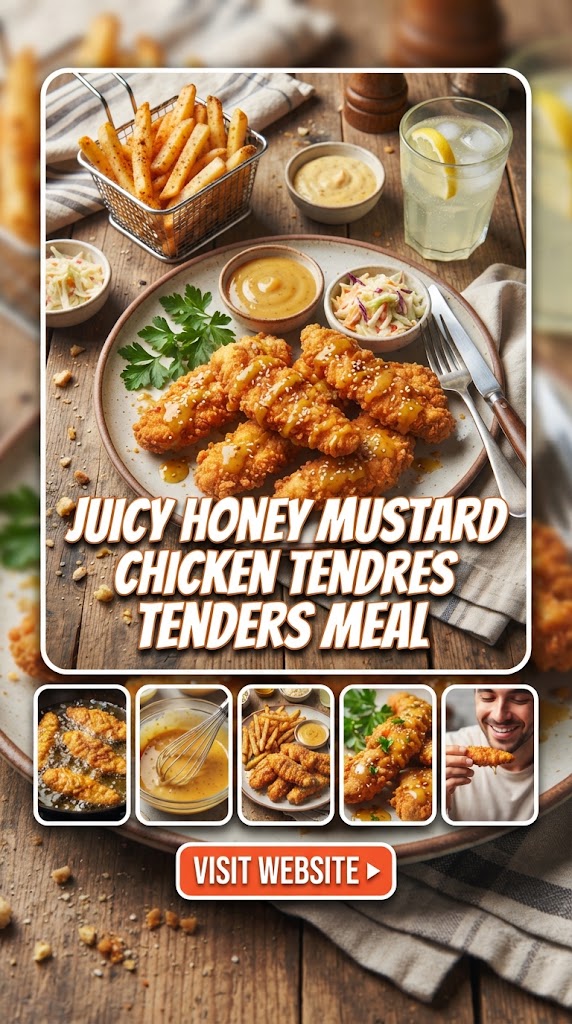
Juicy Honey Mustard Chicken Tenders Meal
There is something universally comforting about a plate of golden-brown chicken tenders. Whether you are five years old or fifty, the combination of a crunchy exterior and a tender, succulent interior is hard to beat. But when you elevate that classic comfort food with a homemade, zesty, and sweet honey mustard glaze, you move from simple snack territory into the realm of a gourmet weeknight masterpiece.
This comprehensive guide will walk you through everything you need to know about creating the perfect Juicy Honey Mustard Chicken Tenders meal. We will explore the science of the marinade, the secrets to a crunch that stays crispy, and the side dishes that turn these tenders into a full-scale feast.
Why Honey Mustard Chicken Tenders Are a Culinary Staple
The popularity of honey mustard chicken tenders isn’t just a fluke of the American palate; it is rooted in the perfect balance of the five basic tastes. You have the saltiness of the chicken seasoning, the sweetness of the honey, the acidity and bitterness of the mustard, and the umami richness of the fried or baked meat.
In the United States, chicken tenders became a household name in the late 20th century, but the honey mustard pairing truly solidified their legendary status. It’s a flavor profile that appeals to those who want a bit of a “kick” without the overwhelming heat of buffalo wings. It’s sophisticated yet approachable.
The Secret to Ultimate Juiciness: The Marinade
The biggest complaint about homemade chicken tenders is that they can often turn out dry or “stringy.” This usually happens because chicken breast meat—which tenders are made from—is very lean. To combat this, we must look at the marinade.
The Power of Brining
Before the breading even touches the chicken, a brine or marinade is essential. For honey mustard tenders, you actually want to incorporate the mustard into the marinade itself. The vinegar in the mustard acts as a mild tenderizer, breaking down the tough proteins in the chicken breast.
The Ingredients for the Perfect Marinade:
- Buttermilk: The acidity helps tenderize the meat while the thickness helps the breading stick.
- Dijon Mustard: Adds a sophisticated depth of flavor.
- Honey: Just a touch to start building that flavor profile from the inside out.
- Garlic and Onion Powder: Essential aromatics.
- Smoked Paprika: Adds a hint of color and a subtle earthiness.
Selecting Your Chicken: Tenders vs. Breasts
Not all “tenders” are created equal. In the grocery store, you will often see packages labeled “Chicken Breast Tenderloins.” These are actual anatomical pieces of the chicken—the pectoralis minor muscle located underneath the breast. They are naturally more tender than the breast itself.
If you cannot find specific tenderloins, you can easily slice a standard chicken breast into strips. To ensure they cook evenly, it is vital to slice them against the grain and aim for a uniform thickness of about one inch.
The Art of the Breading: Achieving Maximum Crunch
The contrast between the juicy meat and a shattering crisp crust is what makes this meal iconic. There are several ways to achieve this, but for a honey mustard profile, certain coatings work better than others.
1. The Panko Method (Recommended)
Panko breadcrumbs are Japanese-style crumbs that are larger and airier than traditional breadcrumbs. They don’t pack down, which means they create more surface area for the oil (or hot air) to crisp up.
2. The Flour and Cornstarch Blend
For a “Southern Style” or “Fast Food Style” tender, a mixture of all-purpose flour and cornstarch is used. The cornstarch inhibits gluten development, resulting in a crunchier, more “shattering” texture rather than a chewy one.
3. The Cornflake Crust
For those who want an extra-sweet crunch that complements the honey, crushed cornflakes are a popular “secret” ingredient. They provide a unique texture that stays crispy even after being tossed in sauce.
Step-by-Step Recipe: Juicy Honey Mustard Chicken Tenders
This recipe focuses on the Oven-Baked method with a Pre-Toast secret to ensure they look and taste fried without the extra calories.
Phase 1: The Ingredients
- Chicken: 1.5 lbs chicken tenderloins.
- Breading: 2 cups Panko breadcrumbs, 1/2 cup grated Parmesan (optional, for saltiness).
- The Binder: 2 eggs, 2 tbsp Dijon mustard, 1 tbsp honey.
- Seasoning: Salt, black pepper, garlic powder, onion powder, and smoked paprika.
Phase 2: The Preparation
- Toast the Crumbs: This is the pro tip. Spread your Panko on a baking sheet and spray lightly with olive oil. Bake at 400°F for 3–5 minutes until they turn a light golden brown. This ensures your chicken isn’t pale when it comes out of the oven.
- The Assembly Line: Set up three bowls.
- Bowl 1: Flour seasoned with salt and pepper.
- Bowl 2: The egg, mustard, and honey mixture.
- Bowl 3: The toasted Panko and seasonings.
- Dredging: Pat the chicken dry. Dip in flour, then the egg mixture, then press firmly into the Panko.
Phase 3: The Bake
Place the tenders on a wire rack set over a baking sheet. This allows hot air to circulate under the chicken, preventing a “soggy bottom.” Bake at 425°F for 12–15 minutes until the internal temperature reaches 165°F.
Mastering the Signature Honey Mustard Sauce
While you can buy bottled sauce, a homemade honey mustard is a game-changer. It takes less than two minutes and allows you to control the balance of sweetness and tang.
The Golden Ratio
The perfect honey mustard usually follows a 3:2:2 ratio:
- 3 Parts Mayonnaise: Provides the creamy base.
- 2 Parts Mustard: Use a mix of Yellow mustard (for tang) and Dijon (for spice).
- 2 Parts Honey: Pure, organic honey works best.
- The Finisher: A splash of apple cider vinegar or lemon juice and a pinch of cayenne pepper.
Mix these until smooth. For a “dipping” consistency, keep it as is. For a “glaze” to toss the chicken in, whisk in a teaspoon of warm water to thin it out.
Alternative Cooking Methods
The Air Fryer Technique
Air fryers are arguably the best tool for chicken tenders.
- Preheat to 375°F.
- Place tenders in a single layer (do not overcrowd).
- Cook for 5–6 minutes per side.
- The high-velocity air creates a crust that is indistinguishable from deep-frying.
Deep Frying for Traditionalists
If you want the full restaurant experience:
- Heat vegetable or peanut oil to 350°F.
- Fry for 3–4 minutes per side.
- Drain on a paper towel and season with a tiny pinch of salt immediately while the oil is still wet on the surface.
Pairing Your Tenders: Making it a Full Meal
To turn these juicy tenders into a well-rounded dinner, you need sides that balance the richness of the fried chicken and the sweetness of the honey.
1. The Classic: Garlic Parmesan Fries
Nothing pairs better than crispy potatoes. Toss oven-baked fries in garlic butter and fresh parsley to elevate the meal.
2. The Fresh: Kale and Apple Slaw
Since honey mustard has a sweet profile, a tart slaw made with shredded kale, thinly sliced green apples, and a cider vinaigrette cuts through the fat of the chicken perfectly.
3. The Hearty: Stovetop Macaroni and Cheese
For the ultimate comfort meal, serve your honey mustard tenders alongside a creamy, three-cheese stovetop mac. The creaminess of the cheese complements the tang of the mustard.
4. The Healthy: Roasted Broccolini
For a lighter touch, roast some broccolini with lemon zest and red pepper flakes. The bitterness of the greens is a great foil to the sweet glaze.
Nutritional Breakdown and Healthier Swaps
While chicken tenders are often seen as an indulgence, you can make them quite healthy with a few adjustments.
- Protein Content: A standard serving of three chicken tenders provides approximately 25–30 grams of high-quality lean protein.
- Gluten-Free Option: Swap the flour for almond flour and use gluten-free Panko or crushed pork rinds for a zero-carb, ultra-crunchy crust.
- Lower Sugar: Replace the honey with a sugar-free maple syrup or a keto-friendly honey substitute if you are monitoring glucose levels.
- Low Fat: By using the oven-baked or air-fryer method with a wire rack, you reduce the fat content by up to 60% compared to deep-frying.
Pro Tips for the Home Chef
- Don’t Overcook: Chicken breast dries out the second it passes 165°F. Use an instant-read thermometer to pull them at exactly 160°F; the “carry-over cooking” will bring them to 165°F as they rest.
- The Resting Period: Let the tenders rest for 3 minutes after cooking. This allows the juices to redistribute so they don’t all run out on the first bite.
- Room Temperature Meat: Take your chicken out of the fridge 15 minutes before cooking. Cold chicken in a hot pan or oven cooks unevenly.
- Double Breading: For an extra-thick crust, go through the egg and Panko steps twice. This creates a “shell” that locks in every drop of moisture.
Troubleshooting Common Issues
Why is my breading falling off?
This usually happens if the chicken was too wet before the flour stage. Always pat the meat dry with paper towels. Additionally, make sure you press the breading into the chicken firmly with the palm of your hand.
Why is the chicken tough?
You likely skipped the marinade or overcooked the meat. If you are using large chicken breasts, you may also have encountered “woody breast”—a condition in some commercial chicken. Buying organic or air-chilled chicken often solves this.
Why isn’t the honey mustard sauce “zingy” enough?
You need more acid. Add an extra teaspoon of Dijon or a squeeze of fresh lemon juice. Mustard loses its “bite” when mixed with fat (mayonnaise) and sugar (honey), so you have to overcompensate.
Storage and Reheating Instructions
How to Store
Keep leftovers in an airtight container in the refrigerator for up to 3 days.
How to Reheat (Avoid the Microwave!)
The microwave is the enemy of crispy chicken. It will make the breading soggy and the meat rubbery. Instead:
- Oven: Reheat at 350°F on a wire rack for 8–10 minutes.
- Air Fryer: Reheat at 350°F for 3–4 minutes. This will return them to their original crispiness.
Freezing for Later
You can freeze these tenders before cooking. Place the breaded, raw tenders on a baking sheet in the freezer for 1 hour (flash freezing), then transfer to a freezer bag. Cook from frozen, adding about 5–8 minutes to the total bake time.
Variations on the Honey Mustard Theme
Once you master the base recipe, you can experiment with these creative twists:
- Spicy Honey Mustard: Add sriracha or habanero honey to the sauce for a “Sweet Heat” experience.
- Pretzel Crusted: Use crushed pretzels instead of Panko. The saltiness of the pretzels is incredible when paired with honey mustard.
- Honey Mustard Chicken Salad: Chop up leftover tenders and toss them with romaine, tomatoes, avocado, and extra sauce for a delicious lunch.
- The Honey Mustard Sandwich: Serve two large tenders on a toasted brioche bun with pickles and Swiss cheese.
The Cultural Impact of the Chicken Tender
In the United States, chicken tenders have evolved from a kids’ menu staple to a culinary obsession. Entire restaurant chains are now built solely around the “perfect tender.” This obsession stems from the nostalgia of the dish combined with the versatility of chicken.
By making these at home, you are taking control of the quality of the ingredients. You aren’t getting processed “nugget” meat; you are getting whole-muscle protein seasoned with real spices and glazed with real honey. It is a meal that feels like a treat but can easily fit into a balanced diet.
Frequently Asked Questions (FAQs)
Can I use yellow mustard instead of Dijon? Yes, but the flavor will be more “American Classic” and slightly more acidic. Dijon provides a deeper, more complex spice profile.
Is honey mustard chicken kid-friendly? Absolutely. It is one of the most popular flavors for children because it is sweet and lacks the “heat” of other sauces.
What is the best honey to use? Clover honey or Wildflower honey are great all-purpose choices. Avoid very dark honeys like Buckwheat for this recipe, as they can be too overpowering.
Can I make this recipe with wings? Yes! The honey mustard sauce works beautifully on crispy baked or fried chicken wings.
Conclusion: The Perfect Bite
The Juicy Honey Mustard Chicken Tenders meal is more than just a quick dinner; it’s a masterclass in texture and flavor balance. By focusing on the quality of your chicken, the crunch of your breading, and the specific ratios of your sauce, you can create a restaurant-quality experience in your own kitchen.
Whether you are hosting a game day party, feeding a hungry family, or just looking for a high-protein meal prep option, these tenders are guaranteed to satisfy. Put on your apron, get that Panko toasting, and prepare for what might just become your new favorite recipe.