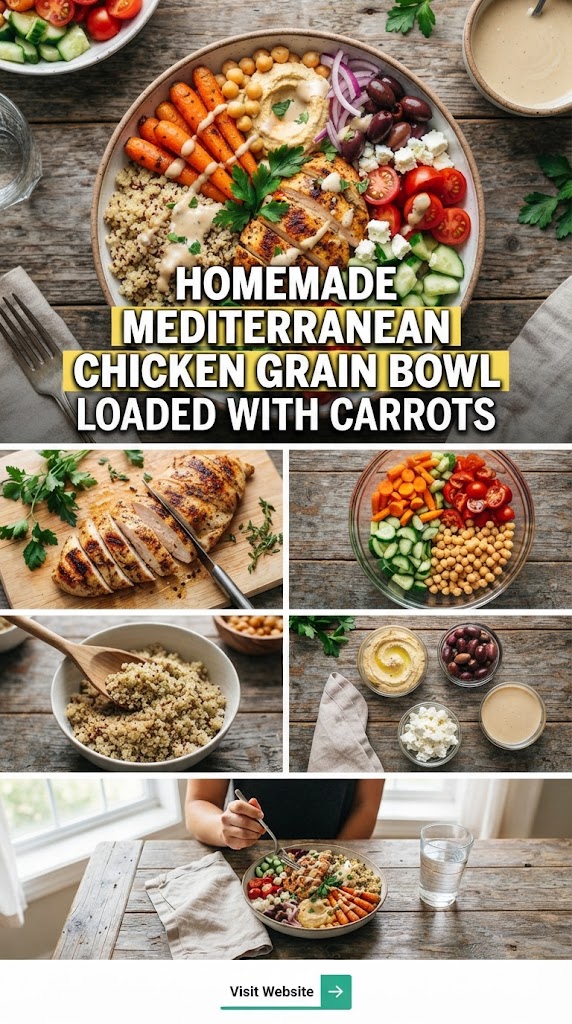
Homemade Mediterranean chicken grain bowl loaded with carrots
If you’re looking for a colorful, satisfying, and easy dinner that feels fresh without requiring complicated cooking, this Homemade Mediterranean Chicken Grain Bowl Loaded With Carrots is a perfect choice. It combines juicy seasoned chicken, hearty whole grains, sweet roasted carrots, crisp cucumber, tomatoes, creamy hummus, tangy feta, fresh herbs, and a bright lemon-garlic dressing in one delicious bowl.
Mediterranean-style meals are especially well suited to grain bowls because they naturally bring together vegetables, grains, legumes, poultry, herbs, nuts, seeds, and olive oil. The American Heart Association describes a Mediterranean-style eating pattern as one that emphasizes vegetables, fruits, whole grains, beans and legumes, nuts and seeds, olive oil, and moderate amounts of poultry and dairy.
This recipe is also highly customizable. You can use brown rice, quinoa, farro, bulgur, or another favorite grain. Add chickpeas for extra texture, swap feta for another cheese, or increase the vegetables when you want an even more colorful bowl.
Recipe Overview
Recipe Name: Homemade Mediterranean Chicken Grain Bowl Loaded With Carrots
Cuisine: Mediterranean-inspired
Category: Lunch, Dinner, Meal Prep
Prep Time: 15 minutes
Cook Time: 25 minutes
Total Time: About 40 minutes
Servings: 4
Difficulty: Easy
Best For: Family dinners, healthy lunches, meal prep, busy weeknights
Why You’ll Love This Mediterranean Chicken Grain Bowl
There are plenty of reasons to add this recipe to your weekly dinner rotation.
1. It’s packed with flavor
The chicken is seasoned with garlic, oregano, paprika, cumin, lemon, olive oil, salt, and black pepper. The combination gives the chicken a savory, slightly smoky, citrusy flavor that pairs beautifully with the other ingredients.
2. Carrots become the star
Instead of treating carrots as an afterthought, this recipe gives them plenty of attention. Roasting brings out their natural sweetness while creating lightly caramelized edges.
Carrots also fit naturally into a vegetable-focused meal. USDA MyPlate classifies carrots among red and orange vegetables and notes that vegetables provide important nutrients including potassium, dietary fiber, folate, vitamin A, and vitamin C.
3. It’s perfect for meal prep
You can prepare the grains, chicken, carrots, dressing, and toppings ahead of time. Store the components separately or assemble individual containers for quick lunches throughout the week.
4. It’s family-friendly
The ingredients can be served separately for picky eaters. Someone who doesn’t like olives can skip them. Someone who loves hummus can add extra. Kids can choose their favorite toppings.
5. It’s easy to customize
Grain bowls are naturally flexible. Similar Mediterranean-style grain bowls commonly use farro, brown rice, couscous, vegetables, greens, chicken, chickpeas, feta, hummus, and other toppings.
Ingredients
For the Chicken
- 1 ½ pounds boneless, skinless chicken breasts or thighs
- 2 tablespoons extra-virgin olive oil
- 1 tablespoon fresh lemon juice
- 3 garlic cloves, minced
- 1 teaspoon dried oregano
- 1 teaspoon smoked paprika
- ½ teaspoon ground cumin
- ½ teaspoon onion powder
- ½ teaspoon salt
- ¼ teaspoon black pepper
- ½ teaspoon dried parsley
- ½ teaspoon lemon zest
Chicken thighs will provide a richer flavor, while chicken breast is a leaner option. USDA MyPlate identifies poultry as part of the Protein Foods Group and recommends choosing lean or lower-fat varieties such as skinless chicken breast.
For the Grain Base
Choose one:
- 2 cups cooked brown rice
- 2 cups cooked quinoa
- 2 cups cooked farro
- 2 cups cooked bulgur
- 2 cups cooked pearl couscous
For a hearty bowl, brown rice or farro works particularly well. For a lighter texture, quinoa is an excellent choice.
For the Roasted Carrots
- 4 large carrots
- 1 tablespoon olive oil
- ½ teaspoon smoked paprika
- ¼ teaspoon cumin
- ¼ teaspoon garlic powder
- Pinch of salt
- Pinch of black pepper
- 1 teaspoon honey, optional
Cut the carrots into thin sticks or diagonal slices. Keeping the pieces relatively similar in size helps them roast evenly.
Fresh Vegetable Toppings
- 1 large cucumber, diced
- 1 cup cherry tomatoes, halved
- ½ small red onion, thinly sliced
- 2 cups baby spinach or arugula
- ½ cup fresh parsley
- 2 tablespoons fresh mint, optional
- ¼ cup Kalamata olives, optional
You can also add roasted bell peppers, shredded cabbage, radishes, or avocado.
Optional Mediterranean Add-Ins
- ½ cup hummus
- ½ cup chickpeas
- ⅓ cup crumbled feta cheese
- 2 tablespoons toasted pumpkin seeds
- 2 tablespoons sliced almonds
- ¼ cup tzatziki
- Fresh dill
- Red pepper flakes
Chickpeas are especially useful if you want to increase the plant-based component of the meal.
Lemon Garlic Dressing
The dressing ties everything together.
Ingredients
- ¼ cup extra-virgin olive oil
- 2 tablespoons fresh lemon juice
- 1 tablespoon red wine vinegar
- 1 teaspoon honey
- 1 small garlic clove, finely grated
- ½ teaspoon dried oregano
- ¼ teaspoon salt
- ¼ teaspoon black pepper
Add everything to a small jar, seal tightly, and shake until emulsified.
Taste and adjust as needed. If you prefer a sharper dressing, add more lemon juice. For a sweeter dressing, add another small amount of honey.
How to Make Mediterranean Chicken Grain Bowls
Step 1: Prepare the Chicken Marinade
Place the chicken in a bowl.
Add olive oil, lemon juice, minced garlic, oregano, smoked paprika, cumin, onion powder, salt, pepper, parsley, and lemon zest.
Mix thoroughly until every piece of chicken is coated.
Allow the chicken to marinate for at least 15 minutes. If you have more time, refrigerate it for several hours.
The lemon and herbs give the chicken a bright Mediterranean-inspired flavor while the olive oil helps the seasonings coat the meat.
Step 2: Prepare the Carrots
Preheat your oven to 425°F.
Wash and peel the carrots if desired. Cut them into sticks or diagonal slices.
Place the carrots on a baking sheet.
Drizzle with olive oil and sprinkle with smoked paprika, cumin, garlic powder, salt, and pepper.
Toss until evenly coated.
For a slightly sweet roasted finish, add a small drizzle of honey.
Spread the carrots into a single layer.
Avoid overcrowding the pan because too many vegetables packed together can steam instead of roast.
Step 3: Roast the Carrots
Roast the carrots for approximately 20–25 minutes, turning them halfway through cooking.
The finished carrots should be tender inside with lightly browned edges.
For deeper caramelization, leave them in the oven for a few extra minutes, watching carefully so they don’t burn.
The roasted carrots should have a naturally sweet, slightly smoky flavor that balances the tangy dressing and savory chicken.
Step 4: Cook the Chicken
While the carrots are roasting, heat a large skillet over medium-high heat.
Add a small drizzle of olive oil.
Place the marinated chicken into the skillet.
Cook until browned on the outside and cooked through in the center. The exact cooking time depends on the thickness of the chicken pieces.
For chicken breasts, you can cut them into smaller pieces before cooking to make the process faster.
Once cooked, transfer the chicken to a cutting board and allow it to rest for several minutes.
Slice the chicken into strips or bite-size pieces.
Step 5: Prepare Your Grain
While the chicken cooks, prepare your chosen grain.
Brown rice gives the bowl a hearty texture. Quinoa has a lighter, slightly nutty flavor. Farro is chewy and substantial, while bulgur cooks quickly and works beautifully with Mediterranean ingredients.
If using leftover cooked grains, simply warm them before assembling the bowls.
A grain bowl is essentially a flexible format, so there is no need to use only one specific grain. Similar Mediterranean bowl recipes commonly recommend swapping among grains such as brown rice, bulgur, quinoa, couscous, and farro.
Step 6: Make the Dressing
Add olive oil, lemon juice, red wine vinegar, honey, garlic, oregano, salt, and pepper to a small jar.
Shake vigorously.
The dressing should taste bright, fresh, slightly tangy, and balanced.
If it tastes too acidic, add another small drizzle of olive oil or a touch more honey.
If it tastes too mild, add more lemon juice or a pinch of salt.
Step 7: Prepare the Fresh Toppings
Dice the cucumber.
Halve the cherry tomatoes.
Thinly slice the red onion.
Wash the spinach or arugula.
Chop the parsley and mint.
Prepare the feta, hummus, chickpeas, olives, or other toppings.
Keeping all of the toppings ready before assembling makes the final step quick and easy.
Step 8: Assemble the Bowls
Start with a generous scoop of cooked grains.
Add a handful of spinach or arugula.
Arrange the chicken on one side.
Add roasted carrots.
Then add cucumber, tomatoes, red onion, chickpeas, olives, and feta.
Place a spoonful of hummus or tzatziki in the center.
Finish with fresh parsley and mint.
Drizzle the lemon-garlic dressing over the top.
For an attractive presentation, arrange the ingredients in separate sections instead of mixing everything immediately.
The Perfect Flavor Combination
One of the best things about this Mediterranean chicken grain bowl is the contrast between its ingredients.
The chicken is savory and herbaceous.
The roasted carrots are naturally sweet and caramelized.
The cucumber provides cool, crisp freshness.
The tomatoes add juicy acidity.
The red onion brings a mild sharpness.
The feta contributes creamy, salty flavor.
The hummus adds richness.
The lemon dressing ties everything together with brightness.
Fresh parsley and mint finish the bowl with an herbal note.
The result is a meal that tastes fresh and satisfying without relying on a heavy sauce.
Best Grain Options for This Recipe
Brown Rice
Brown rice is an easy everyday option. It has a hearty texture and works well with chicken and roasted vegetables.
Quinoa
Quinoa creates a lighter bowl and is especially good when you want a slightly nutty flavor.
Farro
Farro is chewy and substantial, making it excellent for meal-prep bowls.
Bulgur
Bulgur is quick to prepare and has a pleasant texture that complements fresh vegetables.
Pearl Couscous
Pearl couscous creates a softer, more playful texture and works beautifully with lemon and herbs.
How to Make Extra-Crispy Roasted Carrots
If crispy carrot edges are your favorite part, follow a few simple tricks.
First, don’t cut the carrots too thick.
Second, dry the carrots thoroughly after washing.
Third, don’t overcrowd the baking sheet.
Fourth, use enough oil to lightly coat the vegetables.
Finally, roast at a sufficiently high temperature.
You want the carrots to have room around them so the hot air can circulate.
How to Make the Chicken More Flavorful
For deeper flavor, marinate the chicken several hours in advance.
You can also add:
- Fresh oregano
- Fresh parsley
- Extra lemon zest
- Crushed red pepper
- A pinch of coriander
- A little Greek yogurt
- Additional garlic
If using chicken thighs, trim excessive fat but leave enough to keep the meat juicy.
For chicken breast, avoid overcooking because lean meat can become dry.
Always cook chicken thoroughly and verify doneness with a food thermometer when needed.
Easy Meal Prep Instructions
This recipe is excellent for weekly meal preparation.
Prepare the grains and let them cool.
Cook the chicken and roasted carrots.
Chop the vegetables.
Prepare the dressing.
Then divide the ingredients into four meal-prep containers.
For best texture, keep the dressing in a separate small container.
You can also keep hummus or tzatziki separate until serving.
When you’re ready to eat, warm the grains and chicken if desired, then add the fresh vegetables, carrots, sauce, and toppings.
This gives you a flavorful lunch without having to cook an entire meal from scratch during a busy workday.
How Long Does It Last?
For meal-prep purposes, store cooked components properly in the refrigerator and use them within an appropriate food-safety timeframe.
Keep fresh vegetables separate when possible so they stay crisp.
The dressing can also be stored separately.
If you plan to keep the bowl for several days, wait to add cucumber, herbs, dressing, and other delicate toppings until serving.
Mediterranean Chicken Bowl Variations
Spicy Mediterranean Chicken Bowl
Add red pepper flakes, cayenne pepper, or sliced jalapeños to the chicken marinade.
Finish with a spicy yogurt sauce.
Greek Chicken Grain Bowl
Use brown rice or quinoa with cucumber, tomatoes, red onion, feta, olives, oregano, and tzatziki.
Mediterranean Chicken Quinoa Bowl
Replace the grain with quinoa and add chickpeas, spinach, carrots, cucumber, and lemon dressing.
Chicken Hummus Bowl
Make hummus the centerpiece of the bowl and surround it with chicken, carrots, cucumber, tomatoes, greens, and grains.
Mediterranean Chicken Salad Bowl
Skip the grains and increase the leafy greens and vegetables.
Vegetarian Mediterranean Grain Bowl
Replace the chicken with chickpeas, lentils, falafel, or another plant-based protein.
How to Make It More Filling
If you’re serving this for dinner, increase the grain and protein portions.
You can also add:
- Chickpeas
- Hummus
- Avocado
- Feta
- Pumpkin seeds
- Almonds
- Tzatziki
- Roasted sweet potato
A balanced bowl can combine several food groups. USDA’s MyPlate framework includes vegetables, fruits, grains, protein foods, and dairy as the major food groups, making grain bowls an easy format for combining different ingredients.
How to Make It Lighter
For a lighter version, use more vegetables and a smaller grain portion.
Try:
- Extra cucumber
- More leafy greens
- More roasted carrots
- Less feta
- A moderate amount of dressing
- Skinless chicken breast
- A smaller serving of rice or quinoa
You don’t have to remove flavorful ingredients. Portion balance can keep the bowl satisfying while allowing vegetables to take up more space.
Family-Friendly Serving Idea
If you’re feeding children or family members with different preferences, don’t assemble the bowls individually.
Instead, create a Mediterranean bowl bar.
Put the cooked grains in one large serving dish.
Then place chicken, roasted carrots, cucumbers, tomatoes, hummus, feta, olives, spinach, and dressing in separate bowls.
Everyone can build their own bowl.
This makes dinner interactive and allows each person to choose the ingredients they enjoy.
What to Serve With Mediterranean Chicken Bowls
This bowl is filling enough to serve as a complete meal, but you can pair it with additional sides.
Warm Pita Bread
Warm pita is perfect for scooping up hummus and vegetables.
Greek Yogurt Sauce
A simple Greek yogurt, lemon, garlic, and herb sauce adds creaminess.
Roasted Vegetables
Roasted zucchini, bell peppers, or eggplant make excellent additions.
Simple Green Salad
A salad with lettuce, cucumber, tomato, lemon, and olive oil keeps the meal fresh.
Fresh Fruit
Finish the meal with berries, grapes, oranges, or melon.
Common Mistakes to Avoid
Overcooking the Chicken
Dry chicken can make the whole bowl less enjoyable. Cook until safely done but avoid unnecessary extra cooking.
Overcrowding the Carrots
Give the carrots space on the baking sheet so they roast instead of steam.
Using Too Much Dressing
The lemon dressing is flavorful, so start with a modest amount and add more at the table.
Adding Everything Too Early
If you’re meal prepping, don’t add dressing and delicate vegetables several days in advance.
Forgetting Texture
A great grain bowl should contain different textures: chewy grains, tender chicken, crisp vegetables, creamy hummus, crumbly feta, and caramelized carrots.
Expert Tips for the Best Mediterranean Chicken Grain Bowl
Use Fresh Lemon
Fresh lemon juice tastes brighter than bottled lemon juice and works especially well in Mediterranean-inspired recipes.
Don’t Skip the Herbs
Parsley, mint, dill, and oregano can transform a simple bowl.
Roast the Carrots Until Golden
Light caramelization gives the carrots much more flavor.
Season Every Layer
Don’t rely entirely on the dressing. Season the chicken, grains, vegetables, and dressing separately.
Add Crunch
Pumpkin seeds, almonds, toasted chickpeas, or sunflower seeds can provide an appealing contrast to soft grains and chicken.
Serve the Dressing Separately
This is especially useful when preparing bowls ahead of time.
Frequently Asked Questions
What grain is best for a Mediterranean chicken bowl?
Brown rice, quinoa, farro, bulgur, and pearl couscous all work well. Brown rice and farro are excellent choices for a hearty bowl, while quinoa creates a lighter texture.
Can I use leftover chicken?
Absolutely. Leftover grilled, roasted, or rotisserie chicken can make this recipe even faster.
Can I make this recipe without chicken?
Yes. Replace the chicken with chickpeas, lentils, falafel, tofu, or another protein you enjoy.
Can I use baby carrots?
Yes. Baby carrots can be roasted whole or halved lengthwise. Adjust cooking time depending on their size.
Can I make the bowl gluten-free?
Yes. Choose certified gluten-free grains such as rice or quinoa and check packaged ingredients such as hummus, sauces, and seasonings if gluten exposure is a concern.
Can I make it dairy-free?
Absolutely. Simply omit the feta and use a dairy-free hummus or yogurt-based sauce.
Can I make it spicy?
Yes. Add crushed red pepper flakes, cayenne, harissa, or sliced jalapeños.
Is this good for lunch meal prep?
Yes. It’s particularly convenient because the main components can be prepared in advance and assembled quickly.
Nutrition Notes
The exact nutrition information will vary depending on the grain, chicken cut, amount of olive oil, feta, hummus, dressing, and toppings you use.
The recipe features several ingredients commonly associated with a Mediterranean-style eating pattern, including vegetables, whole grains, poultry, olive oil, legumes, herbs, and nuts or seeds when added. The American Heart Association notes that Mediterranean-style eating emphasizes vegetables, fruits, whole grains, beans and legumes, nuts and seeds, and olive oil while favoring poultry and fish over more processed or fatty meats.
Carrots also contribute to the vegetable component of the meal. MyPlate lists carrots as red and orange vegetables and notes that vegetables provide nutrients including dietary fiber, potassium, folate, vitamin A, and vitamin C.
For personalized nutrition needs, portion sizes and ingredients should be adjusted according to individual dietary requirements.
Why This Recipe Works for Busy Weeknights
Busy dinners don’t have to mean boring dinners.
This recipe uses a simple structure:
grain + protein + roasted vegetable + fresh vegetables + creamy topping + dressing.
Once you understand that formula, you can create endless variations.
Cook the grains in advance.
Prepare a large batch of chicken.
Roast carrots and other vegetables at the same time.
Keep chopped vegetables in the refrigerator.
Make a jar of dressing.
Then you can build a fresh Mediterranean chicken grain bowl in minutes.
This type of flexible meal is one reason grain bowls have become popular for both lunch and dinner. Existing Mediterranean-style grain bowl recipes similarly emphasize flexible ingredients, meal-prep potential, and swapping grains, proteins, and vegetables based on preference.
Final Thoughts
This Homemade Mediterranean Chicken Grain Bowl Loaded With Carrots is a simple way to turn everyday ingredients into a colorful, satisfying meal. Juicy lemon-herb chicken provides the protein, hearty grains create a filling base, and roasted carrots add natural sweetness and beautiful color.
Fresh cucumber, tomatoes, greens, herbs, feta, hummus, and a bright lemon-garlic dressing bring the bowl together. The best part is that you can make it exactly the way you like it.
For a quick lunch, prepare the ingredients ahead of time. For family dinner, create a build-your-own bowl station. For a vegetarian meal, replace the chicken with chickpeas or falafel. For extra flavor, add olives, feta, tzatziki, herbs, or a spicy sauce.
The result is a vibrant Mediterranean-inspired meal that looks beautiful, tastes fresh, and fits easily into a busy weekly menu.