How To Build Passive Income From Scratch
The Ultimate Guide to Building Passive Income from Scratch
The dream of “making money while you sleep” is often dismissed as a marketing gimmick or a privilege reserved for the ultra-wealthy. However, in the modern digital economy, building passive income from zero is not only possible; it is a fundamental pillar of long-term financial freedom. Passive income is not about getting rich quick; it is about decoupling your time from your earnings. While active income requires a direct exchange of hours for dollars, passive income involves an upfront investment of either time or capital to create a system that generates revenue autonomously over the long term.
To build these streams from scratch, you must transition from being a consumer to a producer. This guide provides a comprehensive roadmap for navigating the complexities of digital assets, financial markets, and automated business models to create a sustainable portfolio of residual wealth.
1. Content Creation
Content creation is the most accessible entry point for those starting with zero capital. By leveraging platforms like YouTube, blogs, or podcasts, you are essentially building “digital real estate.” The initial phase requires significant “sweat equity”—the process of researching, filming, writing, and editing without immediate pay. However, once a library of high-quality content is established, it begins to attract traffic through search engines and algorithms.
The key to success in content creation is the “Flywheel Effect.” As you produce more content, your authority grows, which improves your SEO (Search Engine Optimization), leading to more views, which in turn generates more ad revenue and sponsorship opportunities. For a blog, this involves mastering keyword research to answer specific user queries. For YouTube, it involves high click-through rates (CTR) and audience retention. Over time, an evergreen video or article can generate ad revenue for years after its initial publication, making it a powerful passive asset.
2. Digital Products
Once you have an audience or a specific skill set, digital products offer a scalable way to monetize your expertise. Unlike physical goods, digital products have zero marginal cost of reproduction. Whether it is an e-book, a template, a set of photo presets, or a specialized software plugin, you create the asset once and sell it infinitely.
The beauty of digital products lies in the automation of the sales funnel. By using platforms like Gumroad, Etsy, or Shopify, you can set up a system where a customer discovers your product, pays via a secure gateway, and receives a download link automatically. To build this from scratch, focus on solving a specific pain point. If you are a graphic designer, sell social media templates. If you are a project manager, sell Notion templates. The goal is to create high-value assets that require minimal maintenance but provide recurring sales.
3. Dividend Stocks
For those who have begun to save small amounts of capital, dividend growth investing is one of the most “pure” forms of passive income. When you buy shares of a dividend-paying company, you become a partial owner of that business. In exchange for your investment, the company pays you a portion of its profits, usually every quarter.
Building a dividend portfolio from scratch requires a long-term perspective and the power of compounding. By opting into a Dividend Reinvestment Plan (DRIP), your dividends are automatically used to buy more shares, which in turn generate even more dividends. Over a decade or more, this creates a snowball effect where the income generated by the portfolio can eventually cover your living expenses. Focus on “Dividend Aristocrats”—companies that have increased their dividend payouts for at least 25 consecutive years—to ensure stability and reliability in your income stream.
4. Index Funds
Generating Image…
If picking individual stocks feels too risky or time-consuming, index funds and Exchange-Traded Funds (ETFs) offer a hands-off approach to wealth building. An index fund, such as one tracking the S&P 500, allows you to own a tiny piece of the 500 largest companies in the United States simultaneously. This provides instant diversification and lowers the risk of any single company’s failure ruining your portfolio.
The strategy here is “Dollar Cost Averaging” (DCA). By investing a fixed amount of money at regular intervals—regardless of whether the market is up or down—you reduce the impact of volatility. Over time, the historical upward trend of the stock market works in your favor. This is the epitome of “set it and forget it” passive income, as it requires no active management while your wealth grows through both capital appreciation and dividends.
5. Affiliate Marketing
Generating Image…
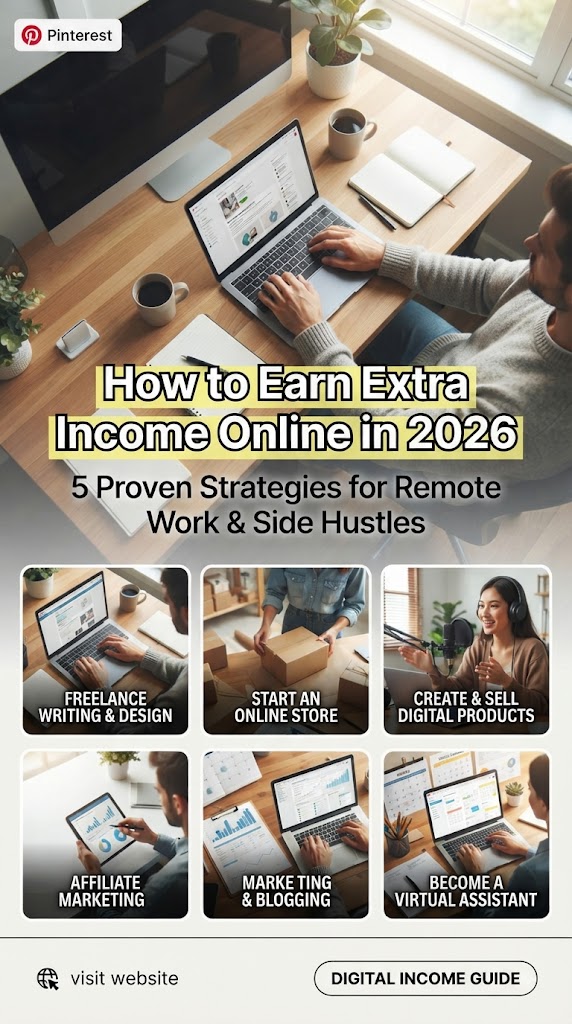
Affiliate marketing is the process of earning a commission by promoting other people’s or companies’ products. You find a product you like, promote it to your audience, and earn a piece of the profit for each sale that you make. This is a highly effective way to build passive income because you don’t have to deal with product development, inventory, shipping, or customer service.
To succeed from scratch, you must build trust. Content that focuses on “Best of” lists, product comparisons, and “How-to” guides tends to perform best for affiliate conversions. By utilizing SEO, your review of a specific camera or software can rank on the first page of Google, catching buyers exactly when they are ready to make a purchase. As long as the link remains active and the content remains relevant, you can earn commissions for years.
6. Real Estate
Physical real estate is a classic passive income play, but it often requires significant upfront capital. However, for those starting from scratch, there are several “low-barrier” entries into the property market. House hacking is a popular method where you buy a multi-unit property, live in one unit, and rent out the others. The rent from the tenants covers your mortgage and expenses, allowing you to live for free while building equity.
Another modern alternative is Real Estate Investment Trusts (REITs). These are companies that own, operate, or finance income-producing real estate. By buying shares of a REIT on the stock market, you get the benefits of real estate (monthly or quarterly dividends) without the headaches of being a landlord. This allows you to start investing in large-scale commercial real estate, like shopping malls or apartment complexes, with as little as $100.
7. Print-on-Demand
Print-on-Demand (POD) is a business model where you design graphics for products like t-shirts, mugs, or posters, but you only pay for the product when a customer buys it. Platforms like Printful, Redbubble, or Amazon Merch handle the manufacturing, printing, and shipping. Your job is purely creative and promotional.
Building a POD stream from scratch involves identifying niche trends and creating designs that resonate with specific communities (e.g., dog lovers, programmers, or outdoor enthusiasts). Once a design is uploaded and optimized with the right tags and keywords, it stays on the marketplace forever. A single viral design can generate hundreds of dollars in passive royalties every month with zero ongoing effort from the creator.
8. Online Courses
If you possess a skill that others want to learn—whether it’s coding, cooking, public speaking, or yoga—packaging that knowledge into an online course is a powerful way to create a recurring income stream. Platforms like Udemy, Skillshare, and Teachable provide the infrastructure to host your videos and manage student enrollments.
The “scratch” approach involves starting with free content on social media to validate your idea and build an initial following. Once you confirm there is demand, you can record a comprehensive, high-quality course. Unlike a 1-on-1 coaching session, a course allows you to teach thousands of people simultaneously. After the initial production and launch, the course becomes a passive asset that can be marketed through automated email sequences and evergreen webinars.
9. Vending Machines
For those interested in “un-digital” passive income, automated retail via vending machines is a lucrative option. This involves purchasing a machine, placing it in a high-traffic location (like an office building, gym, or laundry mat), and keeping it stocked. While it requires some physical maintenance, the “income per hour worked” is exceptionally high.
Starting from scratch in this field involves scouting locations and negotiating contracts with property owners. Modern vending machines can be monitored remotely via apps that tell you exactly which products are selling and when the machine needs a refill. By reinvesting the profits from one machine into a second and third, you can build a “vending route” that generates significant monthly cash flow with only a few hours of work per week.
10. Peer-to-Peer Lending
Peer-to-peer (P2P) lending platforms like Prosper or LendingClub allow individuals to lend money directly to other individuals or small businesses. In return, you receive interest payments on the loan, much like a bank would. This bypasses traditional financial institutions, often resulting in higher returns for the lender and lower rates for the borrower.
To build this from scratch, you can start with very small amounts—often as little as $25 per loan. By spreading your investment across hundreds of different “notes,” you minimize the risk of a single borrower defaulting. As borrowers pay back their loans with interest, the money flows back into your account, where it can be automatically reinvested into new loans, creating a self-sustaining cycle of interest-bearing passive income.
The Philosophy of Passive Wealth
Building passive income from scratch is a marathon, not a sprint. The primary barrier for most people is the “Time-to-Money Gap.” In a traditional job, you work an hour and get paid for an hour. In a passive income model, you might work 100 hours on a blog or a course and earn exactly zero dollars in the first month. However, in the twelfth month, that same 100 hours of work might earn you $1,000—and then $1,000 every month after that for years.
To navigate this journey successfully, you must adopt three core principles:
Consistency Over Intensity
It is better to work on your passive income stream for one hour every single day than to pull an all-nighter once a month. The algorithms that govern the internet and the compounding that governs the markets both reward consistency. Whether it is publishing a weekly article or investing $50 from every paycheck, the habit is more important than the amount.
The Power of Automation
As your income streams grow, your goal should be to remove yourself from the process. This means setting up automated email marketing, hiring virtual assistants to manage customer service, or using “Auto-Invest” features on brokerage accounts. If a business requires your constant presence to function, you haven’t built a passive income stream; you’ve just built yourself a job.
Diversification of Streams
Never rely on a single source of passive income. Platforms can change their algorithms, markets can crash, and niches can become oversaturated. A robust financial fortress is built on multiple, uncorrelated pillars. A mix of digital assets (blogs/courses), financial assets (stocks/REITs), and physical assets (vending/real estate) ensures that if one stream dries up, the others continue to provide stability.
Strategic Roadmap: From Zero to Freedom
Phase 1: The Accumulation Phase (Months 1–6) Focus entirely on “Time Assets.” Since you are starting from scratch, your time is your only leverage. Choose one platform (e.g., YouTube or a Blog) and commit to a rigorous publishing schedule. Do not worry about the money yet; worry about the data. Learn what your audience wants and build a library of content.
Phase 2: The Monetization Phase (Months 6–12) Once you have a steady stream of traffic or a small amount of savings, begin layering in monetization. Add affiliate links to your content, launch your first digital template, or open a brokerage account to start buying fractional shares of index funds. This is where you see the first few dollars of “unearned” income.
Phase 3: The Scaling Phase (Year 1–3) Take the profits from your initial streams and reinvest them. Use your ad revenue to buy better equipment or hire an editor. Use your dividend payments to buy more shares. At this stage, the “Snowball Effect” begins to take hold. Your assets start growing faster than your ability to contribute manually.
Phase 4: The Freedom Phase (Year 5+) At this point, your diversified portfolio of passive income streams begins to approach or exceed your monthly living expenses. You now have the ultimate luxury: the choice of how to spend your time. You can continue to grow your assets, or you can step back and enjoy the “lifestyle design” that passive income affords.
Overcoming Common Pitfalls
The most common reason people fail to build passive income is “Shiny Object Syndrome.” They start a blog, write three posts, and then quit to try dropshipping. When dropshipping doesn’t make them a millionaire in a month, they move to crypto. To build real wealth, you must choose a path and see it through to the “tipping point”—that moment when the momentum of the asset takes over and it begins to grow on its own.
Another pitfall is the “Quality Gap.” Because the barrier to entry is low, the internet is flooded with low-quality content and “get rich quick” schemes. To stand out and build a sustainable income, you must provide genuine value. Whether it’s a high-quality stock analysis, a deeply researched blog post, or a highly reliable vending service, quality is the only thing that survives the test of time and competition.
Conclusion
Building passive income from scratch is a journey of transforming from a laborer into a system-builder. It requires a fundamental shift in mindset—viewing every dollar and every hour as a “seed” that can be planted to grow a “money tree.” While the initial work is demanding and the rewards are delayed, the end result is a life defined by autonomy rather than obligation.
By leveraging the digital tools of the 21st century—from SEO and affiliate marketing to automated stock trading and global marketplaces—the path to financial independence is more accessible today than at any point in human history. Start today by choosing one stream, committing to the process, and building your first asset. The version of you five years from now will thank you for the work you did today.