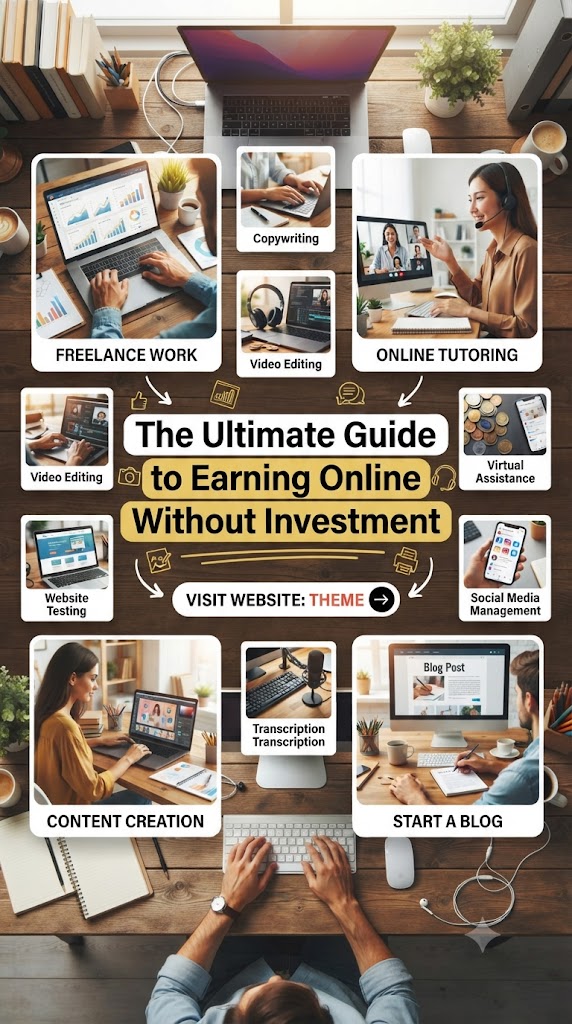
The Ultimate Guide to Earning Money Online
Regenerate Image
WebP
A Comprehensive Roadmap to Financial Freedom
In the modern digital era, the traditional 9-to-5 office grind is no longer the only path to a sustainable income. The internet has democratized wealth creation, allowing anyone with a computer and a reliable internet connection to build a flourishing career from the comfort of their own home. Whether you are looking for a side hustle to pay off debt or dreaming of a full-scale digital empire that allows you to travel the world, the opportunities are boundless.
However, the sheer volume of “get rich quick” schemes can be overwhelming. To truly succeed, you need to navigate the noise and focus on proven, legitimate methods that reward effort, skill, and consistency. This guide explores the most effective and easiest ways to earn money online, providing you with the strategies, platforms, and insights needed to turn your digital aspirations into a reality.
1. Freelance Writing
Freelance writing remains one of the most accessible and lucrative ways to earn money online. Every website, blog, and digital brand requires high-quality content to engage its audience and rank on search engines. If you have a knack for storytelling or can explain complex topics in simple terms, there is a massive market waiting for you.
To start, you don’t necessarily need a degree in journalism. You do, however, need a portfolio. Begin by creating a few “spec” pieces—articles written as if for a client—to showcase your style. Platforms like Upwork, Fiverr, and ProBlogger are excellent places to find your first gigs. As you gain experience, you can specialize in high-paying niches like technical writing, medical content, or B2B SaaS (Software as a Service) whitepapers.
The key to maximizing earnings in freelance writing is “niche-ing down.” Generalists often struggle with low rates, but specialists who understand a specific industry can charge premium prices. Additionally, mastering SEO (Search Engine Optimization) basics makes you twice as valuable to clients, as you’re not just providing words; you’re providing a tool for growth.
2. Virtual Assistance
As the number of online entrepreneurs grows, so does the demand for Virtual Assistants (VAs). A VA is essentially a remote personal assistant who handles administrative, technical, or creative tasks. This role is perfect for organized individuals who excel at multitasking and communication.
Common tasks for a VA include managing email inboxes, scheduling social media posts, booking travel, data entry, and basic customer service. The beauty of being a VA is the variety; one day you might be researching a podcast guest, and the next, you’re organizing a digital filing system.
Platforms like Zirtual or Belay specialize in connecting VAs with busy executives. Alternatively, you can market yourself directly on LinkedIn. To succeed, you should be proficient in tools like Google Workspace, Slack, Trello, and Zoom. As you become more skilled, you can transition into an “Online Business Manager” (OBM), a role that commands a much higher hourly rate for taking over the strategic operations of a business.
3. Online Tutoring
If you possess expertise in a specific subject—whether it’s mathematics, a foreign language, or even a musical instrument—online tutoring is a rewarding way to monetize your knowledge. The global e-learning market is exploding, and students of all ages are seeking personalized instruction.
For those fluent in English, platforms like VIPKid, Cambly, and Preply allow you to teach students from around the world. If you have specialized academic knowledge, sites like Chegg Tutors or TutorMe are great options. The flexibility is a major draw; you can often set your own hours and work as much or as little as you want.
Beyond academic subjects, “skill tutoring” is also on the rise. People are willing to pay for one-on-one sessions to learn coding, graphic design, or even how to play video games at a professional level. The key is to build a reputation through positive reviews and to use interactive tools to keep your students engaged.
4. Micro-tasks
For those who want to earn money without committing to long-term projects or specialized skills, micro-tasking is the easiest entry point. Micro-tasks are small, simple jobs that can be completed in minutes, such as identifying objects in an image, transcribing short audio clips, or verifying data.
Amazon Mechanical Turk (MTurk) is the most famous platform for this, but others like Clickworker and Microworkers offer similar opportunities. While the pay per task is low—often just a few cents to a few dollars—the tasks are abundant and require no prior experience.
This isn’t a career path, but it is a great way to earn “gap money” during your commute or while watching TV. To make the most of micro-tasking, you need to be fast and accurate. Over time, as you build a high approval rating, you may gain access to higher-paying “HITs” (Human Intelligence Tasks).
5. Affiliate Marketing
Affiliate marketing is the art of earning a commission by promoting other people’s products. It is one of the most popular forms of passive income. When someone clicks on your unique affiliate link and makes a purchase, you get a percentage of the sale.
The most successful affiliate marketers build a platform first—this could be a blog, a YouTube channel, or a large Instagram following. By providing honest reviews and valuable recommendations, they build trust with their audience. The Amazon Associates program is the most common starting point because Amazon sells almost everything, but high-ticket affiliate programs in the finance or software sectors can offer much higher payouts.
The secret to affiliate marketing is transparency and relevance. You should only promote products that you truly believe in and that align with your audience’s interests. Using SEO to drive organic traffic to your review articles is a tried-and-true method for generating long-term, consistent income.
6. Stock Photography
If you have a passion for photography and a high-quality camera (or even a top-tier smartphone), you can earn royalties by selling your photos to stock image websites. Businesses, bloggers, and designers are constantly looking for high-quality visuals for their projects.
Platforms like Shutterstock, Adobe Stock, and Getty Images allow you to upload your photos to their vast libraries. Every time a user downloads one of your images, you receive a royalty payment. The goal here is “commercial appeal.” Photos of people working, diverse families, nature, and abstract backgrounds tend to perform well.
To succeed in stock photography, you need to think about what a designer might need. This involves using metadata and keywords effectively so your photos show up in search results. It’s a numbers game; the more high-quality, relevant images you have in your portfolio, the higher your monthly passive income will be.
7. Social Media Management
Almost every business today knows they need a social media presence, but many small business owners lack the time or expertise to manage it effectively. This is where social media managers come in. If you know how to create engaging Reels, write catchy captions, and understand the ever-changing algorithms, you can turn those skills into a business.
As a social media manager, you are responsible for creating a content calendar, interacting with followers, and analyzing performance metrics. You might work for a local bakery, a tech startup, or a lifestyle influencer.
Tools like Canva for design and Buffer or Hootsuite for scheduling are essential for this role. To find clients, start by optimizing your own social media profiles to showcase your results. Offering a free “audit” to a business can be a great way to get your foot in the door and demonstrate your value.
8. User Testing
Companies are willing to pay for your honest opinion on their websites and apps. Before launching a new feature or a redesigned site, they need to know if it’s intuitive and user-friendly. User testing involves performing a set of tasks on a website while recording your screen and your voice as you think out loud.
Platforms like UserTesting, TryMyUI, and Userlytics pay around $10 for a 20-minute test. While you won’t get tests every hour, signing up for multiple platforms can lead to a steady trickle of income.
The key to being a great user tester is to be descriptive. Instead of saying “I like this,” explain why it works or why a certain button is confusing. High-quality feedback leads to a higher rating, which in turn leads to more testing invitations.
9. Print on Demand
Print on Demand (POD) is a low-risk way to start an e-commerce business. Unlike traditional retail, you don’t need to buy inventory or manage shipping. You simply create a design, upload it to a POD platform, and when a customer buys a shirt, mug, or phone case with that design, the platform prints and ships it for you.
Sites like Redbubble, Teespring, and Printful handle the heavy lifting. Your job is to find a niche—like “funny cat shirts for programmers” or “motivational quotes for hikers”—and create designs that resonate with that audience.
You don’t need to be a professional graphic designer to succeed. Many successful POD sellers use simple text-based designs or buy graphics from sites like Creative Market. The key is staying on top of trends and using the right keywords so your products appear in the platform’s internal search engine.
10. Dropshipping
Dropshipping is another e-commerce model that removes the need for inventory. You create an online store (usually using Shopify), list products from a third-party supplier (like AliExpress), and when a customer makes a purchase, the supplier ships the product directly to them.
Your profit is the difference between the price you charge the customer and the price the supplier charges you. The success of a dropshipping business hinges on two things: finding a “winning” product and effective digital marketing.
Most dropshippers use Facebook or TikTok ads to drive traffic to their stores. While this requires some initial investment and a learning curve, it is highly scalable. Many entrepreneurs start with one small store and eventually grow it into a multi-million dollar brand.
11. Content Creation
The “Creator Economy” is booming. Whether it’s through YouTube, a podcast, or a blog, creating content allows you to build a loyal audience that you can monetize in various ways. You can earn through ad revenue (like Google AdSense), brand sponsorships, selling your own digital products, or through fan support on platforms like Patreon.
The most important aspect of content creation is consistency and authenticity. It takes time to build an audience, but once you have a community that trusts you, the earning potential is virtually limitless. Choose a topic you are passionate about—whether it’s cooking, personal finance, or travel—and focus on providing value to your viewers or listeners.
YouTube, in particular, is a powerful engine for income. Once you meet the requirements for the YouTube Partner Program, you earn a share of the ad revenue generated by your videos. Over time, your older videos continue to earn money, creating a powerful passive income stream.
12. Online Surveys
While they won’t make you a millionaire, online surveys are perhaps the easiest way to earn a few extra dollars in your spare time. Market research companies are desperate for consumer insights and are willing to pay for your data.
Platforms like Swagbucks, Survey Junkie, and Prolific Academic are the most reputable in this space. You simply fill out your profile, and the platforms match you with surveys that fit your demographics. You can often choose to be paid in cash via PayPal or in gift cards for major retailers.
To avoid burnout, it’s best to treat surveys as a way to earn “coffee money.” Prolific is particularly well-regarded because it focuses on academic research and tends to pay better than general market research sites.
13. Transcription Services
Transcription involves listening to audio or video recordings and typing out what is said. This is a vital service for journalists, lawyers, medical professionals, and content creators who need captions for their videos.
If you are a fast and accurate typist with a good ear for accents, transcription can be a steady source of income. Sites like Rev, TranscribeMe, and GoTranscript are always looking for new freelancers. Usually, you have to pass a short test to prove your accuracy and knowledge of their style guide.
Specialized transcription, such as legal or medical, pays significantly more but requires specific knowledge of the terminology. As you get faster, your “per-audio-hour” rate effectively increases, allowing you to earn more in less time.
14. Data Entry
Data entry is the quintessential “entry-level” online job. It involves taking information from one format (like a PDF or a handwritten note) and entering it into another (like an Excel sheet or a database). While the work can be repetitive, it is straightforward and requires very little training.
Many companies outsource their data entry tasks to freelancers to save on costs. You can find these roles on job boards like Indeed, or through freelance marketplaces like Upwork. To succeed, you need high accuracy and a decent typing speed.
While basic data entry doesn’t pay as much as creative roles, it provides a foot in the door of the remote work world. It’s a great way to build a history of reliable work and positive reviews, which you can later leverage into higher-paying administrative or research roles.
Conclusion: Building Your Digital Future
The journey to earning money online is a marathon, not a sprint. While the methods listed above vary in their “ease” and potential payout, they all share one common requirement: a commitment to getting started. Most people fail not because they lack skill, but because they never take the first step or they quit when things get challenging.
To succeed in the long term, consider a “hybrid” approach. Perhaps you start with micro-tasks or surveys to see immediate results, while simultaneously building a blog or a YouTube channel for long-term passive income. Or, you might use freelance writing to pay the bills while you learn the ropes of dropshipping.
The internet is a vast ocean of opportunity. By focusing on providing value, staying curious, and consistently refining your skills, you can create a life of flexibility, autonomy, and financial abundance. The digital economy is waiting for you—it’s time to claim your piece of it.