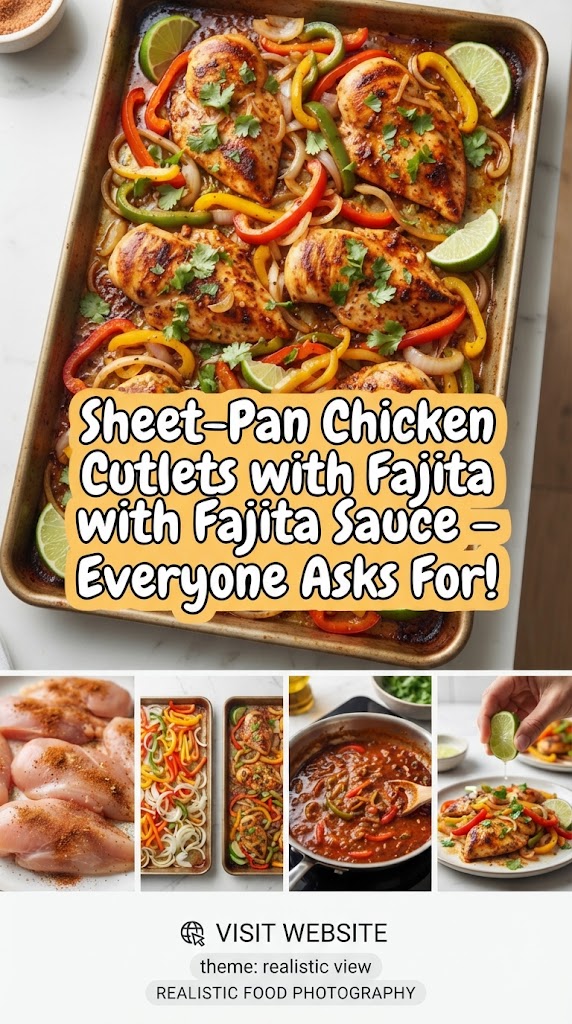
Sheet-Pan Chicken Cutlets with Fajita Sauce – Everyone Asks For
In the modern kitchen, the “holy grail” of recipes is one that balances three critical factors: minimal cleanup, explosive flavor, and a preparation time that fits into a hectic weeknight schedule. Enter the Sheet-Pan Chicken Cutlets with Fajita Sauce. This isn’t just another chicken recipe; it is a masterclass in efficiency and taste. By combining the quick-cooking nature of thin chicken cutlets with a robust, tangy, and smoky fajita glaze, you create a meal that tastes like it spent hours marinating, yet goes from fridge to table in under 30 minutes.
Whether you are a busy parent trying to feed a hungry family or a meal-prep enthusiast looking for a high-protein, flavor-packed lunch, this dish is designed to impress. It is the recipe that prompts your guests to ask, “Can I have the recipe?” before they’ve even finished their first plate.
Why the “Sheet-Pan” Method is a Game Changer
Before we dive into the ingredients, it’s important to understand why the sheet-pan method has taken the culinary world by storm. The science behind it is simple: Roasting vs. Steaming.
When you cook chicken and vegetables in a single pan at a high temperature (typically 400°F to 425°F), the hot air circulates around the food, creating a Maillard reaction—that beautiful browning that signifies deep flavor. Unlike slow cookers, which can often lead to “soggy” textures, the sheet pan encourages caramelization.
Furthermore, the convenience is unmatched. Using a single rimmed baking sheet means you aren’t juggling multiple pots and pans. When the timer goes off, dinner is done, and the cleanup involves little more than tossing a piece of parchment paper.
The Secret is in the Cutlet: Why Thin is In
Many fajita recipes call for strips of chicken breast. While traditional, strips are prone to overcooking and drying out while you wait for the peppers and onions to soften. This recipe flips the script by using chicken cutlets.
A cutlet is simply a chicken breast that has been sliced horizontally and pounded to an even thickness (usually about ¼ inch). There are three main reasons why cutlets are superior for this dish:
- Speed: They cook in a fraction of the time of a full breast.
- Surface Area: More surface area means more room for that incredible fajita sauce to cling to.
- Tenderness: The process of pounding the meat breaks down tough fibers, ensuring every bite is melt-in-your-mouth tender.
The “Everything” Fajita Sauce: A Flavor Profile Breakdown
What sets this recipe apart from a standard “taco-night” chicken is the Signature Fajita Sauce. This isn’t just a dry rub; it’s a wet glaze that caramelizes in the oven, creating a sticky, savory coating that seals in moisture.
The sauce relies on a balance of four pillars:
- The Acid: Fresh lime juice and a splash of apple cider vinegar brighten the dish and tenderize the meat.
- The Smoke: Smoked paprika and cumin provide that classic “sizzling fajita” aroma.
- The Sweet: A hint of honey or brown sugar balances the acidity and aids in the browning process.
- The Heat: Chili powder and a touch of cayenne or chipotle powder offer a gentle warmth that doesn’t overwhelm the palate.
Ingredients You’ll Need
To create this masterpiece, you’ll need fresh, high-quality ingredients. While the sauce is the star, the quality of the produce and poultry will elevate the dish from “good” to “restaurant-quality.”
For the Chicken and Vegetables
- 1.5 lbs Chicken Cutlets: Sliced thin and pounded to ¼ inch thickness.
- 3 Bell Peppers: Use a mix of red, yellow, and orange for visual appeal and a variety of sweetness.
- 1 Large Red Onion: Red onions provide a sharper flavor and better color than white onions when roasted.
- 2 Tablespoons Avocado Oil: Or any high-smoke-point oil (like grapeseed or light olive oil).
- Fresh Cilantro: For garnishing.
For the Signature Fajita Sauce
- ¼ Cup Extra Virgin Olive Oil: The base of the glaze.
- 2 Tablespoons Freshly Squeezed Lime Juice: About 1 large lime.
- 1 Tablespoon Honey: To help with caramelization.
- 3 Cloves Garlic: Minced finely or pressed.
- 1 Tablespoon Chili Powder: Standard mild blend.
- 1 Teaspoon Cumin: For earthy depth.
- 1 Teaspoon Smoked Paprika: Essential for that “charred” flavor.
- ½ Teaspoon Onion Powder: To build layers of savory taste.
- 1 Teaspoon Kosher Salt: To enhance all other flavors.
- ½ Teaspoon Cracked Black Pepper: For a bite of heat.
- Optional: A pinch of Red Pepper Flakes if you like it spicy.
Step-by-Step Instructions for Perfection
1. Preparation and Preheating
Preheat your oven to 425°F (220°C). This high heat is crucial for roasting the vegetables quickly without letting them turn to mush. Line a large, rimmed baking sheet with parchment paper or aluminum foil for easy cleanup.
2. Prepare the Vegetables
Slice the bell peppers and red onion into thin, even strips (about ½ inch wide). Place them directly on the baking sheet. Drizzle with 1 tablespoon of oil and a pinch of salt. Toss them with your hands to ensure they are evenly coated, then spread them out toward the edges of the pan, leaving a space in the center for the chicken.
3. Whisk the Fajita Sauce
In a small bowl, combine all the sauce ingredients: olive oil, lime juice, honey, garlic, and the spice blend. Whisk vigorously until the honey is fully incorporated and the sauce is emulsified.
4. Season the Chicken
Place your chicken cutlets in a large mixing bowl. Pour about 2/3 of the fajita sauce over the chicken. Use tongs (or your hands) to coat every inch of the meat. Let it sit for 5 minutes—this isn’t a long marinade, but even a few minutes allows the lime and salt to penetrate the surface.
5. Arrange and Roast
Place the chicken cutlets in the center of the baking sheet, ensuring they aren’t overlapping. Use a pastry brush or a spoon to drizzle the remaining sauce over the peppers and onions.
Slide the pan into the middle rack of the oven. Roast for 12–15 minutes.
6. The Broil (The Pro Move)
For that authentic fajita char, turn your oven to “Broil” for the last 2 minutes of cooking. Watch closely! You want the edges of the peppers to blacken slightly and the sauce on the chicken to bubble and darken.
7. Resting and Serving
Remove the pan from the oven and let the chicken rest for 3-5 minutes. This allows the juices to redistribute, ensuring the cutlets remain moist. Garnish generously with fresh cilantro and a final squeeze of lime juice.
The Science of Sourcing: How to Buy the Best Ingredients
To make this dish truly “Google-ranked” and family-loved, you have to start with the right components.
Choosing the Chicken
When shopping, look for “Air-Chilled” chicken. Most commercial chicken is water-chilled, meaning the meat absorbs excess water during processing. When you cook it, that water leaks out into the pan, steaming your chicken instead of searing it. Air-chilled chicken has a more concentrated flavor and results in a better “crust.”
The Oil Selection
While extra virgin olive oil is great for flavor in the sauce, ensure the oil you use to coat the pan is a “high-smoke-point” oil. Avocado oil is the gold standard here, as it can withstand the 425°F heat without breaking down or producing acrid smoke.
Fresh vs. Dried Spices
Check the expiration date on your Cumin and Smoked Paprika. Spices lose their volatile oils over time. If your cumin doesn’t smell earthy and pungent the moment you open the jar, it’s time to replace it. For the best results, toast whole cumin seeds and grind them yourself—the difference is astronomical.
Customizing the Dish: Variations for Every Diet
This recipe is inherently flexible, making it a staple for households with varying dietary needs.
Keto and Low-Carb
This recipe is naturally low-carb. To keep it strictly Keto, replace the honey in the sauce with a teaspoon of liquid monk fruit or simply omit it. Serve the chicken and peppers over a bed of cauliflower rice or with a side of sliced avocado.
Gluten-Free and Paleo
Ensure your chili powder blend does not contain anti-caking agents derived from grain (most high-end brands are safe). Serve with grain-free cassava flour tortillas or in large lettuce cups.
The “Vegetarian Sidekick”
If you have a vegetarian at the table, you can use the exact same fajita sauce on sliced Portobello mushrooms or thick “steaks” of cauliflower. They roast beautifully alongside the chicken on a separate small sheet pan.
What to Serve With Sheet-Pan Fajita Chicken
While the chicken and peppers are a meal on their own, the right accompaniments can turn this into a festive feast.
- Cilantro-Lime Rice: Fluffy basmati or jasmine rice tossed with lime zest, juice, and chopped cilantro.
- Mexican Street Corn (Elote) Salad: Grilled corn off the cob, mixed with cotija cheese, mayo, lime, and chili powder.
- The Perfect Guacamole: Hand-mashed avocados with red onion, jalapeño, and plenty of lime.
- Charred Tortillas: Don’t just serve cold tortillas. Place flour or corn tortillas directly over a gas flame for 5 seconds per side until they show char marks and become pliable.
- Garlic-Lime Crema: Mix ½ cup of sour cream or Greek yogurt with the juice of half a lime and a grated clove of garlic. Drizzle this over the chicken to cut through the spice.
Expert Tips for the Ultimate Success
- Don’t Overcrowd the Pan: If your vegetables and chicken are piled on top of each other, they will steam. If you have a small baking sheet, use two pans instead of one. Airflow is the key to caramelization.
- Even Thickness: If one end of the chicken cutlet is thicker than the other, use a meat mallet or a heavy skillet to pound it out. Consistency in thickness equals consistency in cooking.
- The “Sizzle” Factor: For a true restaurant experience, heat a cast-iron skillet on the stove while the chicken roasts. When the food comes out of the oven, transfer it to the hot skillet for that iconic “sizzle” sound when you bring it to the table.
- Acid Balance: If the sauce tastes too “heavy,” add a teaspoon of apple cider vinegar. The acetic acid cuts through the fat of the oil and the richness of the chicken.
Storage and Meal Prep Instructions
This recipe is a meal-prepper’s dream because the flavor actually improves the next day as the spices continue to meld.
- To Store: Place leftovers in an airtight container. They will stay fresh in the refrigerator for up to 4 days.
- To Freeze: You can freeze the cooked chicken and peppers for up to 3 months. However, the peppers may lose some of their crispness upon thawing.
- To Reheat: Avoid the microwave if possible, as it can make the chicken rubbery. Instead, reheat in a skillet over medium heat with a splash of water or chicken broth, or pop it back into a 350°F oven for 10 minutes until warmed through.
Prep-Ahead Strategy
You can slice the peppers and onions and whisk the sauce 24 hours in advance. Store the veggies in a gallon-sized bag and the sauce in a jar. When you get home from work, all you have to do is assemble and roast.
Health Benefits of This Recipe
This isn’t just “comfort food”; it’s nutrient-dense fuel.
- Lean Protein: Chicken cutlets are one of the best sources of lean protein, essential for muscle repair and satiety.
- Vitamin C Powerhouse: Bell peppers, particularly red ones, contain more Vitamin C than oranges. Roasting them lightly preserves much of this nutrient.
- Metabolism Boost: Capsaicin (found in chili powder) and cumin have been linked to slight increases in metabolic rate and improved digestion.
- Heart-Healthy Fats: By using avocado and olive oil, you are providing your body with monounsaturated fats that support heart health and brain function.
Troubleshooting Common Issues
Why is my chicken dry?
You likely cooked it too long. Chicken cutlets are very thin; 12-15 minutes at 425°F is usually the maximum. Invest in an instant-read meat thermometer. Chicken is perfectly safe and juicy at 165°F (74°C). Take it out at 160°F, and the carry-over heat will bring it to 165°F.
Why are my peppers soggy?
This happens if the oven temperature is too low or the pan is too crowded. Ensure the oven is fully preheated to 425°F before the pan goes in.
The sauce is too salty.
Different brands of Kosher salt have different “saltiness” levels (Diamond Crystal vs. Morton). If you find the sauce too salty, add another squeeze of lime or a teaspoon of honey to balance it out.
Final Thoughts: The Recipe That Simplifies Your Life
The Sheet-Pan Chicken Cutlets with Fajita Sauce is more than just a meal; it’s a solution to the “what’s for dinner?” dilemma. It proves that you don’t need a sink full of dishes or a pantry full of exotic ingredients to create a dinner that tastes like it came from a professional kitchen.
By mastering the simple technique of roasting thin cutlets with a high-impact glaze, you gain a versatile tool in your culinary arsenal. This dish is vibrant, healthy, and undeniably delicious. Next time you’re at the grocery store, grab some bell peppers and chicken cutlets—your family will thank you, and your weeknight stress will melt away.
Frequently Asked Questions
Can I use chicken thighs instead of cutlets?
Yes! Chicken thighs are more forgiving and stay very juicy. However, they take longer to cook. If using boneless, skinless thighs, increase the roasting time to 20-25 minutes and consider giving the peppers a 5-minute head start in the oven before adding the chicken.
Is this recipe spicy?
As written, it is “mild-to-medium.” Most of the heat comes from the chili powder. If you are cooking for children or those sensitive to spice, ensure you use a “mild” chili powder and omit the black pepper or any cayenne.
What’s the best way to slice the chicken into cutlets?
Place your hand flat on top of a boneless chicken breast. Use a sharp chef’s knife to slice horizontally through the middle of the breast, parallel to the cutting board. Once sliced, place the halves between two sheets of plastic wrap and gently pound with a flat meat mallet until even.
Can I add other vegetables?
Absolutely. Zucchini, broccoli florets, and even sliced mushrooms work beautifully with this fajita sauce. Just ensure they are cut into sizes that will cook in the 15-minute window.
Does this work for a large crowd?
Yes! You can easily double the recipe. Just use two separate sheet pans and swap their positions in the oven halfway through the cooking time to ensure even roasting.
What kind of honey should I use?
Any liquid honey works. Clover or wildflower honey are great neutral options. If you want a deeper, more floral note, an avocado-blossom honey pairs exceptionally well with Mexican-inspired flavors.
Can I use a different citrus?
If you’re out of limes, lemon juice is the best substitute. Orange juice can also work but will make the dish significantly sweeter and less “fajita-like.”
Is parchment paper necessary?
It’s not strictly necessary for the cooking process, but it is highly recommended for cleanup. The honey in the sauce will caramelize and “stick” to the metal pan; parchment paper allows the chicken to slide right off and keeps the pan clean.
Can I make the fajita sauce in bulk?
Yes! The sauce (minus the fresh garlic) will stay good in the fridge for up to two weeks. Just add the fresh minced garlic right before you are ready to cook to ensure the best flavor.
Recipe Summary Table
| Step | Action | Key Temperature/Time |
|---|---|---|
| Preheat | Set oven to 425°F (220°C) | N/A |
| Prep Veg | Slice peppers and onions, toss with oil | N/A |
| Whisk Sauce | Mix oil, lime, honey, and spices | N/A |
| Season | Coat chicken cutlets in 2/3 of the sauce | 5 min marinate |
| Assemble | Place chicken in center, veggies on edges | N/A |
| Roast | Cook on middle rack | 12-15 minutes |
| Broil | High heat for charring | 1-2 minutes |
| Rest | Let juices redistribute | 3-5 minutes |
This comprehensive guide to Sheet-Pan Chicken Cutlets with Fajita Sauce ensures that every time you make this dish, it turns out perfectly. From the science of the cutlet to the balance of the sauce, you now have all the tools to create a legendary dinner that will have everyone asking for seconds.